


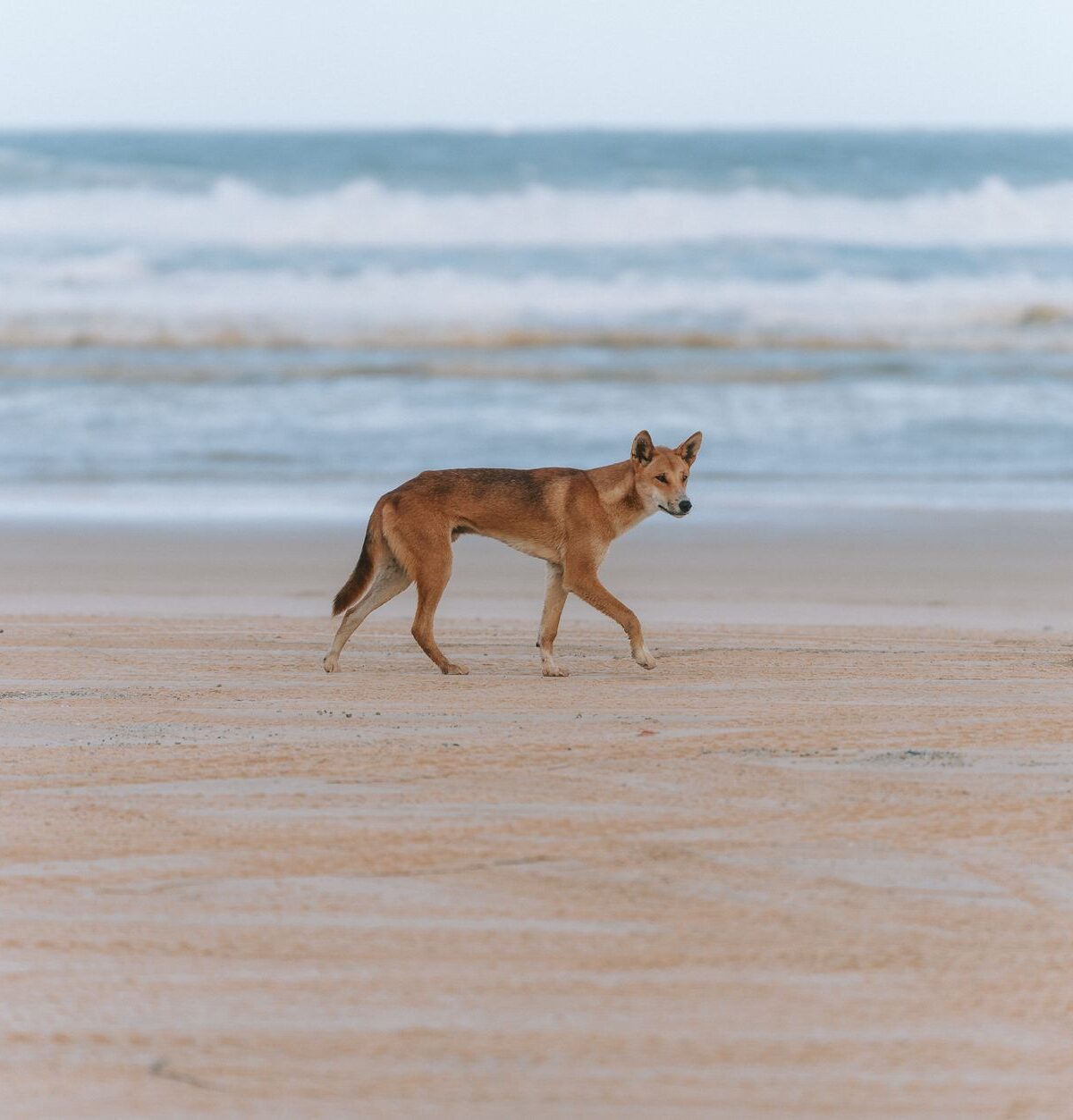
AUSTRALIAN DINGO
Canis lupus dingo
DESCRIPTION
Australian Dingo (Canis lupus dingo) is commonly known as the Dingo. This wild dog exhibits a lean, muscular build with a bushy tail and erect ears, typically displaying a sandy or reddish-brown coat. Dingoes are highly adaptable and exhibit a range of behaviors, from hunting in packs to being solitary, depending on the availability of food and environmental conditions.
FUN FACTS
- Dingoes are believed to have arrived in Australia around 4,000 years ago, likely brought by seafaring people from Southeast Asia
- They are considered a vital part of the Australian ecosystem, helping to control populations of various prey species
- | Unlike domestic dogs, Dingoes have a unique vocalization that includes a distinctive howl, which they use to communicate with each other over long distances
- This howl is an important part of their social structure and helps maintain pack cohesion
QUICK INFO
Lifespan10-15 years in the wild, up to 16 years in captivi
Average Weight12-20 kg
Average Length1-1.2 m
Diet TypeCarnivore
Social StructureDingoes can be solitary or form small packs, typically consisting of a breeding pair and their offspring.
Activity PatternNocturnal
Breeding SeasonWinter (June-August)
- Habitat
- Dingoes inhabit a variety of environments, including forests, grasslands, and deserts. They are highly adaptable and can thrive in both arid and temperate regions.
- Biomes
- Desert, Grassland, Forest
- Native Range
- Dingoes are native to Australia and are found across the continent, from coastal areas to the interior.
- Continent
- Australia
- Countries
- Australia
- Diet
- Dingoes primarily hunt for meat, preying on a variety of animals including kangaroos, rabbits, and birds. They are opportunistic feeders and will scavenge when necessary.
- Diet Type
- Carnivore
- Favorite Food
- kangaroos, rabbits, birds
- Social Structure
- Dingoes can be solitary or form small packs, typically consisting of a breeding pair and their offspring.
- Activity Pattern
- Nocturnal
- Group Size
- 2-10
- Territorial
- 1
 LC
LC
12-20 kg
Weight
1-1.2 m
Length
0.5-0.6 m at shoulder
Height (Shoulder)
- Coloration
- sandy to reddish-brown with white markings
- Sexual Dimorphism
- males are generally larger than females
- Lifespan
- 10-15 years in the wild, up to 16 years in captivi
- Gestation Period
- 63 days
- Offspring per Birth
- 4-6
- Sexual Maturity
- 1-2 years
- Breeding Season
- Winter (June-August)
LC
Least Concern
IUCN Red List Status
- Population Status
- Dingo populations are considered stable in some areas, but they face threats from habitat loss and hybridization with domestic dogs.
- Wild Population Estimate
- 100,000+
- Population Trend
- Stable
- Endangered
- 0
- Threats
- Main threats to Dingoes include habitat destruction, hybridization with domestic dogs, and persecution by humans. These factors have led to a decline in some local populations.
- Predators
- Humans, domestic dogs, and occasionally larger predators like crocodiles in certain regions.
- Defense Mechanisms
- Dingoes use their agility and speed to escape threats, and they can also exhibit aggressive behavior when cornered.
- Found in Zoos
- Uncommon