


AUSTRALIAN KING PARROT
Alisterus scapularis
DESCRIPTION
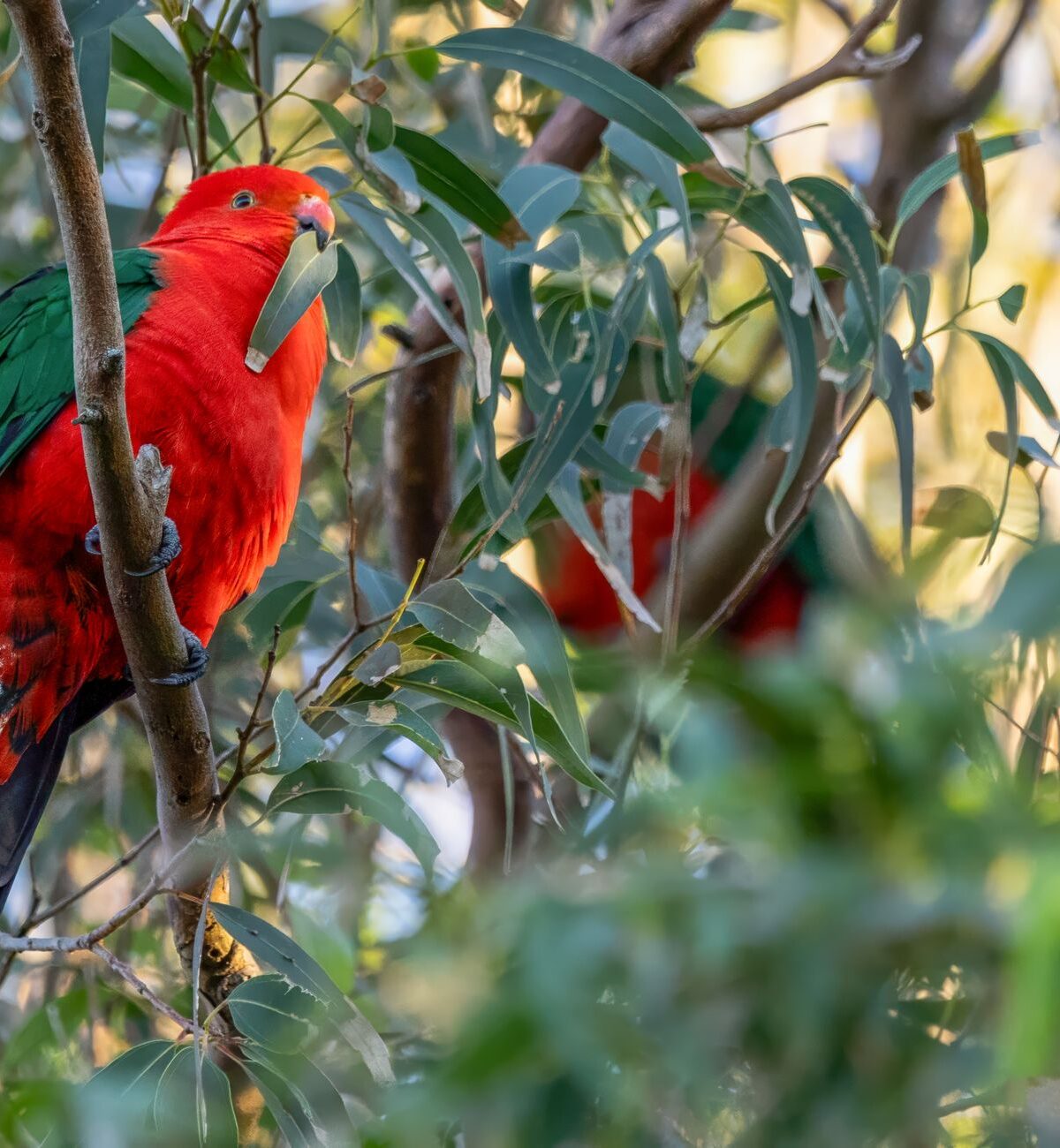
Australian King Parrot (Alisterus scapularis) is a strikingly colorful bird native to eastern Australia. Males are characterized by their vibrant green bodies, bright red underparts, and distinctive red crown, while females are more subdued with green and yellow plumage. These parrots are often seen in pairs or small groups, foraging in the canopy of forests and woodlands, where they are known for their playful and social behavior.
FUN FACTS
- Australian King Parrots are known for their striking appearance and are often kept as pets due to their friendly nature
- They can mimic sounds and words, making them entertaining companions
- | These parrots play a crucial role in their ecosystem as seed dispersers, helping to maintain the health of their forest habitats
- Their vibrant colors also make them a favorite among birdwatchers and photographers
QUICK INFO
Lifespan15-20 years in the wild, up to 30 years in captivi
Average Weight150-200 g
Average Length35-40 cm
Diet TypeHerbivore
Social StructureThey are typically seen in pairs or small groups, often forming strong pair bonds.
Activity PatternDiurnal
Breeding SeasonSpring to early summer (September to January)
- Habitat
- Australian King Parrots inhabit moist, dense forests and woodlands, often near water sources. They prefer areas with abundant foliage for foraging and nesting.
- Biomes
- Tropical Rainforest, Temperate Forest
- Native Range
- They are found along the eastern coast of Australia, from Queensland to New South Wales and into Victoria.
- Continent
- Australia
- Countries
- Australia
- Diet
- They primarily feed on seeds, fruits, and flowers, often foraging in trees and shrubs. Their diet is supplemented with various plant materials, making them important seed dispersers in their ecosystem.
- Diet Type
- Herbivore
- Favorite Food
- seeds, fruits, flowers
- Social Structure
- They are typically seen in pairs or small groups, often forming strong pair bonds.
- Activity Pattern
- Diurnal
- Group Size
- 2-10
- Territorial
- 1

 VU
VU
150-200 g
Weight
35-40 cm
Length
- Coloration
- Males are bright green with red underparts and a red crown, while females are green with yellow and olive tones.
- Sexual Dimorphism
- Males are more colorful than females, with distinct red and green plumage.
- Lifespan
- 15-20 years in the wild, up to 30 years in captivi
- Offspring per Birth
- 2-4
- Sexual Maturity
- 1-2 years
- Breeding Season
- Spring to early summer (September to January)
LC
Least Concern
IUCN Red List Status
- Population Status
- The population is currently stable, with no immediate threats to their survival.
- Wild Population Estimate
- 50,000-100,000
- Population Trend
- Stable
- Endangered
- 0
- Threats
- Main threats include habitat loss due to deforestation and urbanization. They are also vulnerable to predation by introduced species such as cats and foxes.
- Predators
- Cats, foxes, and birds of prey.
- Defense Mechanisms
- They rely on their ability to fly quickly and maneuver through trees to evade predators.
- Compatible Animals
- Other parrot species, finches, doves
- Found in Zoos
- Common