


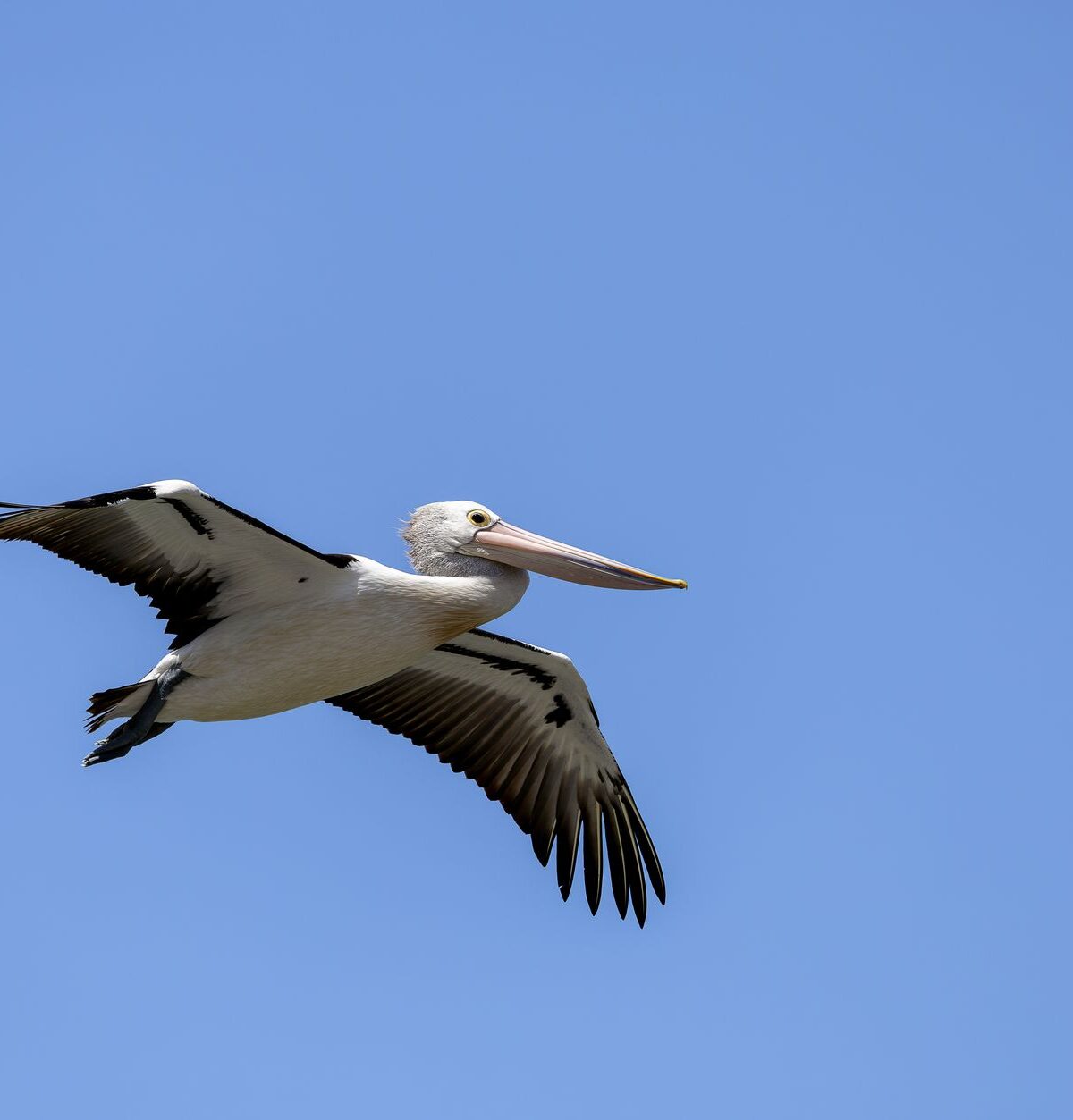
AUSTRALIAN PELICAN
Pelecanus conspicillatus
DESCRIPTION
Australian Pelican (Pelecanus conspicillatus) is a large waterbird known for its distinctive long bill and large throat pouch. It has predominantly white plumage with black wing tips and a strikingly large wingspan that can reach up to 2.5 meters. This species is often seen gliding gracefully over water or diving to catch fish, showcasing its adept hunting skills and social behavior in groups.
FUN FACTS
- Australian Pelicans are known for their impressive fishing techniques, often working together to herd fish into shallow waters
- Their large throat pouch can hold up to 13 liters of water, allowing them to catch and store multiple fish at once
- | These pelicans are also remarkable fliers, capable of soaring for hours without flapping their wings, using thermal updrafts to gain altitude and travel long distances
QUICK INFO
Lifespan10-15 years in the wild, up to 25 years in captivi
Average Weight4-13 kg
Average Length1.6-1.8 m
Diet TypePiscivore
Social Structuregroup — they are often seen in flocks, especially when feeding or nesting.
Activity PatternDiurnal
Breeding SeasonSpring to early summer (August to January)
- Habitat
- Australian Pelicans inhabit a variety of wetland environments, including lakes, rivers, and coastal areas. They prefer shallow waters where they can easily find their prey.
- Biomes
- Wetlands, Coastal
- Native Range
- The species is native to Australia and can also be found in parts of New Guinea and some islands in the southwestern Pacific.
- Continent
- Australia
- Countries
- Australia, Papua New Guinea
- Diet
- Australian Pelicans primarily feed on fish, which they catch using their large bills and throat pouches. They are known to hunt cooperatively, often herding fish into shallow waters for easier capture.
- Diet Type
- Piscivore
- Favorite Food
- fish
- Social Structure
- group — they are often seen in flocks, especially when feeding or nesting.
- Activity Pattern
- Diurnal
- Group Size
- 10-50
- Territorial
- 0
 LC
LC

4-13 kg
Weight
1.6-1.8 m
Length
- Coloration
- predominantly white with black wing tips
- Lifespan
- 10-15 years in the wild, up to 25 years in captivi
- Offspring per Birth
- 1-3
- Sexual Maturity
- 3-4 years
- Breeding Season
- Spring to early summer (August to January)
LC
Least Concern
IUCN Red List Status
- Population Status
- The population of Australian Pelicans is currently stable, with no immediate threats to their numbers.
- Wild Population Estimate
- 100,000+
- Population Trend
- Stable
- Endangered
- 0
- Threats
- Main threats include habitat loss due to urban development and pollution of waterways. Climate change also poses a risk by affecting water levels and fish populations.
- Predators
- Eggs and chicks are vulnerable to predation by birds of prey and feral animals such as foxes and cats.
- Defense Mechanisms
- They rely on their size and social behavior to deter predators, often nesting in colonies to protect their young.
- Compatible Animals
- other waterbirds, such as ducks and swans
- Found in Zoos
- Common