


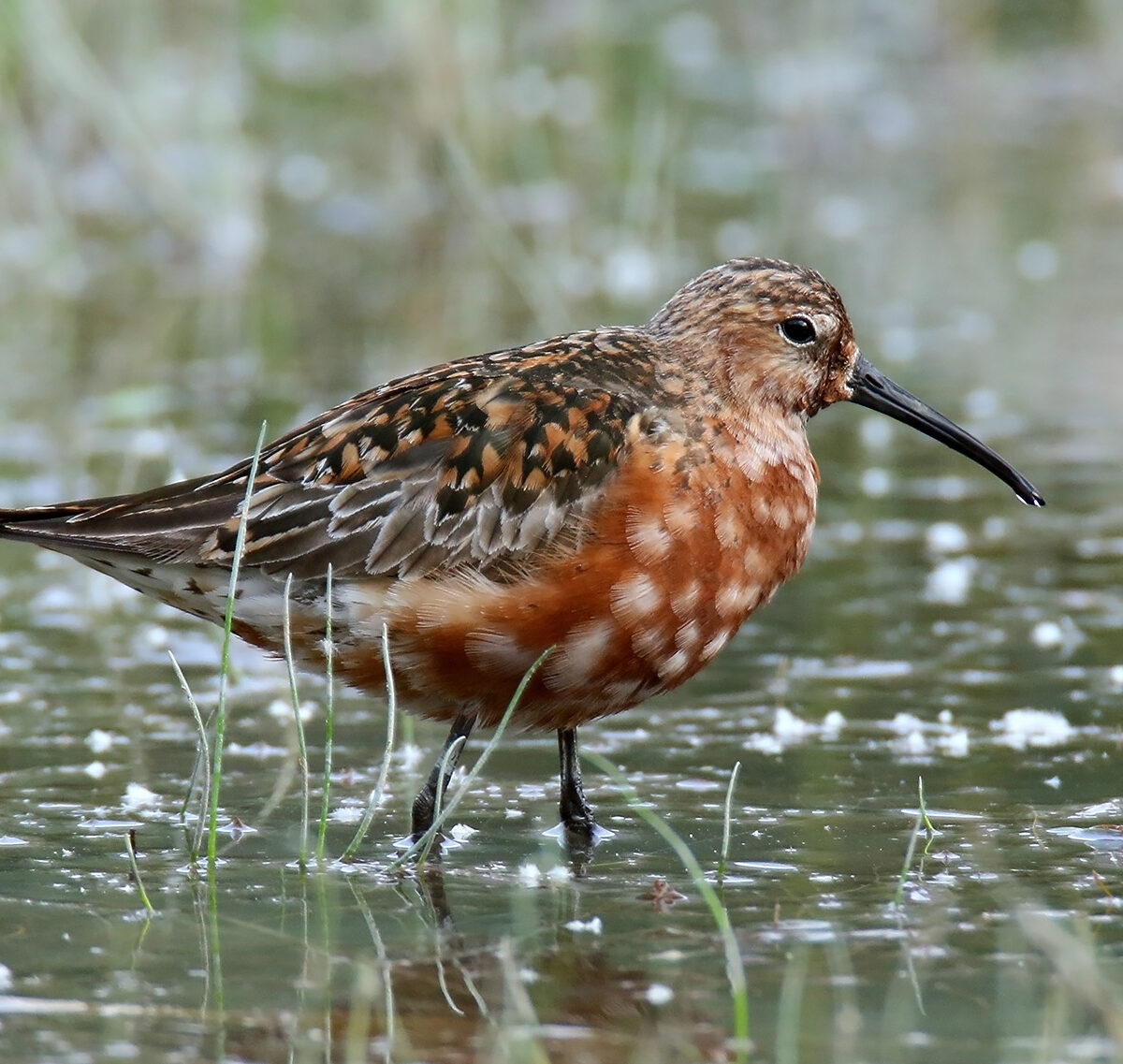
AUSTRALIAN SANDPIPER
DESCRIPTION
Also called the Red-necked Sandpiper, the Australian Sandpiper is a small wading bird characterized by its distinctive reddish-brown neck and underparts during the breeding season. It has a slender body, long legs, and a straight bill, which it uses to probe into mud and sand for food. This species is often found in shallow wetlands and coastal areas, where it forages for invertebrates and small crustaceans.
FUN FACTS
- Australian Sandpipers are known for their unique foraging technique, where they run along the shoreline and quickly probe the sand for food
- This behavior allows them to catch small invertebrates that are hidden beneath the surface
- | During migration, Australian Sandpipers can travel long distances, sometimes flying non-stop for several days to reach their wintering grounds
- Their ability to adapt to different habitats makes them resilient travelers
QUICK INFO
Lifespan5-10 years in the wild
Average Weight50-100 g
Average Length20-25 cm
Diet TypeOmnivore
Social Structuregroup — they are often seen foraging in small flocks.
Activity PatternDiurnal
Breeding SeasonSpring to early summer (September to January)
- Habitat
- This species inhabits a variety of wetland environments, including mudflats, estuaries, and shallow coastal waters. It prefers areas with soft substrates where it can easily forage for food.
- Biomes
- Wetlands, Coastal
- Native Range
- The Australian Sandpiper is native to Australia and New Zealand, with some populations migrating to Southeast Asia during the non-breeding season.
- Continent
- Australia, Oceania
- Countries
- Australia, New Zealand
- Diet
- The Australian Sandpiper primarily feeds on small invertebrates, including insects and crustaceans, which it finds by probing in the mud and sand. It may also consume plant material occasionally.
- Diet Type
- Omnivore
- Favorite Food
- invertebrates, crustaceans
- Social Structure
- group — they are often seen foraging in small flocks.
- Activity Pattern
- Diurnal
- Group Size
- 5-30
- Territorial
- 0
 VU
VU

50-100 g
Weight
20-25 cm
Length
- Coloration
- Reddish-brown neck and underparts, grayish-brown upperparts
- Sexual Dimorphism
- males and females are similar in appearance, but males may have slightly brighter coloration during breeding season.
- Lifespan
- 5-10 years in the wild
- Offspring per Birth
- 3-4
- Sexual Maturity
- 1-2 years
- Breeding Season
- Spring to early summer (September to January)
LC
Least Concern
IUCN Red List Status
- Population Status
- The population of Australian Sandpipers is currently stable, but habitat loss poses a potential threat.
- Wild Population Estimate
- 50,000-100,000
- Population Trend
- Stable
- Endangered
- 0
- Threats
- Main threats include habitat destruction due to coastal development and pollution. Climate change also poses a risk to their wetland habitats.
- Predators
- Birds of prey, foxes, and domestic cats are known predators of the Australian Sandpiper.
- Defense Mechanisms
- They rely on their ability to quickly flee from predators and may use camouflage to blend into their surroundings.
- Found in Zoos
- Rare