


AUSTRALIAN SHOVELER
Anas rhynchotis
DESCRIPTION
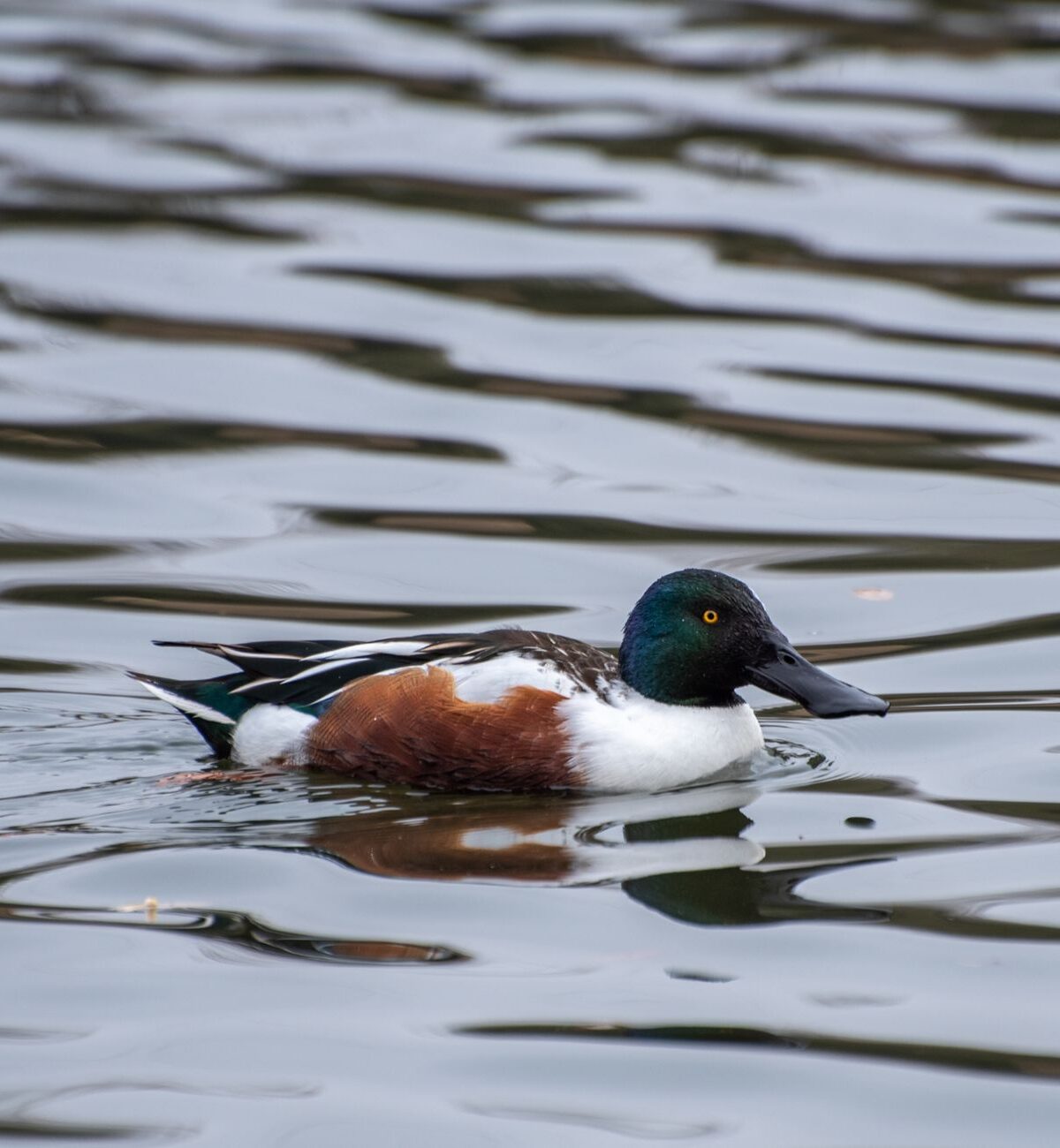
Australian Shoveler (Anas rhynchotis) is a distinctive duck known for its unique spatula-shaped bill, which it uses to filter food from the water. Males are characterized by their striking green head, white chest, and chestnut-colored flanks, while females are mottled brown, providing excellent camouflage. This species is often found in wetlands and shallow lakes, where it engages in dabbling behavior, foraging for food in the water's surface.
FUN FACTS
- The Australian Shoveler's unique bill allows it to filter food from the water efficiently, making it one of the most specialized foragers among ducks
- Additionally, during courtship, males perform elaborate displays, including head bobbing and calling, to attract females
QUICK INFO
Lifespan10-15 years in the wild
Average Weight0.7-1.2 kg
Average Length50-60 cm
Diet TypeOmnivore
Social StructureThey are often found in pairs or small groups, especially during the breeding season.
Activity PatternDiurnal
Breeding SeasonSpring to early summer
- Habitat
- They inhabit freshwater wetlands, marshes, and shallow lakes, often preferring areas with abundant vegetation. These habitats provide essential resources for feeding and nesting.
- Biomes
- Wetlands, Freshwater
- Native Range
- The Australian Shoveler is native to Australia and New Zealand, with some populations found in nearby islands.
- Continent
- Australia, Oceania
- Countries
- Australia, New Zealand
- Diet
- Australian Shovelers primarily feed on aquatic plants, seeds, and small invertebrates, which they filter from the water using their specialized bills.
- Diet Type
- Omnivore
- Favorite Food
- aquatic plants, seeds, small invertebrates
- Social Structure
- They are often found in pairs or small groups, especially during the breeding season.
- Activity Pattern
- Diurnal
- Group Size
- 2-20
- Territorial
- 0

 VU
VU
0.7-1.2 kg
Weight
50-60 cm
Length
- Coloration
- Males have a green head, white chest, and chestnut flanks; females are mottled brown.
- Sexual Dimorphism
- Males are more colorful than females, with distinct green heads and white chests.
- Lifespan
- 10-15 years in the wild
- Offspring per Birth
- 6-12
- Sexual Maturity
- 1 year
- Breeding Season
- Spring to early summer
LC
Least Concern
IUCN Red List Status
- Population Status
- The population of Australian Shovelers is currently stable, but habitat loss poses a potential threat.
- Wild Population Estimate
- 50,000-100,000
- Population Trend
- Stable
- Endangered
- 0
- Threats
- Main threats include habitat destruction due to agricultural expansion and water management practices. Pollution and climate change also pose risks to their wetland habitats.
- Predators
- Foxes, birds of prey, and domestic cats are known predators of Australian Shovelers.
- Defense Mechanisms
- They rely on their ability to quickly take flight and their camouflage to evade predators.
- Compatible Animals
- Other duck species, waterfowl
- Found in Zoos
- Uncommon