


AUSTRALIAN STONE CURLEW
Burhinus grallarius
DESCRIPTION
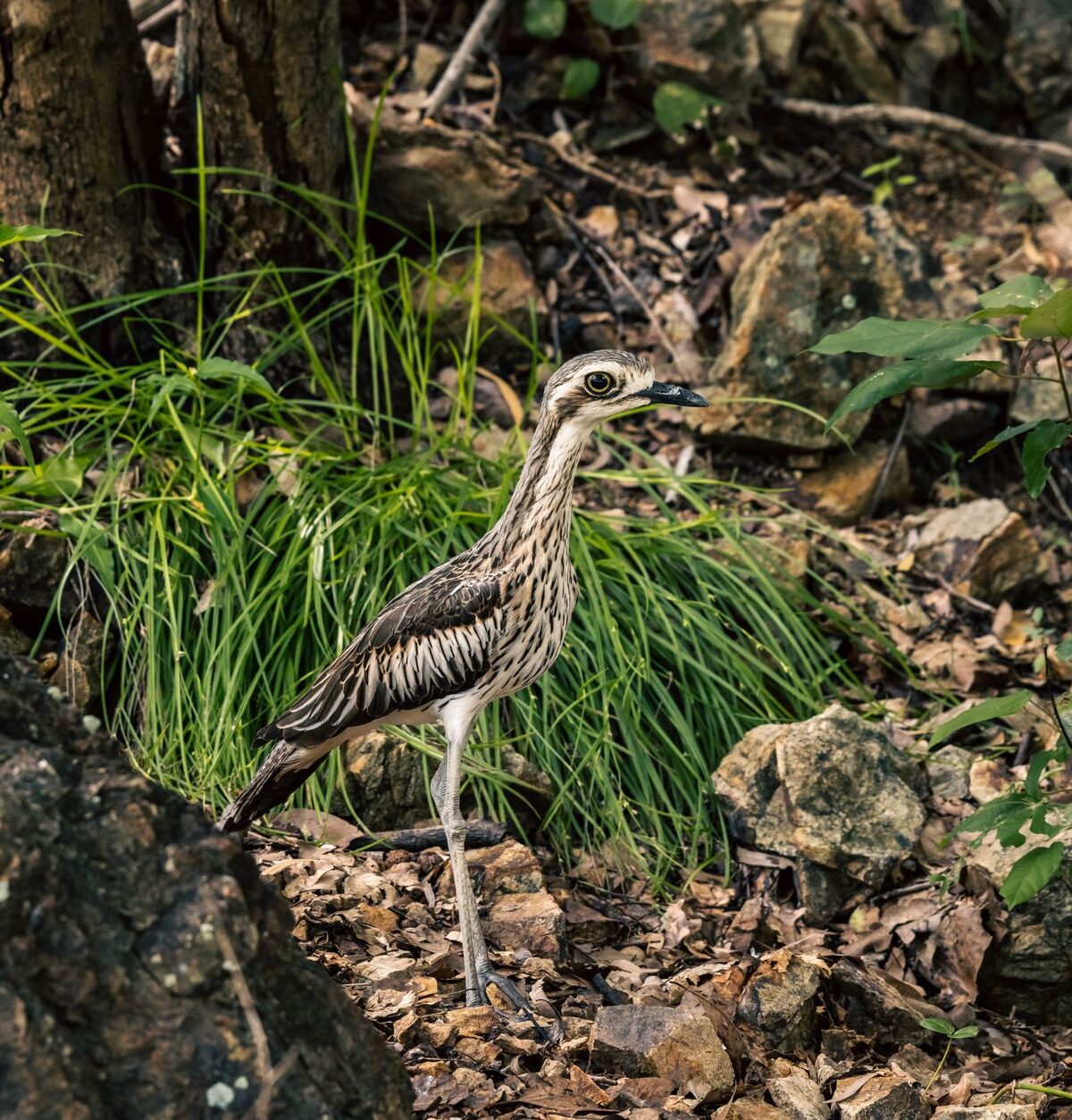
Australian Stone Curlew (Burhinus grallarius) is also known as the Bush Stone-Curlew and Thick-knee. This large, ground-dwelling bird features long legs, a long neck, and a distinctive large eye, which gives it excellent night vision. It is primarily nocturnal, often seen foraging at night and relying on its cryptic plumage for camouflage during the day.
FUN FACTS
- Australian Stone Curlews are known for their unique vocalizations, which can sound quite eerie at night, often described as a haunting call that echoes through the bush
- They have a fascinating behavior of freezing in place when threatened, relying on their camouflage to avoid detection by predators.| These birds are also known for their unusual nesting habits, often laying their eggs directly on the ground without any nest structure, which makes them vulnerable to predation but allows them to blend seamlessly into their environment
QUICK INFO
Lifespan10-15 years in the wild
Average Weight1-1.5 kg
Average Length50-60 cm
Diet TypeOmnivore
Social Structuresolitary or in pairs, often seen alone or with a mate
Activity PatternNocturnal
Breeding SeasonSpring to early summer
- Habitat
- Australian Stone Curlews inhabit open grasslands, woodlands, and scrublands. They prefer areas with sparse vegetation that provide cover and foraging opportunities.
- Biomes
- Grassland, Woodland
- Native Range
- The species is native to Australia and parts of New Guinea.
- Continent
- Australia
- Countries
- Australia, Papua New Guinea
- Diet
- It primarily feeds on insects, small vertebrates, and plant material. The diet can vary based on availability and habitat.
- Diet Type
- Omnivore
- Favorite Food
- insects, small vertebrates
- Social Structure
- solitary or in pairs, often seen alone or with a mate
- Activity Pattern
- Nocturnal
- Group Size
- 1-2
- Territorial
- 1

 VU
VU
1-1.5 kg
Weight
50-60 cm
Length
- Coloration
- The plumage is mottled brown and grey, providing excellent camouflage against the ground.
- Lifespan
- 10-15 years in the wild
- Offspring per Birth
- 1-3
- Sexual Maturity
- 2-3 years
- Breeding Season
- Spring to early summer
LC
Least Concern
IUCN Red List Status
- Population Status
- The population is currently stable but can be affected by habitat loss.
- Wild Population Estimate
- 10,000-20,000
- Population Trend
- Stable
- Endangered
- 0
- Threats
- Main threats include habitat destruction due to agriculture and urban development. Predation by introduced species such as foxes and cats also poses a significant risk.
- Predators
- Foxes, feral cats, and birds of prey.
- Defense Mechanisms
- They rely on their cryptic coloration to blend into their surroundings and avoid detection.
- Found in Zoos
- Uncommon