


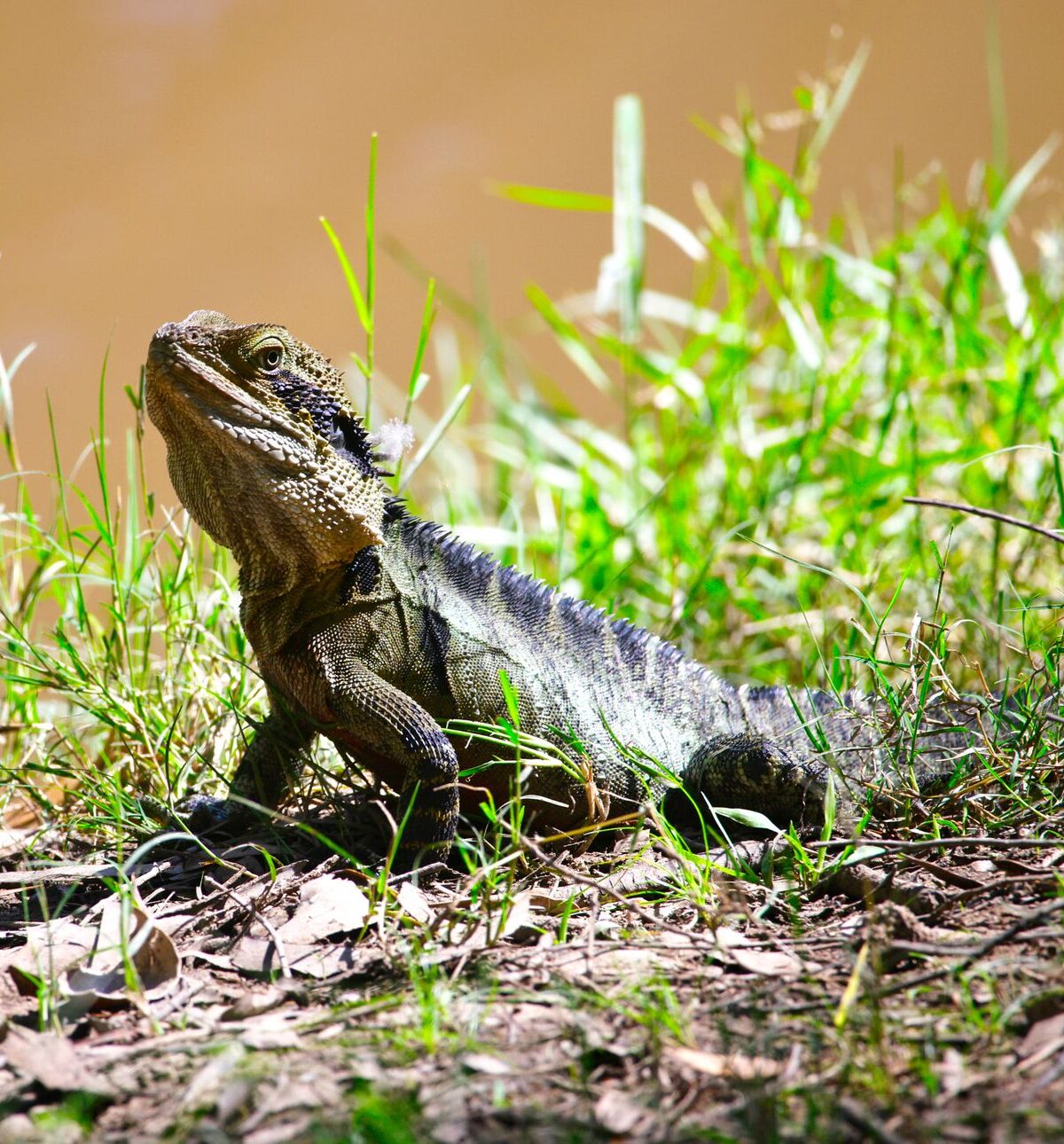
AUSTRALIAN WATER DRAGON
Intellagama lesueurii
DESCRIPTION
Australian Water Dragon (Intellagama lesueurii) is commonly known as Lesueur's Water Dragon and Eastern Water Dragon. This large lizard can reach lengths of up to 1 meter, featuring a robust body, long tail, and distinctive spiny crest along its back. They are often found basking on rocks or near water bodies, displaying a mix of green, brown, and gray coloration that provides excellent camouflage in their natural habitat.
FUN FACTS
- Australian Water Dragons are excellent swimmers and can hold their breath underwater for several minutes, allowing them to evade predators
- They are also known for their unique courtship displays, where males will puff out their throat pouches and perform head-bobbing movements to attract females
QUICK INFO
Lifespan10-15 years in the wild, up to 20 years in captivi
Average Weight1-2 kg
Average Length0.9-1 m
Diet TypeOmnivore
Social Structuresolitary, though they may be seen in small groups near abundant food sources.
Activity PatternDiurnal
Breeding SeasonSpring (September-November)
- Habitat
- These lizards inhabit a range of environments, primarily along the eastern coast of Australia, favoring areas near rivers, lakes, and wetlands. They are often found in forests, woodlands, and urban parks.
- Biomes
- Temperate Forest, Freshwater
- Native Range
- The species is native to the eastern coast of Australia, from Queensland to New South Wales.
- Continent
- Australia
- Countries
- Australia
- Diet
- Australian Water Dragons are omnivorous, feeding on a variety of plant matter, insects, and small animals. Their diet can include fruits, leaves, and even small fish or frogs.
- Diet Type
- Omnivore
- Favorite Food
- insects, fruits, small animals
- Social Structure
- solitary, though they may be seen in small groups near abundant food sources.
- Activity Pattern
- Diurnal
- Group Size
- 1-5
- Territorial
- 0
 VU
VU
 LC
LC
 LC
LC
1-2 kg
Weight
0.9-1 m
Length
- Coloration
- They exhibit a mix of green, brown, and gray with lighter underbellies and distinctive markings.
- Sexual Dimorphism
- Males are generally larger and have more pronounced throat pouches than females.
- Lifespan
- 10-15 years in the wild, up to 20 years in captivi
- Offspring per Birth
- 5-20 eggs
- Sexual Maturity
- 2-3 years
- Breeding Season
- Spring (September-November)
LC
Least Concern
IUCN Red List Status
- Population Status
- The population is currently stable, with no major declines reported.
- Wild Population Estimate
- Unknown
- Population Trend
- Stable
- Endangered
- 0
- Threats
- Main threats include habitat destruction due to urban development and pollution of waterways. They are also vulnerable to predation by domestic pets.
- Predators
- Birds of prey, snakes, and domestic cats.
- Defense Mechanisms
- They can escape quickly into water or climb trees to evade predators.
- Found in Zoos
- Common