


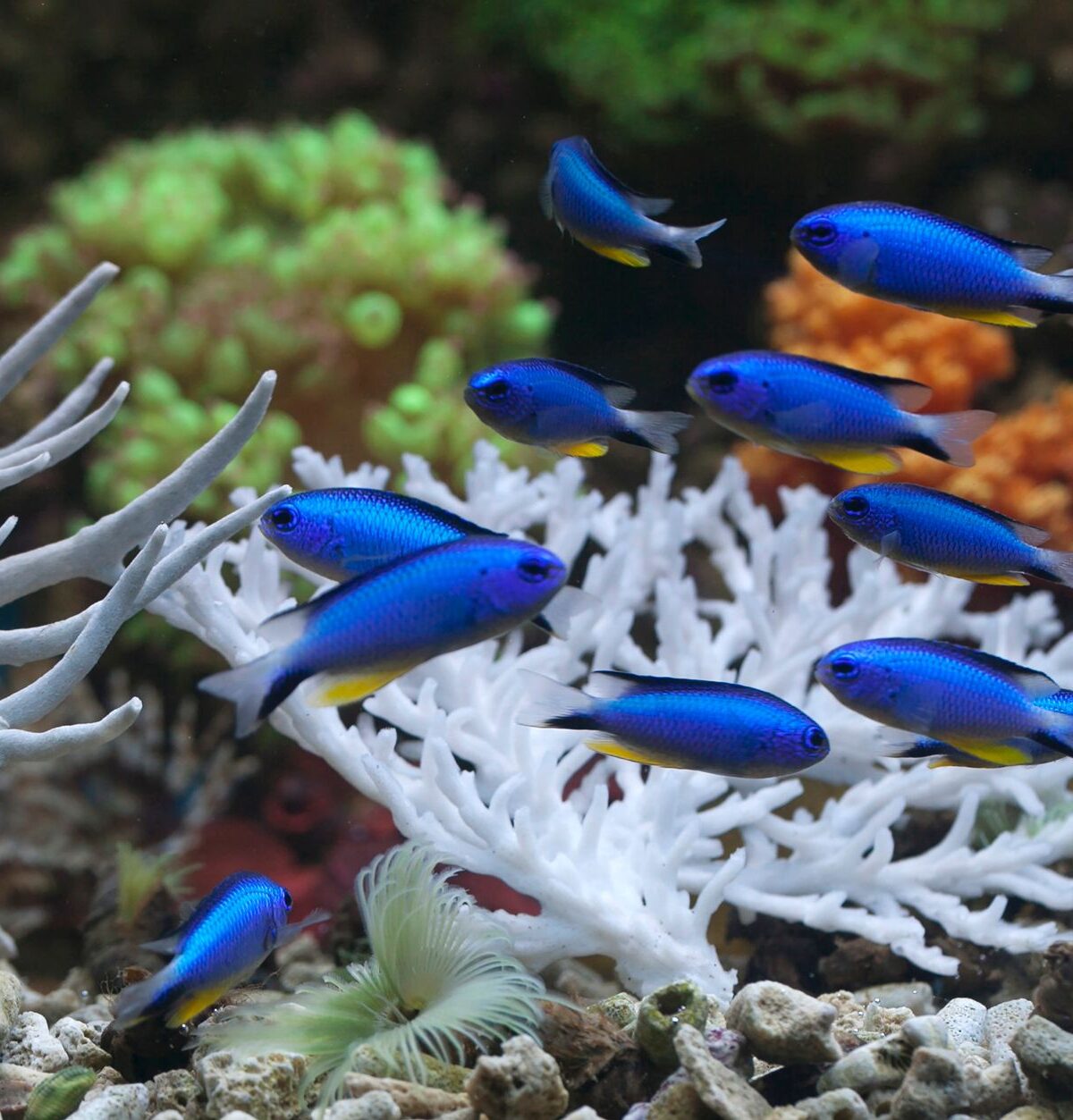
AZURE DAMSELFISH
DESCRIPTION
Also called Blue Damselfish and Blue Devil Damselfish, Azure Damselfish is a small, vibrant fish known for its striking blue coloration. They typically exhibit a robust body shape and can display varying shades of blue, often with darker markings. These fish are highly territorial and are often found in coral reefs, where they establish and defend their own territories against intruders.
FUN FACTS
- Azure Damselfish are known for their vibrant colors, which can change slightly based on their mood and environment
- They play a crucial role in maintaining the health of coral reefs by controlling algae growth, which can otherwise overwhelm coral and disrupt the ecosystem.| These fish are often used in aquariums due to their hardiness and striking appearance
- They are relatively easy to care for, making them a popular choice for both novice and experienced aquarists
QUICK INFO
Lifespan5-10 years in the wild
Average Length5-10 cm
Diet TypeHerbivore
Social StructureThey are generally found in small groups or pairs, with a dominant male defending a territory that includes several females.
Activity PatternDiurnal
Breeding SeasonYear-round in tropical regions
- Habitat
- Azure Damselfish inhabit shallow coral reefs and rocky areas, often near the surface. They prefer environments with abundant algae growth, which provides both food and shelter.
- Biomes
- Coral Reef, Marine
- Native Range
- They are native to the Indo-Pacific region, including areas around the Great Barrier Reef and various islands in the Pacific Ocean.
- Continent
- Oceania, Asia
- Countries
- Australia, Indonesia, Philippines, Papua New Guinea, Solomon Islands
- Diet
- Azure Damselfish primarily feed on algae and small zooplankton. They are known to graze on algae-covered surfaces, which helps maintain the health of their coral reef habitats.
- Diet Type
- Herbivore
- Favorite Food
- algae, zooplankton
- Social Structure
- They are generally found in small groups or pairs, with a dominant male defending a territory that includes several females.
- Activity Pattern
- Diurnal
- Group Size
- 2-10
- Territorial
- 1
 LC
LC
5-10 cm
Length
- Coloration
- vibrant blue with darker markings
- Sexual Dimorphism
- Males are typically more colorful and larger than females.
- Lifespan
- 5-10 years in the wild
- Sexual Maturity
- 1-2 years
- Breeding Season
- Year-round in tropical regions
LC
Least Concern
IUCN Red List Status
- Population Status
- The population is currently stable, with no significant declines reported.
- Wild Population Estimate
- unknown
- Population Trend
- Stable
- Endangered
- 0
- Threats
- Main threats include habitat destruction due to coral reef degradation and climate change. Overfishing can also impact local populations, although they are not currently considered endangered.
- Predators
- Larger fish, such as groupers and snappers, as well as some species of moray eels.
- Defense Mechanisms
- They use their territorial behavior to defend against intruders and can also hide among coral structures.
- Compatible Animals
- Clownfish, other small damselfish, gobies
- Found in Zoos
- Common