


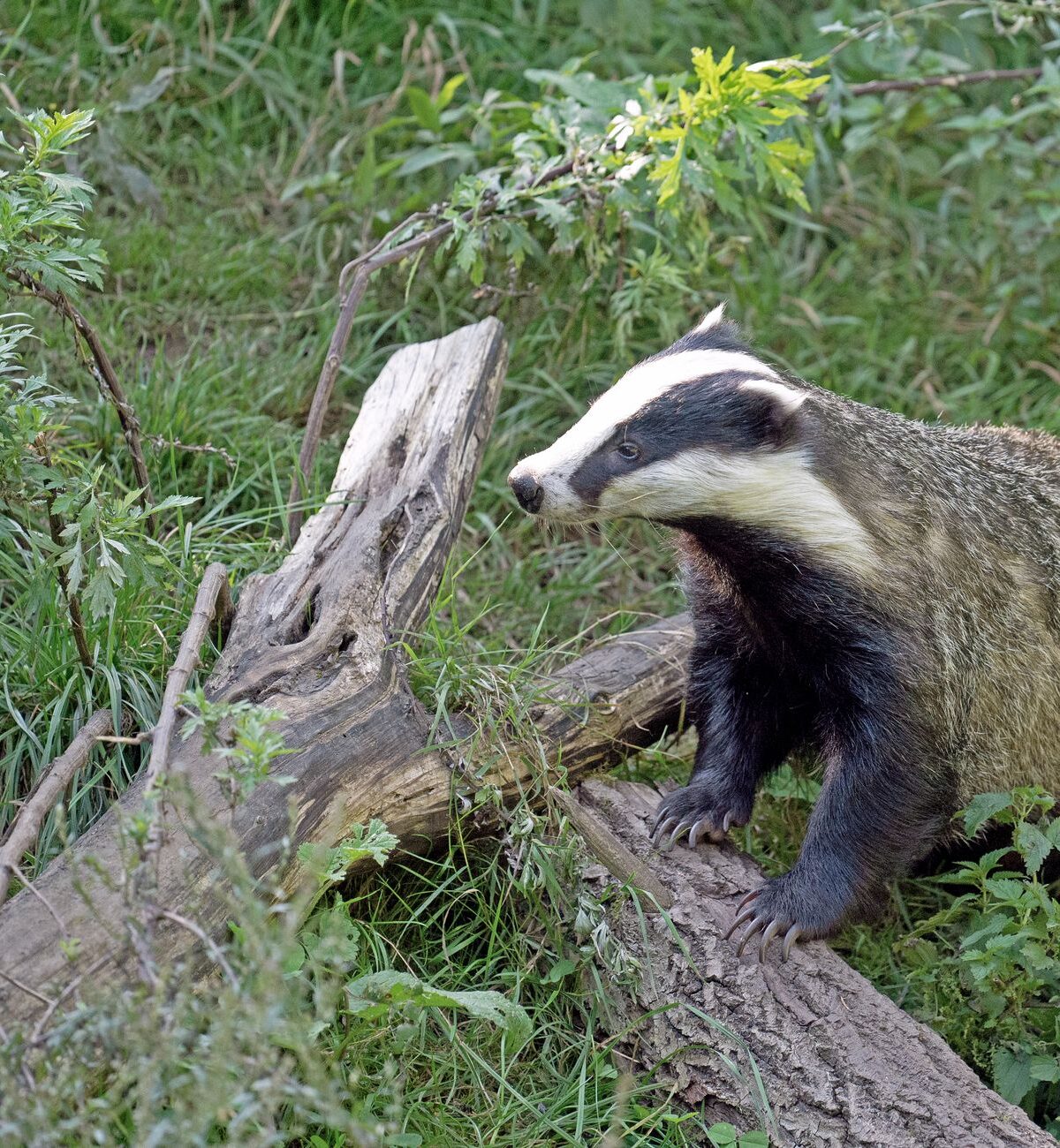
BADGER
DESCRIPTION
Also called the European Badger and American Badger, Badgers are stout, burrowing mammals known for their distinctive black and white facial markings and robust bodies. They typically have short legs and a low profile, which aids in their digging behavior. Badgers are primarily nocturnal and are known for their social structures, often living in groups called cete, which can consist of several individuals sharing a burrow system.
FUN FACTS
- Badgers are known for their remarkable digging abilities, capable of creating extensive burrow systems that can be several meters deep
- They can also run surprisingly fast for their size, reaching speeds of up to 30 km/h when necessary
- | The Honey Badger, a close relative of the badger, is famous for its fearless nature and has been known to take on much larger predators, including lions and snakes
- Its thick skin and loose fur allow it to withstand bites and stings, making it one of the toughest animals in the animal kingdom
QUICK INFO
Lifespan10-14 years in the wild, up to 20 years in captivi
Average Weight8-12 kg
Average Length60-90 cm
Diet TypeOmnivore
Social Structuregroup — Badgers often live in family groups called cete, which can include several adults and their young.
Activity PatternNocturnal
Breeding SeasonLate winter to early spring (February-April)
- Habitat
- Badgers typically inhabit woodlands, grasslands, and agricultural areas where they can dig burrows. They prefer areas with loose soil that facilitates their burrowing activities.
- Biomes
- Temperate Forest, Grassland, Agricultural
- Native Range
- Badgers are found across North America, Europe, and parts of Asia.
- Continent
- North America, Europe, Asia
- Countries
- United States, Canada, United Kingdom, Germany, France
- Diet
- Badgers are omnivorous and have a varied diet that includes insects, small mammals, fruits, and roots. They are particularly fond of earthworms and are known to forage extensively in their search for food.
- Diet Type
- Omnivore
- Favorite Food
- earthworms, insects, small mammals
- Social Structure
- group — Badgers often live in family groups called cete, which can include several adults and their young.
- Activity Pattern
- Nocturnal
- Group Size
- 5-15
- Territorial
- 1
 LC
LC
 VU
VU
8-12 kg
Weight
60-90 cm
Length
- Coloration
- Badgers have a grayish-brown coat with distinctive black and white facial markings.
- Sexual Dimorphism
- males are generally larger than females
- Lifespan
- 10-14 years in the wild, up to 20 years in captivi
- Gestation Period
- 7-8 weeks
- Offspring per Birth
- 2-5
- Sexual Maturity
- 1-2 years
- Breeding Season
- Late winter to early spring (February-April)
LC
Least Concern
IUCN Red List Status
- Population Status
- Badger populations are generally stable, but local declines can occur due to habitat loss.
- Wild Population Estimate
- 1,000,000+
- Population Trend
- Stable
- Endangered
- 0
- Threats
- Main threats to badgers include habitat destruction, road mortality, and persecution due to agricultural practices. In some regions, they are also affected by diseases such as bovine tuberculosis.
- Predators
- Coyotes, wolves, large birds of prey, and humans are the main predators of badgers.
- Defense Mechanisms
- Badgers have strong claws for digging and can be aggressive when threatened, using their powerful jaws to defend themselves.
- Compatible Animals
- none
- Found in Zoos
- Common