


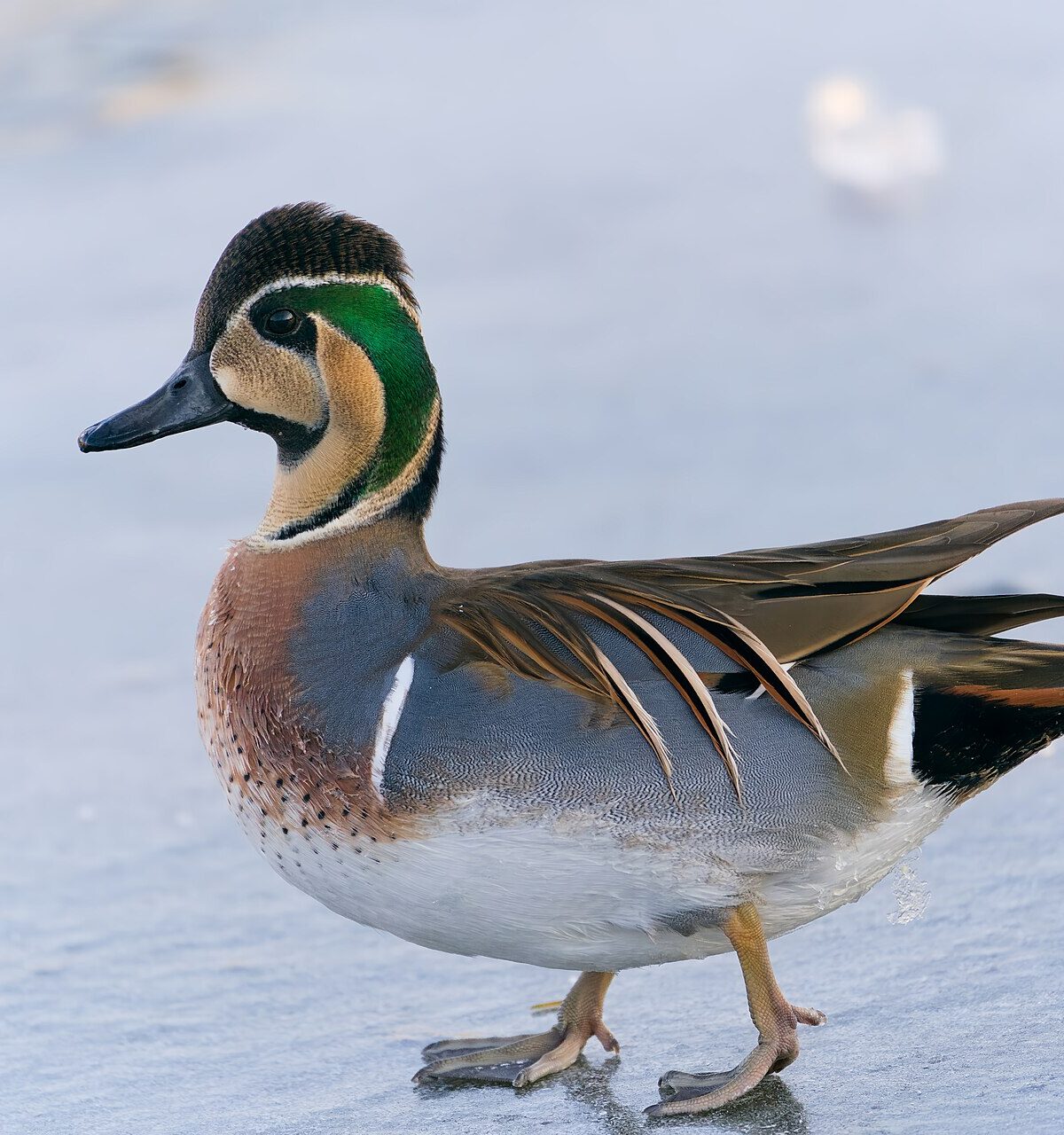
BAIKAL TEAL
DESCRIPTION
Baikal Teal is a small dabbling duck known for its striking appearance, featuring a distinctive greenish head and a white crescent on its face. This species is often found in shallow wetlands and marshes, where it forages for food. Baikal Teal is migratory, traveling long distances between breeding and wintering grounds, and is known for its social behavior, often seen in flocks during migration.
FUN FACTS
- Baikal Teal is named after Lake Baikal in Siberia, which is one of the largest freshwater lakes in the world
- This species is known for its impressive migratory journey, traveling thousands of kilometers between its breeding and wintering grounds, showcasing remarkable endurance and navigation skills
QUICK INFO
Lifespan5-10 years in the wild
Average Weight0.5-1 kg
Average Length40-50 cm
Diet TypeOmnivore
Social Structuregroup — they are often seen in flocks, especially during migration.
Activity PatternDiurnal
Breeding SeasonSpring (April-June)
- Habitat
- Baikal Teal inhabits freshwater wetlands, marshes, and shallow lakes. They prefer areas with abundant vegetation for foraging and nesting.
- Biomes
- Wetlands, Freshwater
- Native Range
- Baikal Teal breeds in northeastern Asia, particularly in Siberia and parts of Mongolia, and migrates to East Asia for the winter.
- Continent
- Asia
- Countries
- Russia, Mongolia, China, Japan, South Korea
- Diet
- Baikal Teal primarily feeds on aquatic plants, seeds, and small invertebrates. They forage by dabbling in the water and grazing on vegetation.
- Diet Type
- Omnivore
- Favorite Food
- aquatic plants, seeds, invertebrates
- Social Structure
- group — they are often seen in flocks, especially during migration.
- Activity Pattern
- Diurnal
- Group Size
- 20-100
- Territorial
- 0
 DD
DD
0.5-1 kg
Weight
40-50 cm
Length
- Coloration
- males have a greenish head, white crescent on the face, and a brown body, while females are mottled brown.
- Sexual Dimorphism
- males are more colorful than females, with distinct markings.
- Lifespan
- 5-10 years in the wild
- Offspring per Birth
- 6-10
- Sexual Maturity
- 1 year
- Breeding Season
- Spring (April-June)
LC
Least Concern
IUCN Red List Status
- Population Status
- The population of Baikal Teal is currently stable, but they face threats from habitat loss.
- Wild Population Estimate
- 100,000-200,000
- Population Trend
- Stable
- Endangered
- 0
- Threats
- Main threats include habitat destruction due to agricultural expansion and wetland drainage. Climate change also poses a risk to their migratory patterns and breeding habitats.
- Predators
- foxes, raptors, and large fish can prey on Baikal Teal, especially during the nesting season.
- Defense Mechanisms
- They rely on their ability to quickly take flight and their cryptic coloration to avoid predators.
- Found in Zoos
- Uncommon