


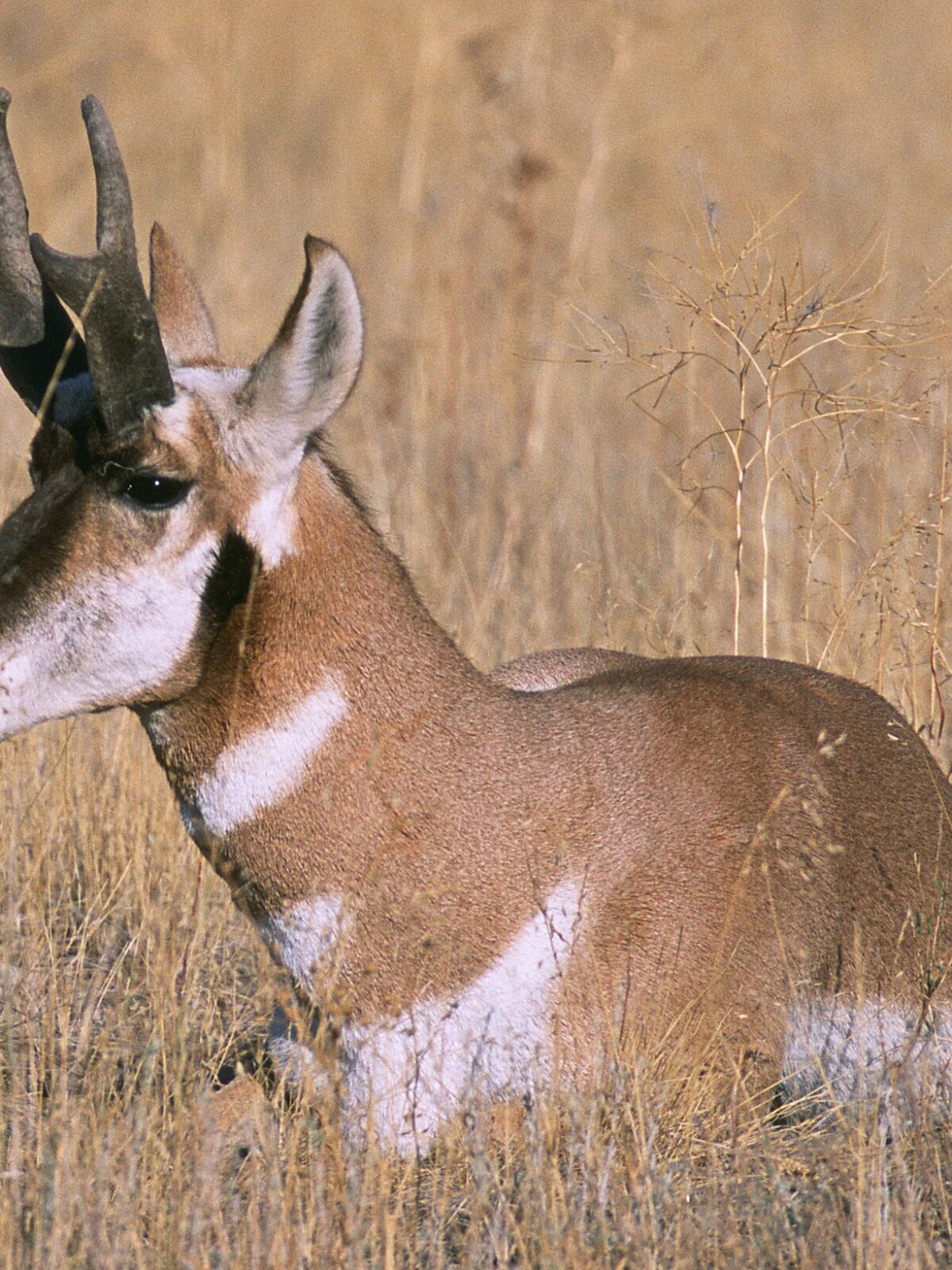
BAJA PENINSULA PRONGHORN
Antilocapra americana peninsularis
DESCRIPTION
Baja Peninsula Pronghorn (Antilocapra americana peninsularis) is a subspecies of pronghorn found exclusively in the Baja California Peninsula of Mexico. This species is characterized by its slender body, long legs, and distinctive horns that are shed annually. They are known for their incredible speed, capable of running at high speeds to escape predators, and they inhabit arid and semi-arid environments, showcasing remarkable adaptations to their habitat.
FUN FACTS
- Baja Peninsula Pronghorn are the fastest land mammals in North America, capable of reaching speeds up to 60 miles per hour
- Their unique horns are not true horns but rather a combination of bone and keratin, which they shed annually, making them distinct from other horned animals
QUICK INFO
Lifespan10-15 years in the wild, up to 20 years in captivi
Average Weight40-65 kg
Average Length1.2-1.5 m
Diet TypeHerbivore
Social StructureThey are typically found in small groups or alone, with females often seen with their young. Males may be solitary or form small bachelor groups.
Activity PatternDiurnal
Breeding SeasonLate summer to early fall
- Habitat
- This subspecies thrives in open grasslands, scrublands, and desert areas. They prefer habitats with sufficient cover for shelter and foraging.
- Biomes
- Desert, Grassland
- Native Range
- The Baja Peninsula in Mexico, specifically in the regions of Baja California and Baja California Sur.
- Continent
- North America
- Countries
- Mexico
- Diet
- Baja Peninsula Pronghorn primarily feeds on a variety of grasses, forbs, and shrubs. Their diet is adapted to the sparse vegetation found in their desert habitat.
- Diet Type
- Herbivore
- Favorite Food
- grasses, forbs, shrubs
- Social Structure
- They are typically found in small groups or alone, with females often seen with their young. Males may be solitary or form small bachelor groups.
- Activity Pattern
- Diurnal
- Group Size
- 1-10
- Territorial
- 0
 LC
LC
40-65 kg
Weight
1.2-1.5 m
Length
0.9 m at shoulder
Height (Shoulder)
- Coloration
- Their coloration ranges from light tan to reddish-brown, with white markings on the face, throat, and belly.
- Sexual Dimorphism
- Males are larger and have longer horns than females.
- Lifespan
- 10-15 years in the wild, up to 20 years in captivi
- Gestation Period
- 240 days
- Offspring per Birth
- 1
- Sexual Maturity
- 1-2 years
- Breeding Season
- Late summer to early fall
EN
Endangered
IUCN Red List Status
- Population Status
- The population of Baja Peninsula Pronghorn is currently low and fragmented due to habitat loss and other environmental pressures.
- Wild Population Estimate
- Less than 1,000
- Population Trend
- Decreasing
- Endangered
- 1
- Threats
- Main threats include habitat destruction due to agriculture and urban development, as well as competition with livestock for food resources. Additionally, poaching poses a risk to their population.
- Predators
- Coyotes, mountain lions, and bobcats are known predators of the Baja Peninsula Pronghorn.
- Defense Mechanisms
- They rely on their speed and agility to escape from predators, often running at high speeds for long distances.
- Found in Zoos
- Rare