


BALD IBIS
Geronticus eremita
DESCRIPTION
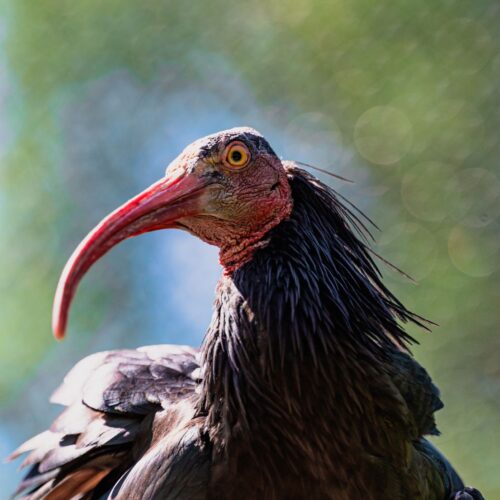
The Bald Ibis is a large bird characterized by its long, curved bill and bald head, which is covered in a reddish-brown skin. Its plumage is predominantly dark with a glossy sheen, and it has long, slender legs adapted for wading. This species is known for its social behavior, often seen foraging in groups and performing elaborate courtship displays during the breeding season.
FUN FACTS
- The Bald Ibis is often considered a symbol of good luck in some cultures, and its unique appearance has made it a subject of fascination in art and literature
- | This species was once widespread across Europe and the Middle East, but due to various factors, it has become critically endangered and is now primarily found in isolated populations
QUICK INFO
Lifespan10-15 years in the wild, up to 20 in captivity
Average Weight1.5-2.5 kg
Average Length65-75 cm
Diet TypeInsectivore
Social StructureThey are typically found in pairs or small groups, especially during the breeding season.
Activity PatternDiurnal
Breeding SeasonSpring (March-May)
- Habitat
- Bald Ibises inhabit arid and semi-arid regions, often near wetlands, rivers, and agricultural fields. They prefer open landscapes where they can easily forage for food.
- Biomes
- Desert, Grassland, Wetland
- Native Range
- Historically found across North Africa and parts of the Middle East, their range has significantly decreased over time.
- Continent
- Africa, Asia
- Countries
- Morocco, Tunisia, Turkey, Syria
- Diet
- The Bald Ibis primarily feeds on insects, small vertebrates, and other invertebrates found in the soil. It uses its long bill to probe into the ground to find food.
- Diet Type
- Insectivore
- Favorite Food
- insects, small vertebrates
- Social Structure
- They are typically found in pairs or small groups, especially during the breeding season.
- Activity Pattern
- Diurnal
- Group Size
- 5-30
- Territorial
- 0

 VU
VU
1.5-2.5 kg
Weight
65-75 cm
Length
- Coloration
- Dark plumage with a glossy sheen and a bald red head.
- Lifespan
- 10-15 years in the wild, up to 20 in captivity
- Offspring per Birth
- 2-4
- Sexual Maturity
- 2-3 years
- Breeding Season
- Spring (March-May)
CR
Critically Endangered
IUCN Red List Status
- Population Status
- The Bald Ibis population is currently declining due to habitat loss and hunting.
- Wild Population Estimate
- Less than 1,000 individuals
- Population Trend
- Decreasing
- Endangered
- 1
- Threats
- Main threats include habitat destruction, hunting, and disturbance from human activities. Conservation efforts are needed to protect their remaining habitats.
- Conservation Program
- Various conservation programs are in place, including habitat restoration and protection initiatives.
- Predators
- Foxes, large birds of prey, and humans.
- Defense Mechanisms
- They rely on their ability to fly away quickly to escape predators.
- Found in Zoos
- Uncommon