


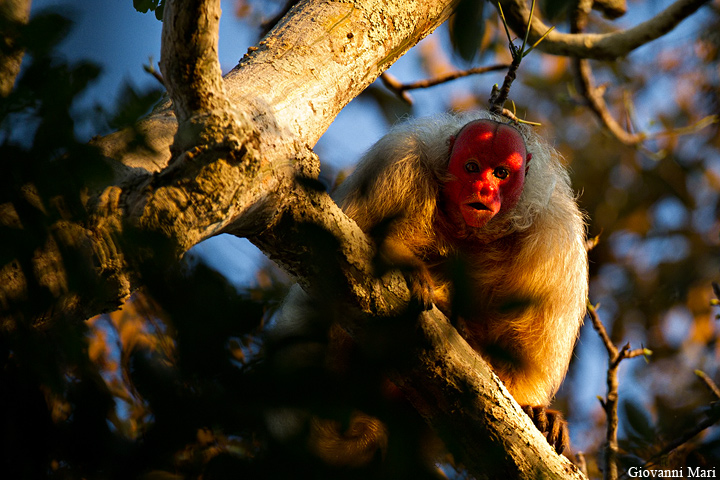
BALD UAKARI
Cacajao amuna
DESCRIPTION
Bald Uakari (Cacajao amuna) is commonly known as the Bald Uakari Monkey, characterized by its striking appearance with a hairless face and bright red skin. This primate is native to the Amazon rainforest, where it inhabits flooded forests and riverine environments. Socially, Bald Uakaris are known for their strong group dynamics, often seen foraging and playing together in the treetops.
FUN FACTS
- Bald Uakaris are known for their unique social behaviors, often engaging in grooming and play, which strengthens their social bonds
- Their bald faces are not just for show; they are thought to help regulate body temperature in their humid rainforest habitat.|These monkeys have a very limited range and are highly specialized for their environment, making them sensitive to changes in their habitat
- Their striking appearance has made them a subject of interest in both scientific research and conservation efforts
QUICK INFO
Lifespan15-20 years in the wild, up to 30 in captivity
Average Weight3-5 kg
Average Length45-65 cm
Diet TypeHerbivore
Social Structuregroup — they typically live in small to medium-sized groups that can range from 5 to 20 individuals.
Activity PatternDiurnal
Breeding SeasonYear-round, with peaks depending on food availability
- Habitat
- Bald Uakaris thrive in tropical rainforests, particularly in areas that experience seasonal flooding. They are often found in the canopy layer, where they can easily access their food sources.
- Biomes
- Tropical Rainforest
- Native Range
- The native range of the Bald Uakari includes the Amazon Basin, specifically in Brazil and parts of Peru.
- Continent
- South America
- Countries
- Brazil, Peru
- Diet
- Bald Uakaris primarily consume fruits, seeds, and nuts, with a particular preference for ripe fruits. They may also eat some leaves and flowers, depending on seasonal availability.
- Diet Type
- Herbivore
- Favorite Food
- fruits, seeds, nuts
- Social Structure
- group — they typically live in small to medium-sized groups that can range from 5 to 20 individuals.
- Activity Pattern
- Diurnal
- Group Size
- 5-20
- Territorial
- 0
 NT
NT
3-5 kg
Weight
45-65 cm
Length
- Coloration
- Bald Uakaris have a distinctive bald face with bright red skin and a body covered in short, coarse fur that is typically brown or gray.
- Sexual Dimorphism
- males are generally larger than females
- Lifespan
- 15-20 years in the wild, up to 30 in captivity
- Gestation Period
- 150 days
- Offspring per Birth
- 1
- Sexual Maturity
- 3-4 years
- Breeding Season
- Year-round, with peaks depending on food availability
VU
Vulnerable
IUCN Red List Status
- Population Status
- The population of Bald Uakaris is currently considered vulnerable due to habitat loss and hunting.
- Wild Population Estimate
- 10,000-20,000
- Population Trend
- Decreasing
- Endangered
- 1
- Threats
- Main threats to Bald Uakaris include deforestation and habitat destruction due to agriculture and logging. Additionally, hunting poses a significant risk to their populations.
- Conservation Program
- Conservation efforts are underway in some regions, focusing on habitat protection and restoration.
- Predators
- Main predators include large birds of prey and jaguars, which may target young or vulnerable individuals.
- Defense Mechanisms
- Bald Uakaris rely on their social structure and vocalizations to warn each other of potential threats.
- Found in Zoos
- Uncommon