


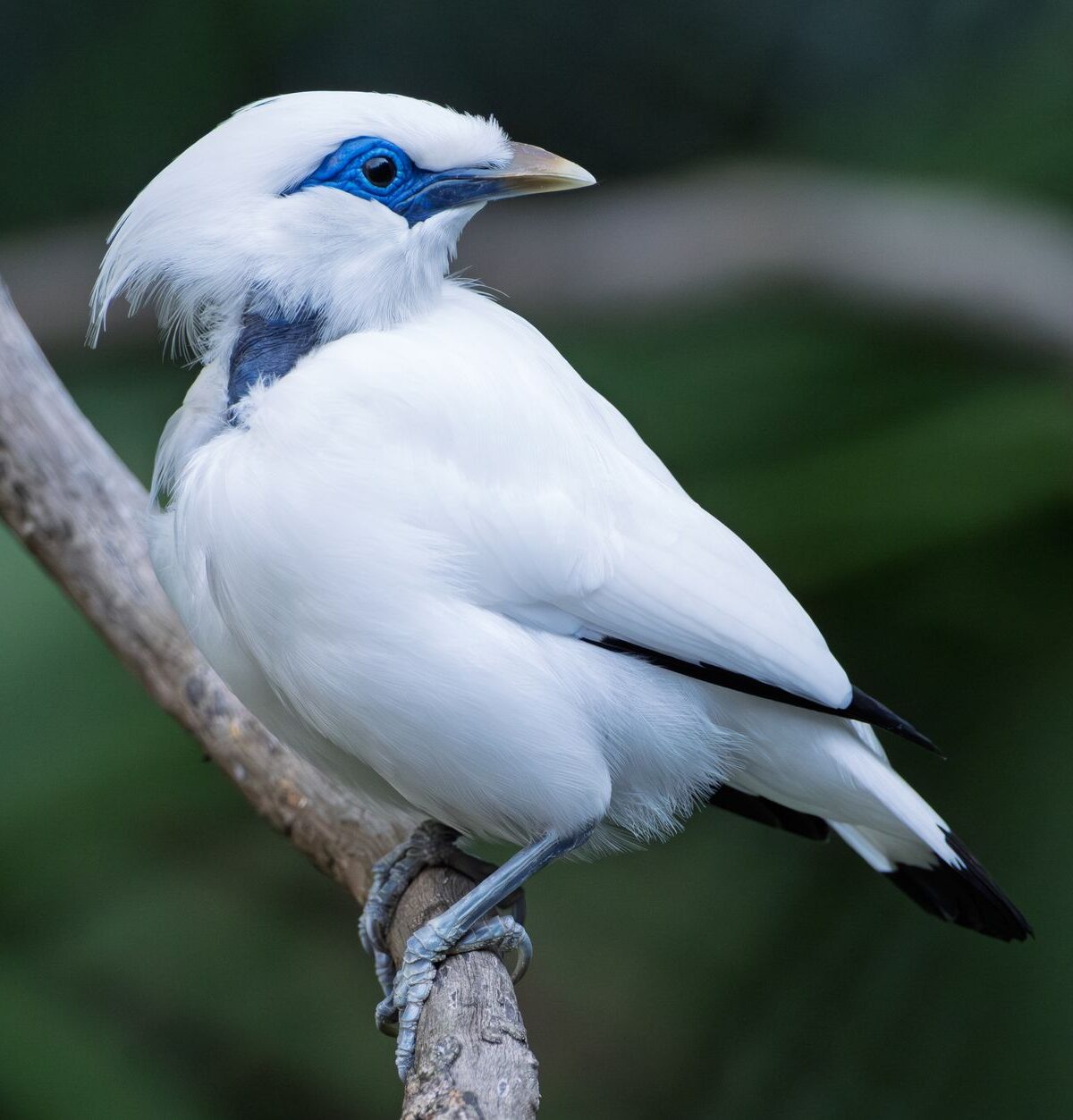
BALI MYNA
Leucopsar rothschildi
DESCRIPTION
Bali Myna, also known as the Bali Starling, is a striking bird native to Bali, Indonesia. It features a predominantly white plumage with a distinctive black crown and blue eye patches, making it easily recognizable. This species is known for its social behavior, often found in small groups, and its melodious calls that resonate through its natural habitat.
FUN FACTS
- Bali Myna is considered a national symbol of Indonesia and is often featured in cultural representations
- Its striking appearance has made it a popular choice for aviculture, but this has also contributed to its decline in the wild.|The Bali Myna was once thought to be extinct in the wild, but conservation efforts have helped to reintroduce it into its natural habitat
- These efforts highlight the importance of protecting endangered species and their ecosystems
QUICK INFO
Lifespan10-15 years in the wild, up to 20 years in captivi
Average Weight70-100 g
Average Length25-28 cm
Diet TypeOmnivore
Social StructureTypically found in pairs or small groups, Bali Myna exhibits social behaviors that include grooming and vocal communication.
Activity PatternDiurnal
Breeding SeasonSpring (March-May)
- Habitat
- Bali Myna inhabits open forests, woodlands, and agricultural areas. It prefers areas with plenty of trees for nesting and foraging.
- Biomes
- Tropical Rainforest, Savanna
- Native Range
- Endemic to Bali, Indonesia, with a very limited range.
- Continent
- Asia
- Countries
- Indonesia
- Diet
- Bali Myna primarily feeds on fruits, seeds, and insects. It forages in trees and on the ground, utilizing its strong beak to access various food sources.
- Diet Type
- Omnivore
- Favorite Food
- fruits, seeds, insects
- Social Structure
- Typically found in pairs or small groups, Bali Myna exhibits social behaviors that include grooming and vocal communication.
- Activity Pattern
- Diurnal
- Group Size
- 2-10
- Territorial
- 0
 LC
LC
70-100 g
Weight
25-28 cm
Length
- Coloration
- Predominantly white with a black crown and blue eye patches.
- Sexual Dimorphism
- Males and females are similar in appearance, making it difficult to distinguish between the sexes.
- Lifespan
- 10-15 years in the wild, up to 20 years in captivi
- Offspring per Birth
- 2-4
- Sexual Maturity
- 1-2 years
- Breeding Season
- Spring (March-May)
CR
Critically Endangered
IUCN Red List Status
- Population Status
- The population of Bali Myna is critically low due to habitat loss and illegal trapping.
- Wild Population Estimate
- Less than 1,000 individuals
- Population Trend
- Decreasing
- Endangered
- 1
- Threats
- Main threats include habitat destruction due to agriculture and urbanization, as well as illegal trapping for the pet trade. Conservation efforts are crucial to prevent extinction.
- Conservation Program
- Breeding programs in captivity and habitat restoration initiatives are underway.
- Predators
- Natural predators include birds of prey and snakes, but specific predator species are not well-documented.
- Defense Mechanisms
- Bali Myna relies on its ability to fly and its social behavior to evade predators.
- Compatible Animals
- Other small birds, such as finches and canaries, in controlled environments.
- Found in Zoos
- Uncommon