


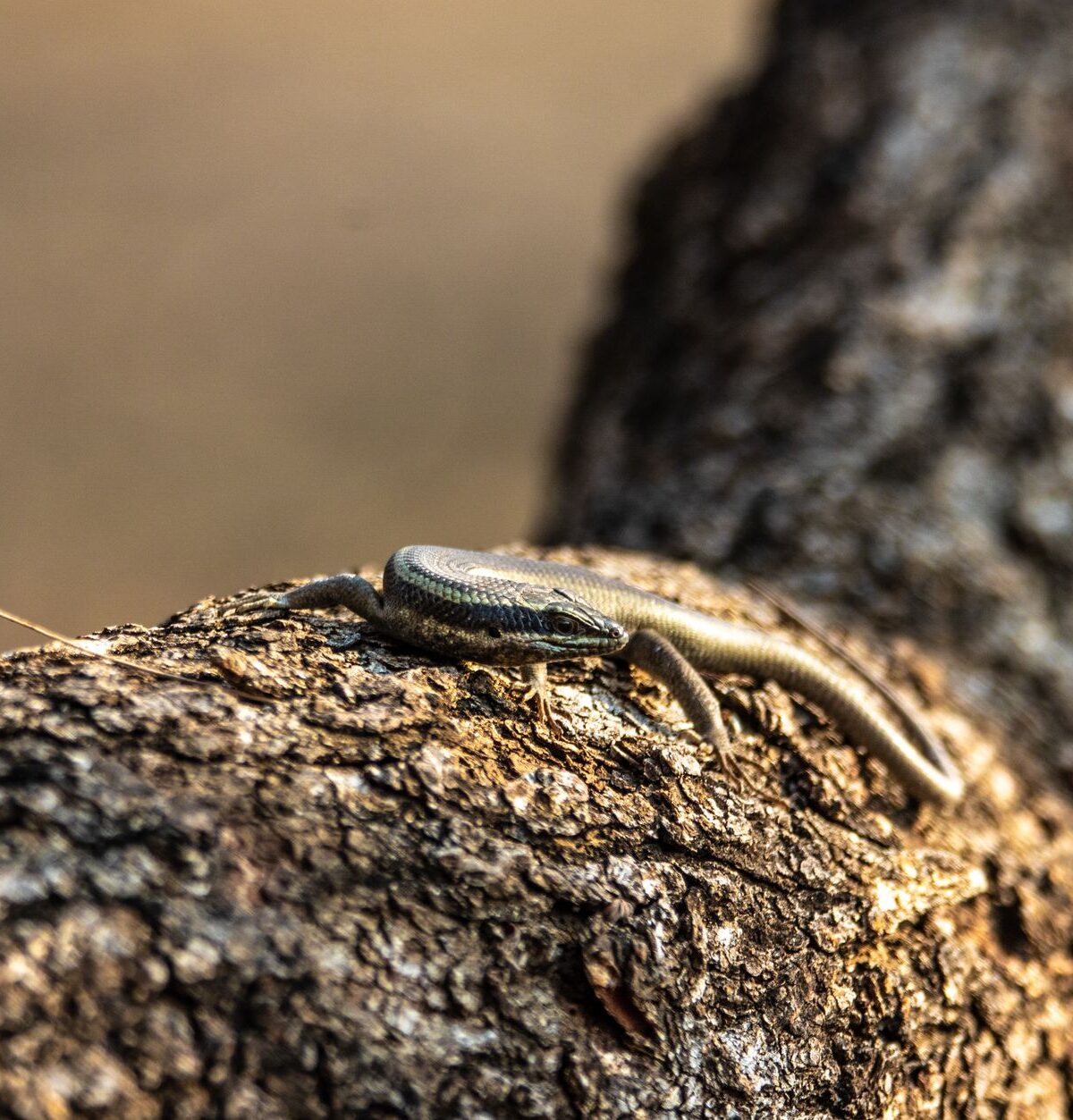
BANDED LIZARD
Lygosoma lineatum
DESCRIPTION
Banded Lizard (Lygosoma lineatum) is commonly known as the Striped Skink and Lineated Skink. This small lizard is characterized by its elongated body and distinct banding pattern, which provides effective camouflage in its natural habitat. It is primarily terrestrial, often found in leaf litter or under rocks, and exhibits a shy demeanor, retreating quickly when threatened.
FUN FACTS
- Banded Lizards are known for their remarkable ability to blend into their surroundings, making them difficult to spot in the wild
- They can also regenerate their tails if lost, a common trait among many lizard species, which helps them escape from predators.|These lizards are often mistaken for other skink species due to their similar appearance, but their unique banding pattern sets them apart
- They play an important role in their ecosystem by controlling insect populations, contributing to the balance of their habitats
QUICK INFO
Average Length10-15 cm
Diet TypeInsectivore
Social Structuresolitary
Activity PatternDiurnal
- Habitat
- Banded Lizards inhabit a variety of environments, including forests, grasslands, and scrublands. They prefer areas with ample cover, such as leaf litter and rocks, which provide shelter from predators.
- Biomes
- Temperate Forest, Grassland, Scrubland
- Native Range
- This species is native to Southeast Asia, particularly found in regions of Thailand, Malaysia, and Indonesia.
- Continent
- Asia
- Countries
- Thailand, Malaysia, Indonesia
- Diet
- Banded Lizards primarily feed on small insects and other invertebrates. They are opportunistic feeders, foraging actively during the day.
- Diet Type
- Insectivore
- Favorite Food
- small insects
- Social Structure
- solitary
- Activity Pattern
- Diurnal
- Group Size
- 1
- Territorial
- 0
 VU
VU
 LC
LC
10-15 cm
Length
- Coloration
- The coloration typically features a series of dark and light bands along its body, providing effective camouflage.
LC
Least Concern
IUCN Red List Status
- Population Status
- The population status of Banded Lizards is not well-documented, but they are generally considered to be common in their native range.
- Population Trend
- Stable
- Endangered
- 0
- Threats
- Main threats include habitat loss due to deforestation and urbanization. Additionally, they may be affected by the collection for the pet trade.
- Predators
- Birds of prey, snakes, and larger lizards are known predators of Banded Lizards.
- Defense Mechanisms
- They rely on their speed and camouflage to evade predators.
- Found in Zoos
- Uncommon