


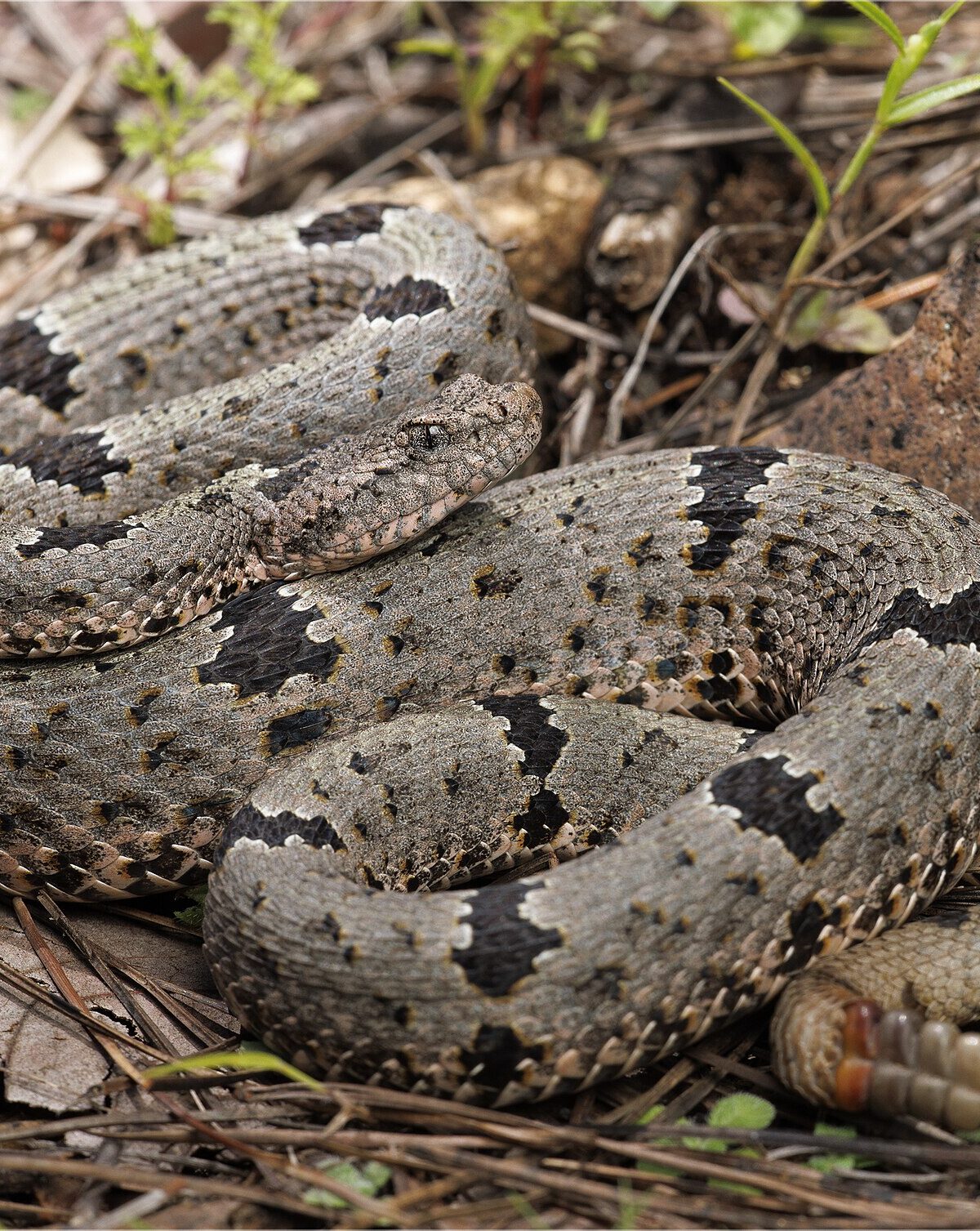
BANDED ROCK RATTLESNAKE
Crotalus lepidus
DESCRIPTION
Banded Rock Rattlesnake (Crotalus lepidus) is a small to medium-sized rattlesnake known for its distinctive banded pattern, which provides excellent camouflage against rocky terrains. This species exhibits a range of colors, typically featuring shades of gray, brown, and cream, with darker bands running across its body. Banded Rock Rattlesnakes are primarily found in mountainous regions and are known for their secretive behavior, often hiding among rocks and crevices.
FUN FACTS
- Banded Rock Rattlesnakes are known for their unique ability to regulate their body temperature by basking in the sun or seeking shade, which is crucial for their survival in harsh environments
- Additionally, they are viviparous, meaning they give birth to live young rather than laying eggs, which is relatively rare among reptiles.|These snakes have a fascinating method of hunting; they can detect the body heat of their prey using specialized pits located between their eyes and nostrils
- This adaptation allows them to hunt effectively even in low-light conditions, making them formidable predators in their rocky habitats
QUICK INFO
Lifespan10-20 years in the wild, up to 25 years in captivi
Average Weight0.5-1.5 kg
Average Length0.6-1.2 m
Diet TypeCarnivore
Social Structuresolitary
Activity PatternDiurnal
Breeding SeasonSpring (April-June)
- Habitat
- This species inhabits rocky outcrops, canyons, and mountainous areas, often favoring arid and semi-arid environments. They are adept at blending into their surroundings, which aids in both hunting and avoiding predators.
- Biomes
- Desert, Mountain
- Native Range
- Banded Rock Rattlesnakes are native to the southwestern United States and northern Mexico.
- Continent
- North America
- Countries
- United States, Mexico
- Diet
- Banded Rock Rattlesnakes primarily feed on small mammals, birds, and lizards. They use their heat-sensing pits to detect warm-blooded prey, striking with precision.
- Diet Type
- Carnivore
- Favorite Food
- small mammals, birds, lizards
- Social Structure
- solitary
- Activity Pattern
- Diurnal
- Group Size
- 1
- Territorial
- 1
 VU
VU

0.5-1.5 kg
Weight
0.6-1.2 m
Length
- Coloration
- gray, brown, and cream with darker bands
- Sexual Dimorphism
- males are generally smaller than females
- Lifespan
- 10-20 years in the wild, up to 25 years in captivi
- Gestation Period
- 90-100 days
- Offspring per Birth
- 3-10
- Sexual Maturity
- 2-3 years
- Breeding Season
- Spring (April-June)
LC
Least Concern
IUCN Red List Status
- Population Status
- The population of Banded Rock Rattlesnakes is currently stable, but habitat loss poses a potential threat.
- Wild Population Estimate
- unknown
- Population Trend
- Stable
- Endangered
- 0
- Threats
- Main threats include habitat destruction due to urban development and agriculture, as well as road mortality. Additionally, they face persecution from humans due to fear and misunderstanding.
- Predators
- birds of prey, larger snakes, mammals such as coyotes and foxes
- Defense Mechanisms
- Banded Rock Rattlesnakes use their cryptic coloration to blend into their environment, and they can also rattle their tails as a warning when threatened.
- Found in Zoos
- Uncommon