


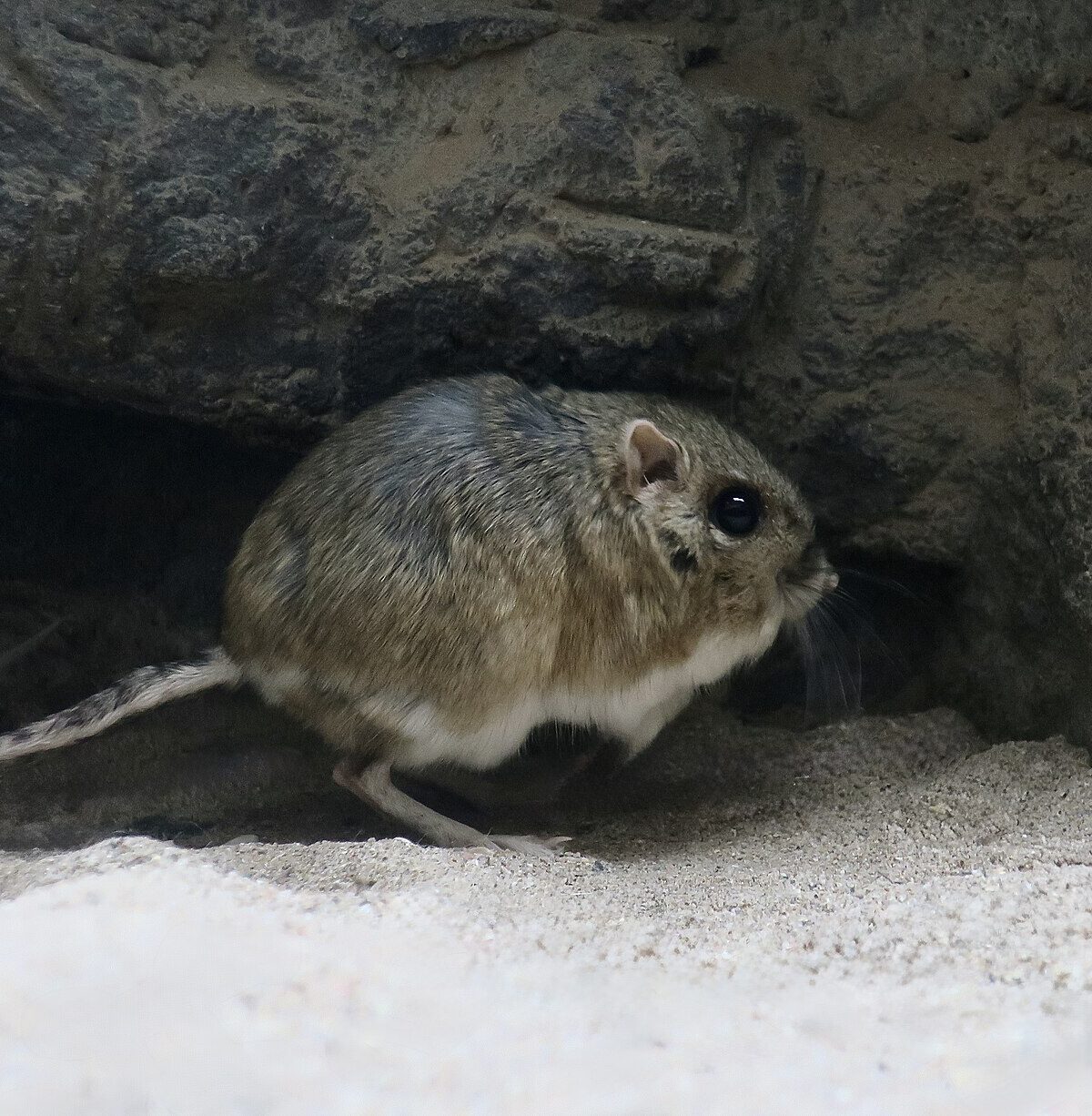
BANNER-TAILED KANGAROO RAT
Dipodomys spectabilis
DESCRIPTION
Banner-tailed Kangaroo Rat (Dipodomys spectabilis) is a medium-sized rodent known for its distinctive long tail and large hind legs, which are adapted for jumping. This species exhibits a sandy-colored fur that provides excellent camouflage in its arid desert habitat. They are primarily nocturnal, foraging for food at night and using their burrows to escape the heat of the day.
FUN FACTS
- Banner-tailed Kangaroo Rats can leap up to 9 feet in a single bound, making them one of the most agile rodents in their habitat
- They have specialized kidneys that allow them to conserve water efficiently, enabling them to survive in extremely dry environments.| These kangaroo rats are known for their unique method of communication, which includes a series of high-pitched calls and foot drumming to signal to others in their territory
QUICK INFO
Lifespan3-5 years in the wild, up to 7 years in captivity
Average Weight100-150 g
Average Length20-25 cm
Diet TypeHerbivore
Social Structuresolitary, they typically live alone except during mating season.
Activity PatternNocturnal
Breeding SeasonSpring to early summer
- Habitat
- Banner-tailed Kangaroo Rats inhabit arid and semi-arid regions, particularly in sandy or loose soils that facilitate burrowing. They create extensive burrow systems that provide shelter and help regulate their body temperature.
- Biomes
- Desert, Grassland
- Native Range
- They are native to the southwestern United States and parts of northern Mexico.
- Continent
- North America
- Countries
- United States, Mexico
- Diet
- They primarily feed on seeds, grains, and some green vegetation, which they gather and store in their burrows. Their diet is adapted to their desert environment, allowing them to survive with minimal water intake.
- Diet Type
- Herbivore
- Favorite Food
- seeds and grains
- Social Structure
- solitary, they typically live alone except during mating season.
- Activity Pattern
- Nocturnal
- Group Size
- 1
- Territorial
- 1
 LC
LC
 CR
CR
100-150 g
Weight
20-25 cm
Length
- Coloration
- sandy brown with a lighter underbelly
- Sexual Dimorphism
- males are generally larger than females
- Lifespan
- 3-5 years in the wild, up to 7 years in captivity
- Gestation Period
- 30 days
- Offspring per Birth
- 2-5
- Sexual Maturity
- 2-3 months
- Breeding Season
- Spring to early summer
LC
Least Concern
IUCN Red List Status
- Population Status
- The population is currently stable, but habitat loss poses a potential threat.
- Wild Population Estimate
- unknown
- Population Trend
- Stable
- Endangered
- 0
- Threats
- Main threats include habitat destruction due to urban development and agriculture. Additionally, predation by natural predators can impact local populations.
- Predators
- snakes, hawks, coyotes, and other small mammals
- Defense Mechanisms
- They rely on their speed and agility to escape predators, often using their burrows as a refuge.
- Found in Zoos
- Uncommon