


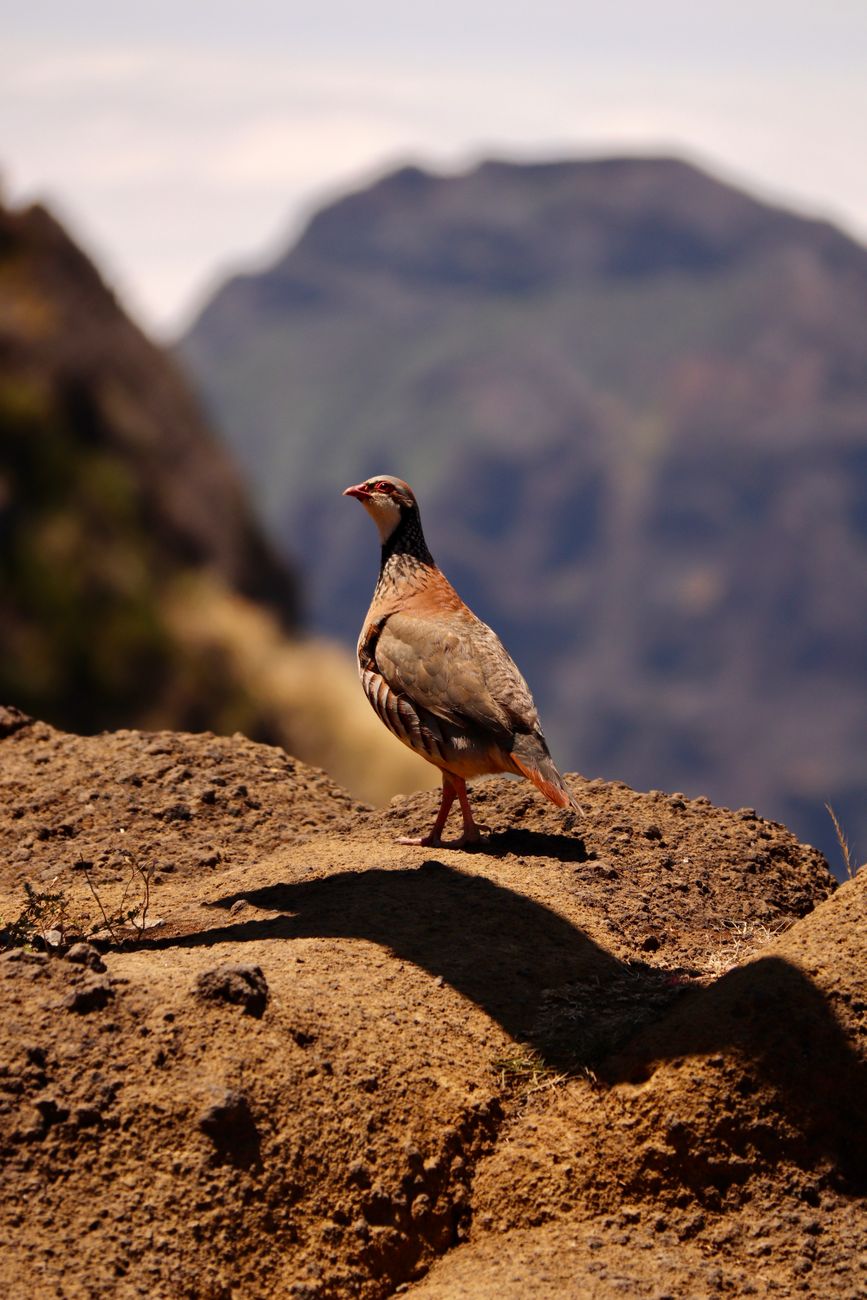
BARBARY PARTRIDGE
Alectoris barbara
DESCRIPTION
Barbary Partridge (Alectoris barbara) is a medium-sized game bird characterized by its robust body and distinctive plumage. It has a grayish-brown coloration with a striking black and white face pattern, making it easily recognizable. This species is known for its strong, swift flight and is often found in pairs or small groups, foraging on the ground in search of food.
FUN FACTS
- Barbary Partridges are known for their elaborate courtship displays, where males perform a series of calls and postures to attract females
- They are also capable of flying short distances, but prefer to stay on the ground where they feel safer and can forage more effectively.|These birds have a unique social structure, often forming small groups that help them protect against predators
- Their vocalizations are not only used for communication but also play a role in establishing territory among males
QUICK INFO
Lifespan5-10 years in the wild
Average Weight0.5-0.7 kg
Average Length30-35 cm
Diet TypeOmnivore
Social StructureThey are often found in pairs or small groups, typically consisting of a male and several females.
Activity PatternDiurnal
Breeding SeasonSpring (March-May)
- Habitat
- They inhabit open, dry grasslands, scrublands, and rocky hillsides, often favoring areas with dense cover for nesting. These birds are well-adapted to arid environments.
- Biomes
- Grassland, Scrubland
- Native Range
- The native range of the Barbary Partridge includes North Africa and parts of southern Europe, particularly in the Mediterranean region.
- Continent
- Africa, Europe
- Countries
- Morocco, Algeria, Tunisia, Libya, Spain, Portugal, France, Italy
- Diet
- Barbary Partridges primarily feed on seeds, grains, and various plant materials, occasionally including insects in their diet.
- Diet Type
- Omnivore
- Favorite Food
- seeds, grains, plant materials
- Social Structure
- They are often found in pairs or small groups, typically consisting of a male and several females.
- Activity Pattern
- Diurnal
- Group Size
- 2-10
- Territorial
- 1

 VU
VU
0.5-0.7 kg
Weight
30-35 cm
Length
- Coloration
- Grayish-brown with a distinctive black and white face pattern
- Sexual Dimorphism
- Males are generally more colorful and larger than females.
- Lifespan
- 5-10 years in the wild
- Offspring per Birth
- 8-12 eggs
- Sexual Maturity
- 1 year
- Breeding Season
- Spring (March-May)
LC
Least Concern
IUCN Red List Status
- Population Status
- The population of Barbary Partridge is currently stable, although habitat loss poses a potential threat.
- Wild Population Estimate
- 100,000-200,000
- Population Trend
- Stable
- Endangered
- 0
- Threats
- Main threats include habitat destruction due to agriculture and urban development, as well as hunting pressures. Conservation efforts are needed to maintain their populations in the wild.
- Predators
- Foxes, birds of prey, and domestic cats are known predators of Barbary Partridges.
- Defense Mechanisms
- They rely on their camouflage and ability to run quickly to escape predators.
- Found in Zoos
- Uncommon