


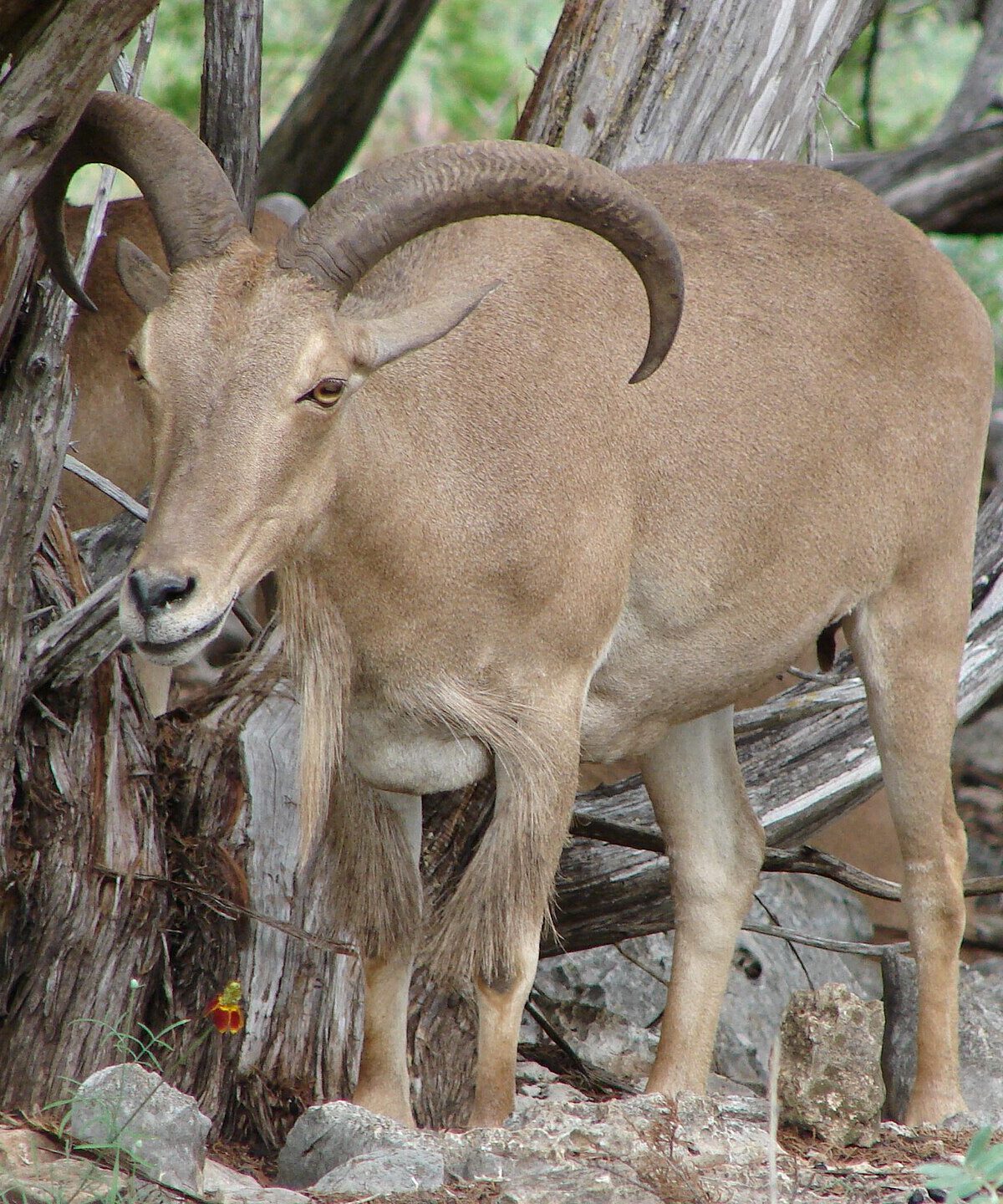
BARBARY SHEEP
Ammotragus lervia
DESCRIPTION
The Barbary sheep, also known as the aoudad, is a robust and muscular species characterized by its distinctive curved horns that can reach lengths of up to 1 meter in males. Their coat is a sandy or reddish-brown color, which helps them blend into their rocky desert habitats. These animals are well-adapted to arid environments, exhibiting behaviors such as climbing steep terrains and seeking shelter during the hottest parts of the day.
FUN FACTS
- Barbary sheep are known for their impressive climbing abilities, often navigating steep and rocky terrains with ease
- This skill not only helps them escape predators but also allows them to access food sources that are out of reach for many other herbivores
- | The species has been introduced to various regions outside its native range, including parts of the United States, where they are often hunted for sport
- Their adaptability to different environments has made them a popular choice for wildlife enthusiasts and hunters alike
QUICK INFO
Lifespan10-15 years in the wild, up to 20 years in captivi
Average Weight90-140 kg
Average Length1.2-1.5 m
Diet TypeHerbivore
Social StructureThey typically live in groups, often consisting of females and their young, while males may be solitary or form bachelor groups.
Activity PatternDiurnal
Breeding SeasonFall (September-November)
- Habitat
- Barbary sheep inhabit rocky, mountainous areas and steep cliffs, which provide them with both shelter and a vantage point to spot predators. They are often found in arid and semi-arid regions, where water sources are scarce.
- Biomes
- Desert, Grassland, Mountain
- Native Range
- Originally native to North Africa, particularly in the Atlas Mountains and the Sahara Desert.
- Continent
- Africa
- Countries
- Morocco, Algeria, Tunisia, Libya
- Diet
- Barbary sheep are herbivores that primarily graze on grasses, shrubs, and other vegetation. They are known to be selective feeders, often choosing the most nutritious plants available.
- Diet Type
- Herbivore
- Favorite Food
- grasses, shrubs
- Social Structure
- They typically live in groups, often consisting of females and their young, while males may be solitary or form bachelor groups.
- Activity Pattern
- Diurnal
- Group Size
- 5-20
- Territorial
- 0
 LC
LC
LC
LC
90-140 kg
Weight
1.2-1.5 m
Length
0.9-1.1 m at shoulder
Height (Shoulder)
- Coloration
- sandy or reddish-brown with lighter underparts
- Sexual Dimorphism
- Males are larger and have more prominent horns than females.
- Lifespan
- 10-15 years in the wild, up to 20 years in captivi
- Gestation Period
- 150 days
- Offspring per Birth
- 1
- Sexual Maturity
- 2-3 years
- Breeding Season
- Fall (September-November)
LC
Least Concern
IUCN Red List Status
- Population Status
- The population of Barbary sheep is currently stable in some areas but has declined in others due to habitat loss and hunting.
- Wild Population Estimate
- 20,000-30,000
- Population Trend
- Stable
- Endangered
- 0
- Threats
- Main threats include habitat destruction due to agriculture and urbanization, as well as hunting for sport and meat. In some regions, competition with domestic livestock also poses a challenge.
- Predators
- Mountain lions, wolves, and humans are known predators of Barbary sheep.
- Defense Mechanisms
- They rely on their agility and ability to escape to steep cliffs to avoid predators.
- Compatible Animals
- none
- Found in Zoos
- Uncommon