


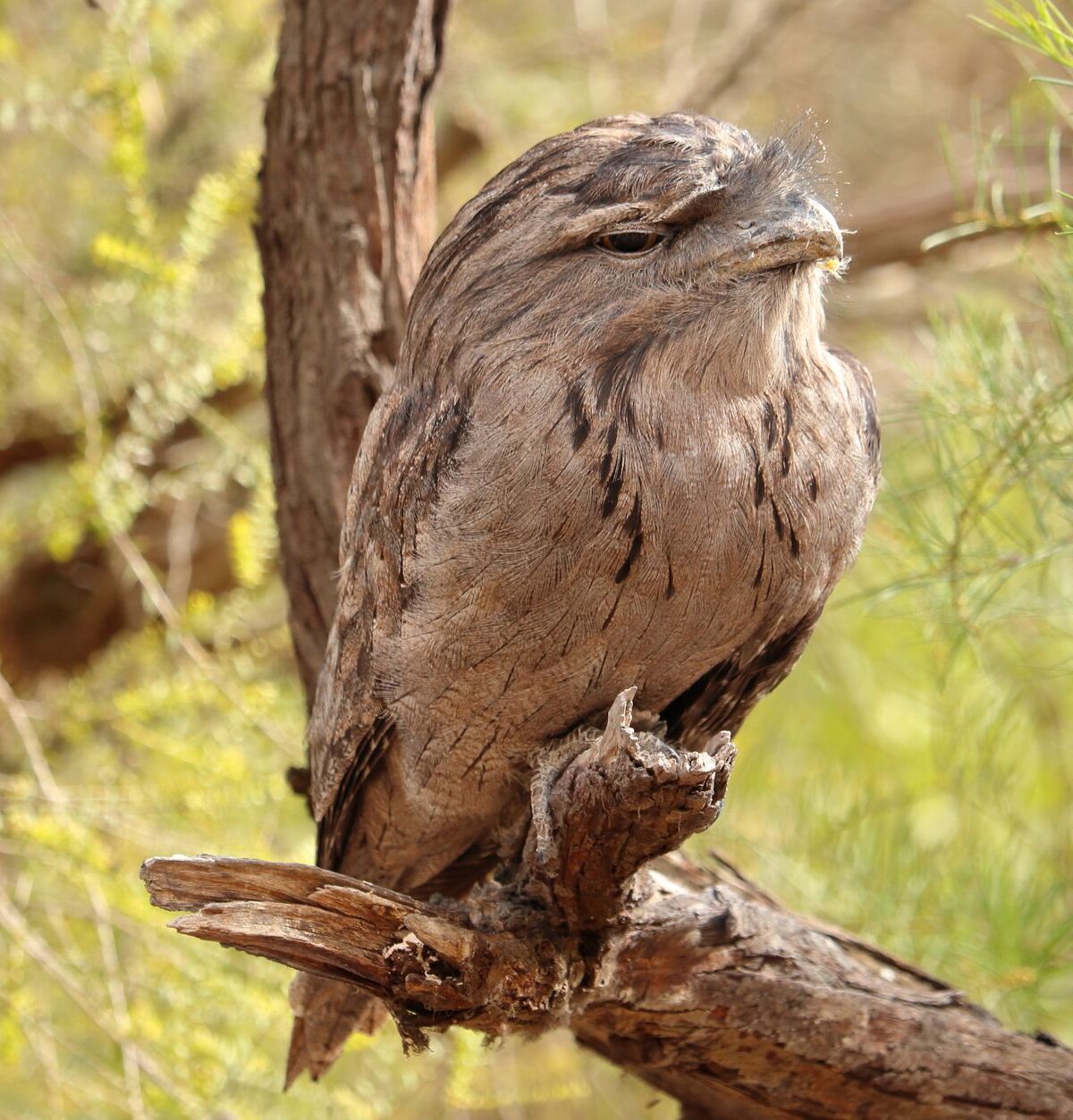
BARKING OWL
Ninox connivens
DESCRIPTION
Barking Owl (Ninox connivens) is also known as the Mopoke and Tawny Frogmouth, characterized by its distinctive barking call that resembles a dog. This medium-sized owl has a robust body, large yellow eyes, and a mottled brown and white plumage that provides excellent camouflage against tree bark. Barking Owls are primarily nocturnal hunters, often seen perched quietly during the day and becoming active at night to hunt for prey.
FUN FACTS
- Barking Owls are known for their unique vocalizations, which can sound remarkably like a dog barking, making them one of the more distinctive owl species in Australia
- They have excellent night vision, allowing them to hunt effectively in low light conditions, and their silent flight helps them approach prey without being detected.| These owls are also known to engage in playful behavior, such as chasing each other through the trees, which is not commonly observed in many other owl species
- Their ability to adapt to urban environments has allowed them to thrive in areas where natural habitats have been altered
QUICK INFO
LifespanUp to 10 years in the wild.
Average Weight300-500 g
Average Length35-45 cm
Diet TypeCarnivore
Social StructureTypically solitary or in pairs, Barking Owls establish and defend their territories vigorously.
Activity PatternNocturnal
Breeding SeasonSpring to early summer (August to December)
- Habitat
- Barking Owls inhabit open forests, woodlands, and sometimes urban areas where there are sufficient trees for roosting. They prefer habitats with a mix of open spaces and dense foliage for hunting and nesting.
- Biomes
- Temperate Forest, Savanna
- Native Range
- Barking Owls are native to Australia and New Guinea, found in various regions across these areas.
- Continent
- Australia, Oceania
- Countries
- Australia, New Guinea
- Diet
- Barking Owls primarily feed on small mammals, birds, and insects, using their keen eyesight and hearing to locate prey. They are known to hunt from a perch, swooping down to catch their food.
- Diet Type
- Carnivore
- Favorite Food
- small mammals, birds, insects
- Social Structure
- Typically solitary or in pairs, Barking Owls establish and defend their territories vigorously.
- Activity Pattern
- Nocturnal
- Group Size
- 1-2
- Territorial
- 1

300-500 g
Weight
35-45 cm
Length
- Coloration
- Mottled brown and white plumage that resembles tree bark.
- Sexual Dimorphism
- Males and females are similar in appearance, but females are generally larger.
- Lifespan
- Up to 10 years in the wild.
- Offspring per Birth
- 2-4
- Sexual Maturity
- 1-2 years
- Breeding Season
- Spring to early summer (August to December)
LC
Least Concern
IUCN Red List Status
- Population Status
- The population of Barking Owls is currently stable, but habitat loss poses a potential threat.
- Wild Population Estimate
- Unknown
- Population Trend
- Stable
- Endangered
- 0
- Threats
- Main threats include habitat destruction due to logging and land clearing for agriculture. Additionally, predation by introduced species such as cats can impact local populations.
- Predators
- Cats, foxes, and larger birds of prey.
- Defense Mechanisms
- Barking Owls rely on their camouflage to avoid detection by predators, often remaining motionless against tree bark.
- Found in Zoos
- Uncommon