


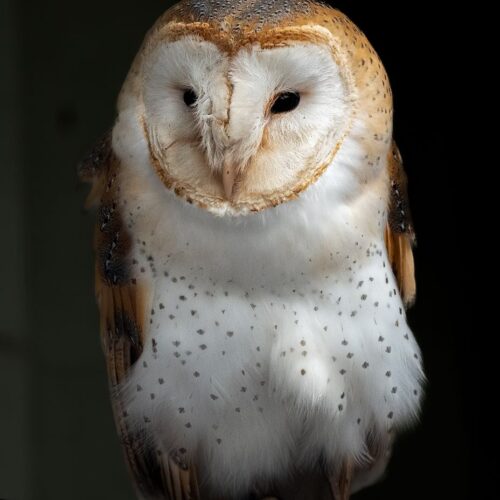
BARN OWL
Tyto alba
DESCRIPTION
The Barn Owl (Tyto alba) is a medium-sized owl known for its distinctive heart-shaped face and silent flight. It is found in a variety of habitats and is recognized for its ghostly appearance and haunting call.
FUN FACTS
- Barn Owls can rotate their heads up to 270 degrees | They have excellent night vision and can hunt in complete darkness | Their heart-shaped face helps to funnel sound to their ears for better hearing
QUICK INFO
Lifespan4-5 years in the wild, up to 20 years in captivity
Average Weight300-600 g
Average Length30-40 cm
Diet TypeCarnivore
Social Structuresolitary or in pairs, typically seen alone except during breeding season
Activity PatternNocturnal
Breeding SeasonSpring to early summer
- Habitat
- Barn Owls inhabit open countryside, grasslands, and agricultural areas, often nesting in old buildings or tree cavities. They prefer areas with abundant prey and suitable roosting sites.
- Biomes
- Grassland, Temperate Forest, Agricultural
- Native Range
- Barn Owls are found on every continent except Antarctica, with a wide distribution across North America, Europe, Asia, and Australia.
- Continent
- North America, Europe, Asia, Australia, Africa
- Countries
- United States, Canada, United Kingdom, Australia, India, South Africa
- Diet
- Barn Owls primarily feed on small mammals, particularly rodents. They are skilled hunters, using their acute hearing to locate prey in darkness.
- Diet Type
- Carnivore
- Favorite Food
- mice, voles, and other small mammals
- Social Structure
- solitary or in pairs, typically seen alone except during breeding season
- Activity Pattern
- Nocturnal
- Group Size
- 1-2
- Territorial
- 1
 CR
CR
300-600 g
Weight
30-40 cm
Length
- Coloration
- pale, mottled brown and white with a distinctive heart-shaped face
- Sexual Dimorphism
- males are generally smaller and have lighter coloration than females
- Lifespan
- 4-5 years in the wild, up to 20 years in captivity
- Offspring per Birth
- 2-18
- Sexual Maturity
- 1 year
- Breeding Season
- Spring to early summer
LC
Least Concern
IUCN Red List Status
- Population Status
- The Barn Owl population is currently stable in many areas, but it faces threats in others.
- Wild Population Estimate
- 1,000,000-4,000,000
- Population Trend
- Stable
- Endangered
- 0
- Threats
- Habitat loss, rodenticide use, and human disturbance are significant threats to Barn Owls. They are also vulnerable to vehicle collisions.
- Predators
- larger birds of prey, such as eagles and hawks
- Defense Mechanisms
- Barn Owls rely on their camouflage and silent flight to avoid detection by predators.
- Found in Zoos
- Uncommon