


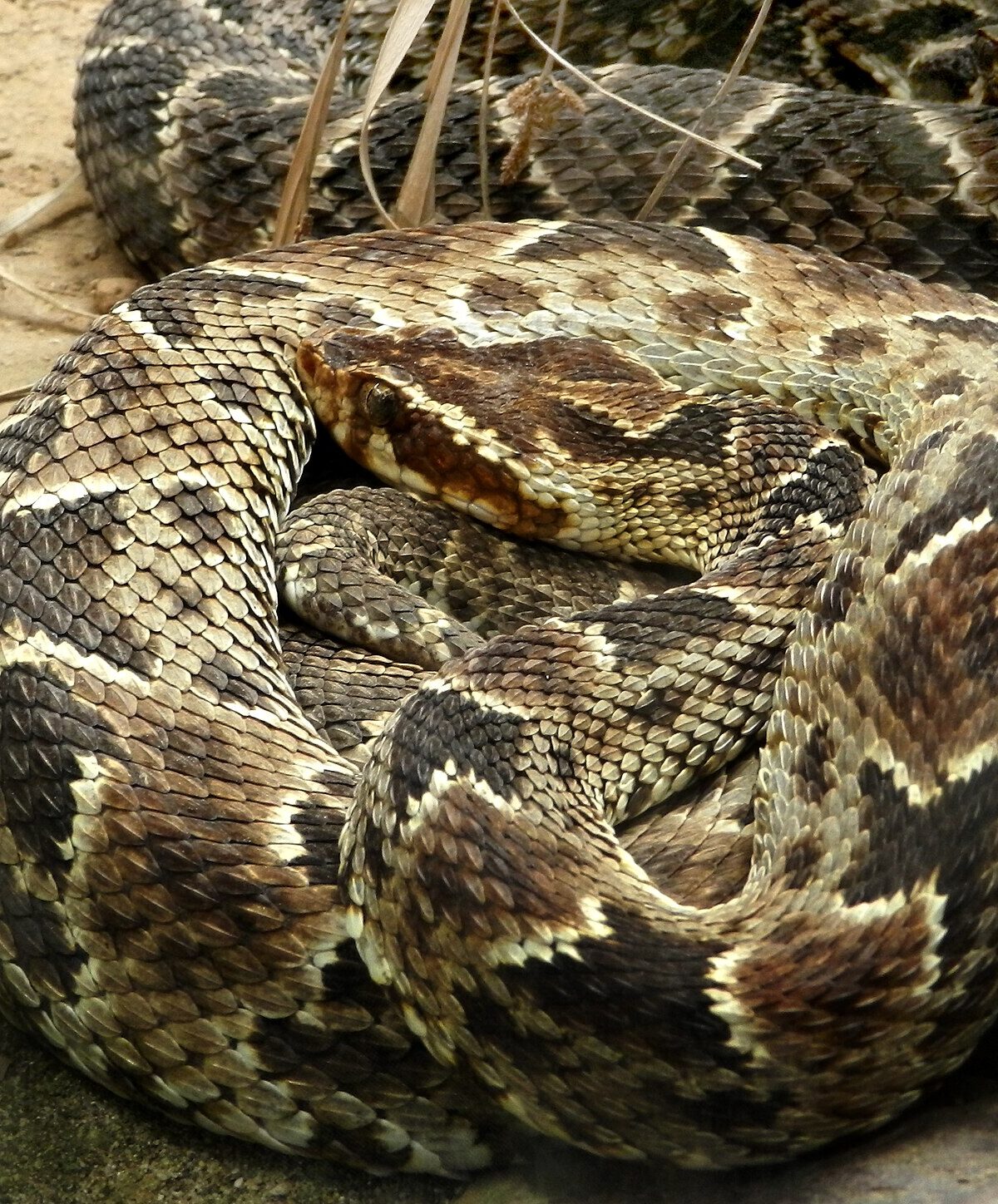
BARNETT’S LANCEHEAD
Bothrops barnetti
DESCRIPTION
Barnett’s Lancehead (Bothrops barnetti) is a venomous pit viper species endemic to the tropical forests of South America. It is characterized by its distinctive coloration, which typically includes shades of brown and green, allowing it to blend seamlessly into its forested habitat. This species is primarily arboreal, often found resting on branches or in leaf litter, and is known for its ambush hunting strategy, waiting for unsuspecting prey to come within striking distance.
FUN FACTS
- Barnett’s Lancehead is named after the herpetologist who first described the species, highlighting the importance of scientific research in understanding biodiversity
- | This snake is part of a group known as pit vipers, which possess heat-sensing pits that allow them to detect warm-blooded prey even in complete darkness
QUICK INFO
Lifespan10-15 years in the wild
Average Length1.2-1.5 m
Diet TypeCarnivore
Social Structuresolitary
Activity PatternNocturnal
Breeding SeasonSpring (March-May)
- Habitat
- This species inhabits humid tropical forests, often favoring areas with dense vegetation. It is typically found at elevations ranging from lowland to mid-montane regions.
- Biomes
- Tropical Rainforest
- Native Range
- Barnett’s Lancehead is native to the Amazon Basin, specifically found in parts of Brazil and surrounding regions.
- Continent
- South America
- Countries
- Brazil
- Diet
- Barnett’s Lancehead primarily feeds on small mammals and birds, utilizing its potent venom to immobilize prey. It employs a sit-and-wait strategy, relying on camouflage to ambush its food.
- Diet Type
- Carnivore
- Favorite Food
- small mammals, birds
- Social Structure
- solitary
- Activity Pattern
- Nocturnal
- Group Size
- 1
- Territorial
- 0
 VU
VU
1.2-1.5 m
Length
- Coloration
- brown and green with darker patterns for camouflage
- Lifespan
- 10-15 years in the wild
- Gestation Period
- 6-7 months
- Offspring per Birth
- 5-15
- Sexual Maturity
- 2-3 years
- Breeding Season
- Spring (March-May)
VU
Vulnerable
IUCN Red List Status
- Population Status
- The population status of Barnett’s Lancehead is not well-documented, but habitat loss poses a potential threat.
- Population Trend
- Decreasing
- Endangered
- 1
- Threats
- Main threats include habitat destruction due to deforestation and human encroachment. Additionally, the illegal pet trade poses a risk to local populations.
- Predators
- Birds of prey, larger snakes, and mammals such as raccoons may prey on Barnett’s Lancehead.
- Defense Mechanisms
- Barnett’s Lancehead relies on its cryptic coloration for camouflage and can deliver a potent venom to deter predators.
- Found in Zoos
- Rare