


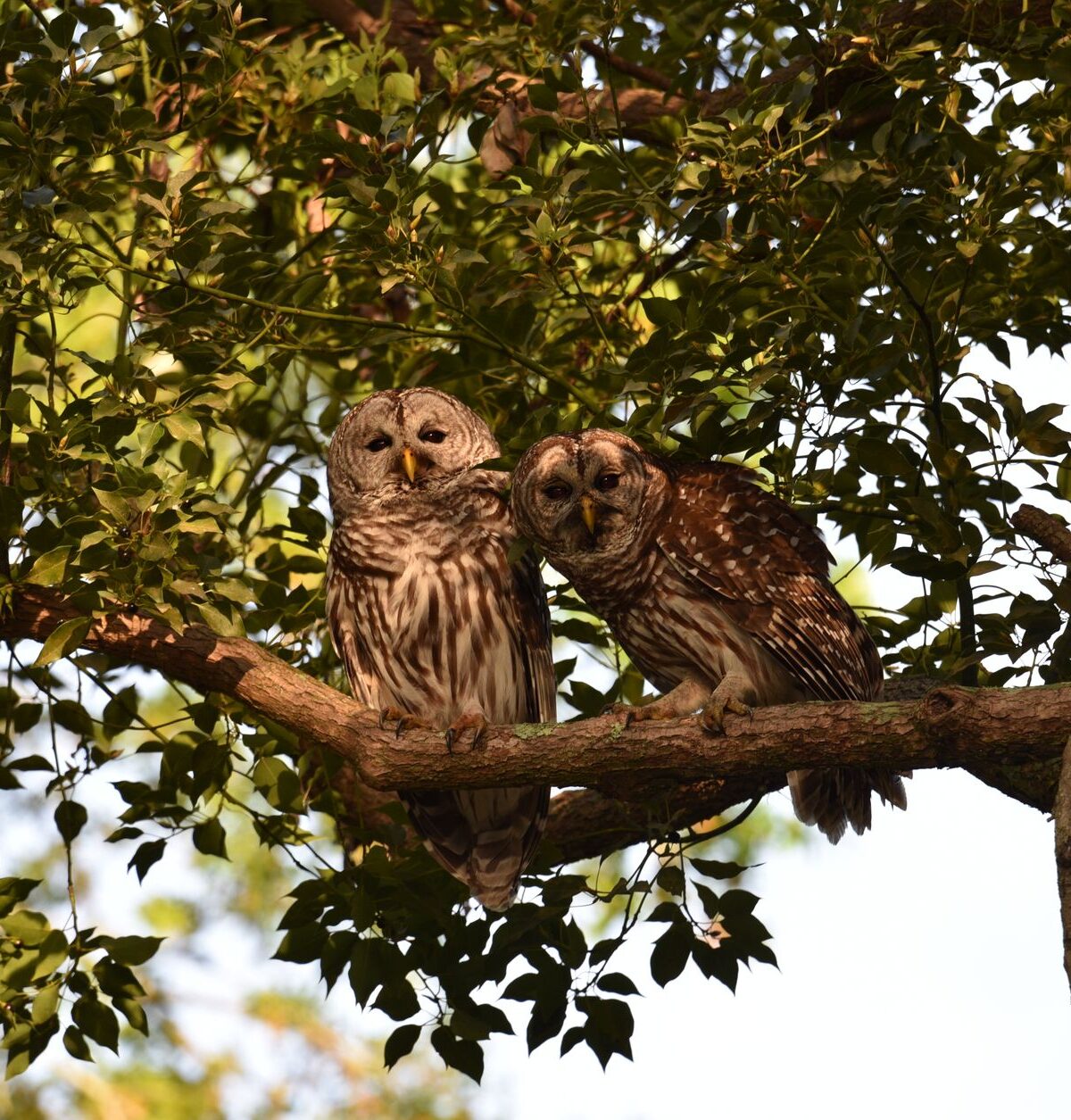
BARRED OWL
Strix varia
DESCRIPTION
Barred Owl (Strix varia) is a large, stocky owl known for its distinctive brown and white striped plumage. It has a rounded head, dark eyes, and a facial disc that helps to funnel sound, making it an effective nocturnal predator. This species is often found in wooded areas and is known for its characteristic hooting call, which can be heard echoing through its forested habitat.
FUN FACTS
- Barred Owls are known for their unique vocalizations, which sound like a series of hoots that can be interpreted as 'Who cooks for you?'
- This distinctive call is not only a means of communication but also serves to establish territory among other owls
- | Unlike many other owl species, Barred Owls are quite adaptable and can thrive in urban environments, often being spotted in parks and suburban areas
- Their ability to hunt effectively in various habitats has contributed to their successful expansion across North America
QUICK INFO
Lifespan10-15 years in the wild, up to 25 years in captivi
Average Weight500-1,000 g
Average Length40-63 cm
Diet TypeCarnivore
Social Structuresolitary, pairs during breeding season
Activity PatternNocturnal
Breeding SeasonWinter (January-March)
- Habitat
- Barred Owls inhabit mature forests, particularly those with a mix of deciduous and coniferous trees. They prefer areas near water sources such as rivers and swamps, which provide ample hunting opportunities.
- Biomes
- Temperate Forest, Wetlands
- Native Range
- Barred Owls are native to North America, ranging from southern Canada to the eastern and western United States.
- Continent
- North America
- Countries
- Canada, United States
- Diet
- Barred Owls primarily feed on small mammals, birds, and occasionally amphibians. They are skilled hunters, using their excellent hearing and vision to locate prey in the dark.
- Diet Type
- Carnivore
- Favorite Food
- Rodents, birds
- Social Structure
- solitary, pairs during breeding season
- Activity Pattern
- Nocturnal
- Group Size
- 1-2
- Territorial
- 1
 LC
LC
500-1,000 g
Weight
40-63 cm
Length
- Coloration
- Brown and white striped feathers with a mottled appearance
- Sexual Dimorphism
- Females are generally larger than males
- Lifespan
- 10-15 years in the wild, up to 25 years in captivi
- Offspring per Birth
- 2-4
- Sexual Maturity
- 1 year
- Breeding Season
- Winter (January-March)
LC
Least Concern
IUCN Red List Status
- Population Status
- The Barred Owl population is currently stable, though it has expanded its range in recent decades.
- Wild Population Estimate
- Unknown, but considered common in suitable habitats
- Population Trend
- Stable
- Endangered
- 0
- Threats
- Main threats include habitat loss due to logging and urban development. Competition with the invasive Great Horned Owl can also impact local Barred Owl populations.
- Predators
- Great Horned Owls, larger raptors, and humans
- Defense Mechanisms
- Barred Owls rely on their camouflage and ability to remain still to avoid detection by predators.
- Found in Zoos
- Uncommon