


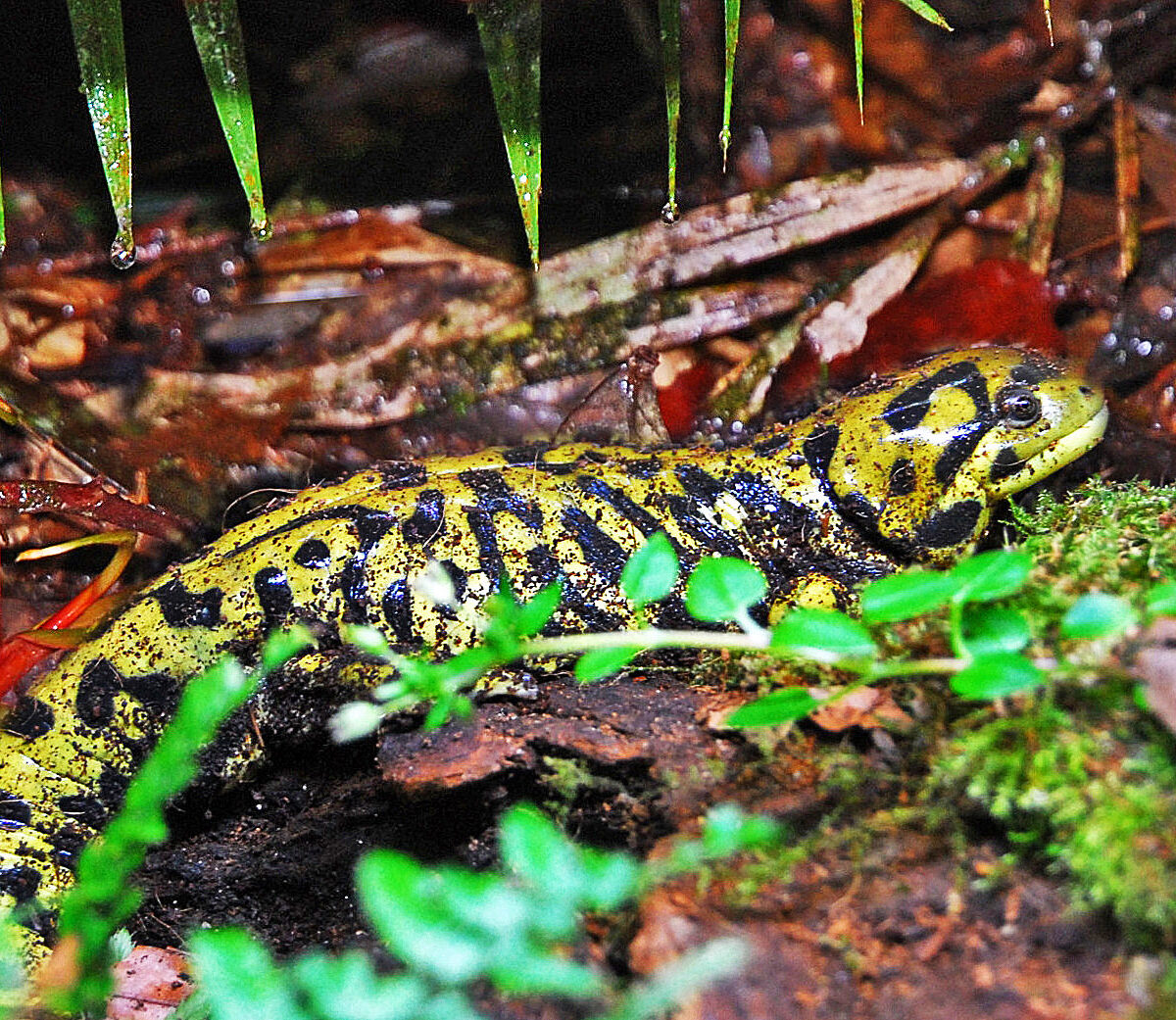
BARRED TIGER SALAMANDER
Ambystoma mavortium
DESCRIPTION
Barred Tiger Salamander (Ambystoma mavortium) is commonly known as the Western Tiger Salamander. This species is characterized by its striking yellow or white bars against a dark background, which provides effective camouflage in its natural habitat. They are primarily nocturnal and spend much of their time underground in burrows, emerging during the breeding season or after heavy rains to hunt and mate.
FUN FACTS
- Barred Tiger Salamanders have a unique ability to regenerate lost limbs, which is a fascinating trait shared by many amphibians
- Additionally, they undergo a remarkable transformation from aquatic larvae to terrestrial adults, showcasing a dramatic change in their morphology and lifestyle
QUICK INFO
Lifespan10-15 years in the wild, up to 25 years in captivi
Average Weight50-100 g
Average Length20-25 cm
Diet TypeCarnivore
Social Structuresolitary
Activity PatternNocturnal
Breeding SeasonSpring (March-May)
- Habitat
- These salamanders are typically found in grasslands, open woodlands, and near temporary ponds where they breed. They prefer moist environments that provide ample cover and access to food sources.
- Biomes
- Grassland, Temperate Forest
- Native Range
- Barred Tiger Salamanders are native to North America, primarily found in the western United States and parts of Canada.
- Continent
- North America
- Countries
- United States, Canada
- Diet
- Barred Tiger Salamanders are carnivorous, primarily feeding on insects, worms, and other small invertebrates. They are opportunistic feeders and will consume a variety of prey items available in their environment.
- Diet Type
- Carnivore
- Favorite Food
- insects, worms
- Social Structure
- solitary
- Activity Pattern
- Nocturnal
- Group Size
- 1-2
- Territorial
- 0
 VU
VU
 LC
LC

50-100 g
Weight
20-25 cm
Length
- Coloration
- dark background with yellow or white bars
- Sexual Dimorphism
- males are typically larger than females
- Lifespan
- 10-15 years in the wild, up to 25 years in captivi
- Offspring per Birth
- 100-300
- Sexual Maturity
- 2-3 years
- Breeding Season
- Spring (March-May)
LC
Least Concern
IUCN Red List Status
- Population Status
- The population of Barred Tiger Salamanders is currently stable in many areas, but some local populations are declining due to habitat loss.
- Wild Population Estimate
- unknown
- Population Trend
- Stable
- Endangered
- 0
- Threats
- Main threats include habitat destruction due to urban development and agriculture, as well as pollution and climate change. These factors can lead to decreased breeding sites and food availability.
- Predators
- birds, snakes, larger amphibians, mammals
- Defense Mechanisms
- Barred Tiger Salamanders can secrete toxins through their skin as a defense mechanism against predators.
- Found in Zoos
- Uncommon