


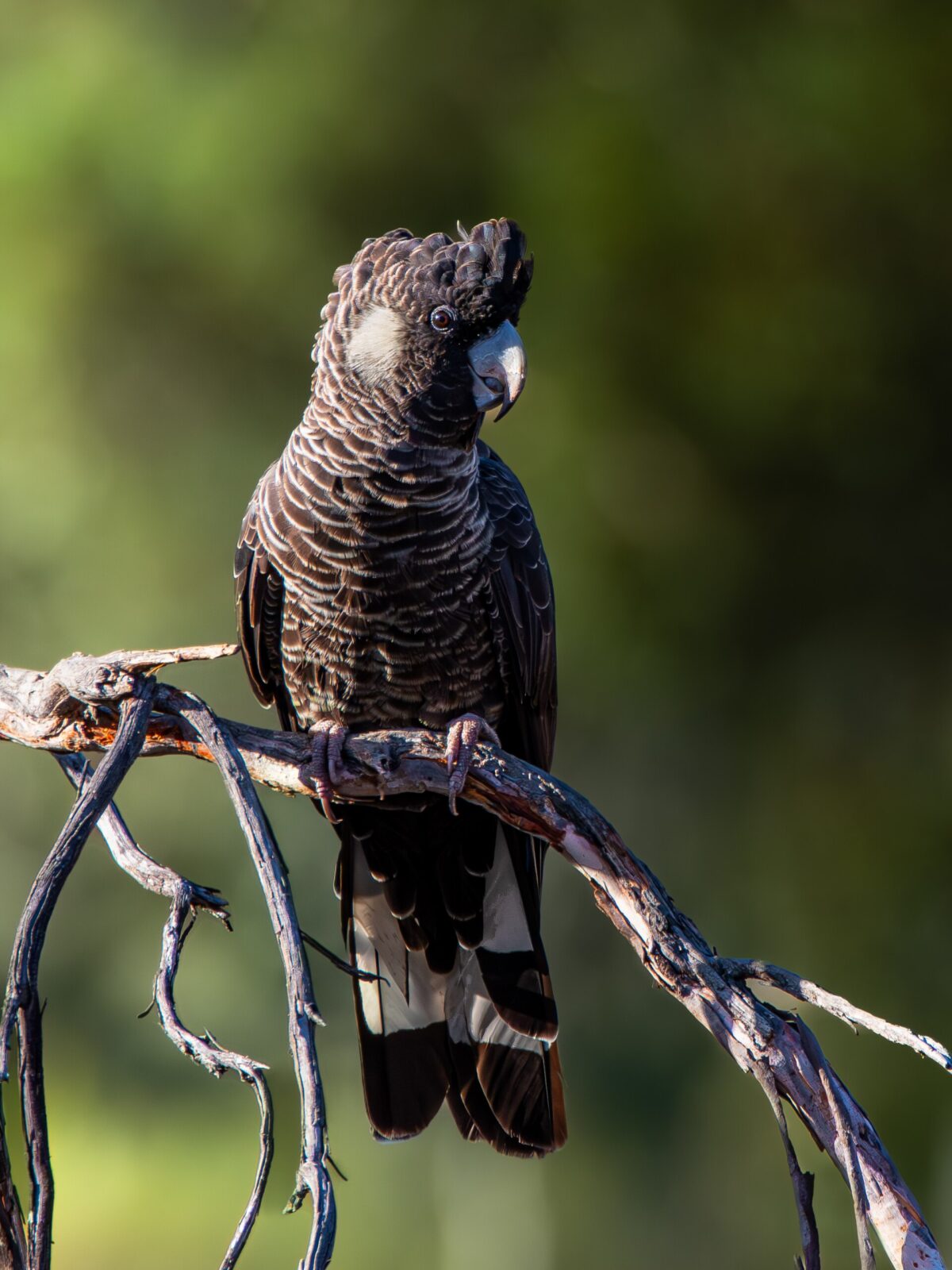
BAUDIN'S COCKATOO
Calyptorhynchus baudinii
DESCRIPTION
Baudin's Cockatoo (Calyptorhynchus baudinii) is also known as Baudin's Black Cockatoo, characterized by its striking black plumage and distinctive yellow cheek patches. This medium-sized cockatoo exhibits a long, wedge-shaped tail and a strong, curved bill, which it uses to crack open hard seeds and nuts. In the wild, these birds are often seen foraging in pairs or small groups, displaying a range of vocalizations that contribute to their social interactions.
FUN FACTS
- Baudin's Cockatoo is known for its impressive vocal abilities, often mimicking sounds from their environment, including human-made noises
- They are also highly intelligent birds, capable of solving complex problems and using tools to access food
QUICK INFO
Lifespan20-30 years in the wild, up to 50 in captivity
Average Weight300-400 g
Average Length48-55 cm
Diet TypeHerbivore
Social StructureThey are typically found in pairs or small groups, often forming strong pair bonds.
Activity PatternDiurnal
Breeding SeasonSpring (September-November)
- Habitat
- This species inhabits forested areas, particularly those with mature eucalyptus trees, which provide both food and nesting sites. They are often found in woodlands and open forests, where they can easily access their preferred food sources.
- Biomes
- Temperate Forest, Woodland
- Native Range
- Baudin's Cockatoo is native to the southwestern region of Australia, particularly in the forests of Western Australia.
- Continent
- Australia
- Countries
- Australia
- Diet
- Baudin's Cockatoo primarily feeds on seeds, nuts, and fruits, with a particular preference for the seeds of native trees. They play a crucial role in their ecosystem by aiding in seed dispersal.
- Diet Type
- Herbivore
- Favorite Food
- native seeds and nuts
- Social Structure
- They are typically found in pairs or small groups, often forming strong pair bonds.
- Activity Pattern
- Diurnal
- Group Size
- 2-10
- Territorial
- 1
300-400 g
Weight
48-55 cm
Length
- Coloration
- Predominantly black with yellow cheek patches and a yellow band on the tail.
- Sexual Dimorphism
- Males and females are similar in appearance, but males tend to have slightly larger bills.
- Lifespan
- 20-30 years in the wild, up to 50 in captivity
- Offspring per Birth
- 1-2
- Sexual Maturity
- 3-4 years
- Breeding Season
- Spring (September-November)
EN
Endangered
IUCN Red List Status
- Population Status
- The population of Baudin's Cockatoo is currently declining due to habitat loss and other environmental pressures.
- Wild Population Estimate
- Less than 10,000
- Population Trend
- Decreasing
- Endangered
- 1
- Threats
- Main threats include habitat destruction due to logging and land clearing, as well as competition for food and nesting sites with other species. Climate change also poses a risk to their habitat.
- Predators
- Natural predators include birds of prey and possibly feral cats, which can pose a threat to their nests and young.
- Defense Mechanisms
- They may use loud vocalizations to deter potential threats and can also fly away quickly to escape danger.
- Found in Zoos
- Uncommon