


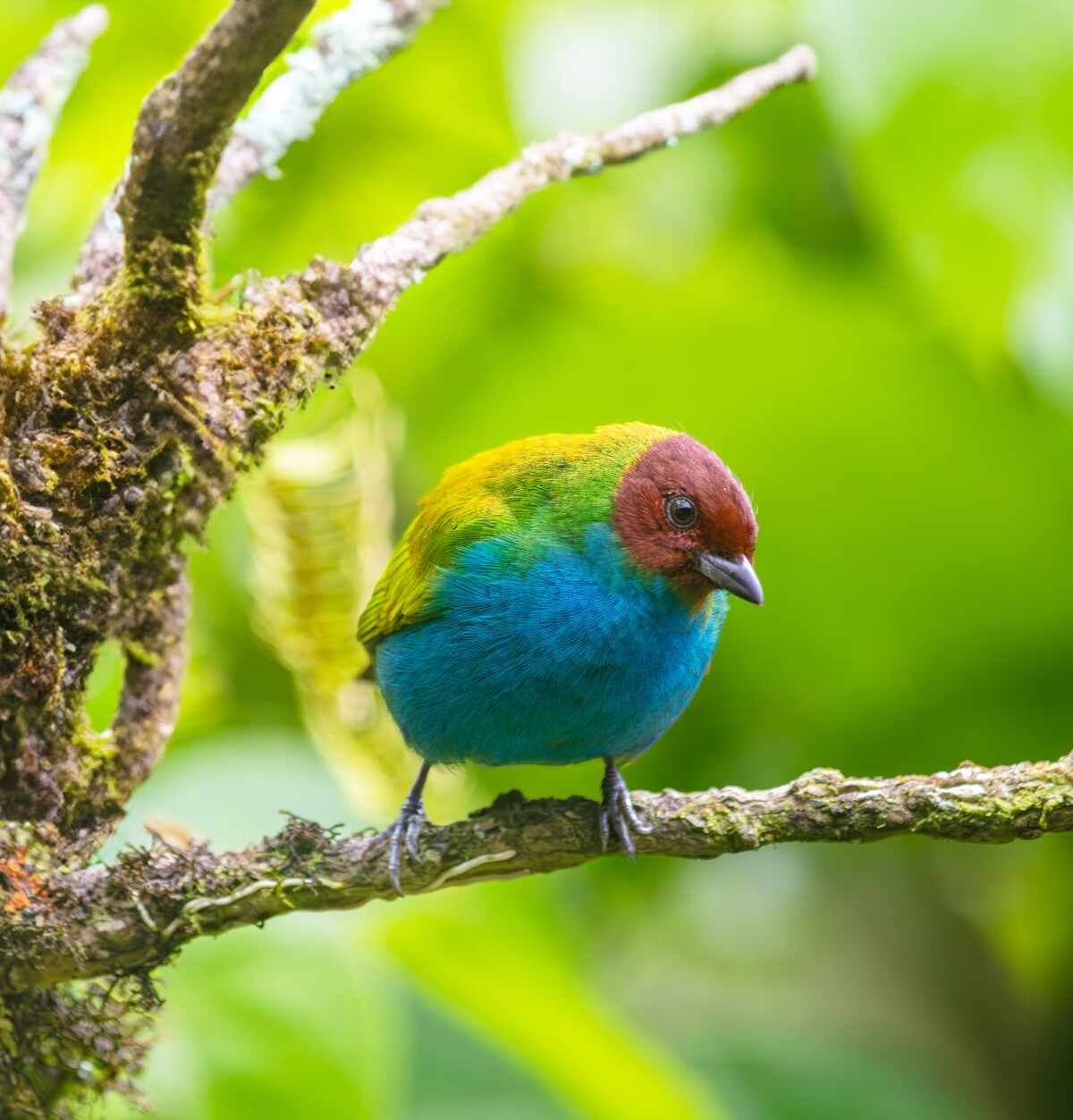
BAY-HEADED TANAGER
Tangara gyrola
DESCRIPTION
Bay-headed tanager (Tangara gyrola) is a strikingly colorful bird known for its vibrant plumage, which features a bright blue body and a distinctive bay-colored head. This species is often found in pairs or small groups, flitting through the canopy of tropical forests in search of food. Its behavior is characterized by a lively and active nature, often seen foraging among the foliage and engaging in social interactions with other tanagers.
FUN FACTS
- The Bay-headed tanager is known for its beautiful song, which consists of a series of melodious notes that can be heard during the breeding season
- Additionally, these birds play an important role in their ecosystem as seed dispersers, helping to maintain the health of their forest habitats
QUICK INFO
Lifespanup to 10 years in the wild
Average Weight20-30 g
Average Length15-18 cm
Diet TypeOmnivore
Social Structuregroup — they are often found in small flocks or pairs, engaging in social interactions.
Activity PatternDiurnal
Breeding SeasonSpring to early summer
- Habitat
- This species inhabits humid tropical forests, often favoring the edges and clearings where food sources are abundant. It thrives in areas with dense vegetation that provides ample cover and foraging opportunities.
- Biomes
- Tropical Rainforest
- Native Range
- The Bay-headed tanager is native to Central and South America, ranging from southern Mexico to western Ecuador.
- Continent
- North America, South America
- Countries
- Mexico, Guatemala, Honduras, Nicaragua, Costa Rica, Panama, Colombia, Ecuador
- Diet
- The Bay-headed tanager primarily feeds on fruits, seeds, and insects, showcasing a diverse diet that supports its energetic lifestyle.
- Diet Type
- Omnivore
- Favorite Food
- fruits and insects
- Social Structure
- group — they are often found in small flocks or pairs, engaging in social interactions.
- Activity Pattern
- Diurnal
- Group Size
- 2-10
- Territorial
- 0
 LC
LC
 VU
VU
20-30 g
Weight
15-18 cm
Length
- Coloration
- vibrant blue body with a bay-colored head and greenish wings
- Sexual Dimorphism
- males are generally more brightly colored than females
- Lifespan
- up to 10 years in the wild
- Offspring per Birth
- 2-4
- Sexual Maturity
- 1 year
- Breeding Season
- Spring to early summer
LC
Least Concern
IUCN Red List Status
- Population Status
- The population of Bay-headed tanagers is currently stable, with no significant declines reported.
- Wild Population Estimate
- unknown
- Population Trend
- Stable
- Endangered
- 0
- Threats
- Habitat loss due to deforestation and agricultural expansion poses a threat to the Bay-headed tanager. However, it is not currently considered endangered.
- Predators
- snakes, birds of prey, and larger mammals may prey on Bay-headed tanagers, particularly when they are on the ground or in exposed areas.
- Defense Mechanisms
- They rely on their agility and ability to quickly escape into dense foliage to avoid predators.
- Found in Zoos
- Uncommon