


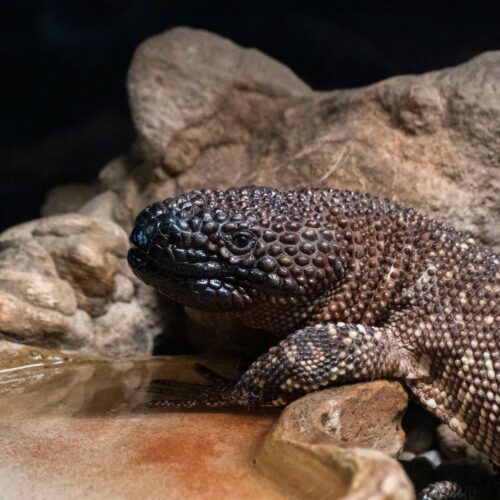
BEADED LIZARD
Heloderma horridum
DESCRIPTION
The Beaded Lizard (Heloderma horridum) is a venomous lizard native to Mexico and Guatemala. It is known for its distinctive bead-like scales and can grow to a significant size.
FUN FACTS
- Beaded Lizards are one of the few venomous lizards in the world | They can store fat in their tails, which helps them survive in arid environments | Their venom is used in research for potential medical applications
QUICK INFO
Lifespan20-30 years in captivity
Average Weight1-2 kg
Average Length0.6-1 m
Diet TypeCarnivore
Social Structuresolitary
Activity PatternNocturnal
Breeding SeasonSpring (April-June)
- Habitat
- They inhabit dry, rocky areas, often found in scrublands and semi-arid regions. They prefer environments with plenty of cover and burrows.
- Biomes
- Desert, Scrubland
- Native Range
- The Beaded Lizard is found in parts of Mexico and Guatemala.
- Continent
- North America
- Countries
- Mexico, Guatemala
- Diet
- Beaded Lizards primarily feed on small mammals, birds, and eggs. They are known to consume a variety of prey, utilizing their venom to subdue them.
- Diet Type
- Carnivore
- Favorite Food
- small mammals, birds, eggs
- Social Structure
- solitary
- Activity Pattern
- Nocturnal
- Group Size
- 1
- Territorial
- 1
 LC
LC
1-2 kg
Weight
0.6-1 m
Length
- Coloration
- black with yellow or orange bead-like patterns
- Lifespan
- 20-30 years in captivity
- Offspring per Birth
- 2-10
- Sexual Maturity
- 3-4 years
- Breeding Season
- Spring (April-June)
LC
Least Concern
IUCN Red List Status
- Population Status
- The population is currently stable but faces threats from habitat loss.
- Wild Population Estimate
- unknown
- Population Trend
- Stable
- Endangered
- 0
- Threats
- Main threats include habitat destruction and illegal collection for the pet trade.
- Predators
- larger birds of prey, snakes
- Defense Mechanisms
- They possess venom that can deter predators and are known to bite when threatened.
- Found in Zoos
- Uncommon