


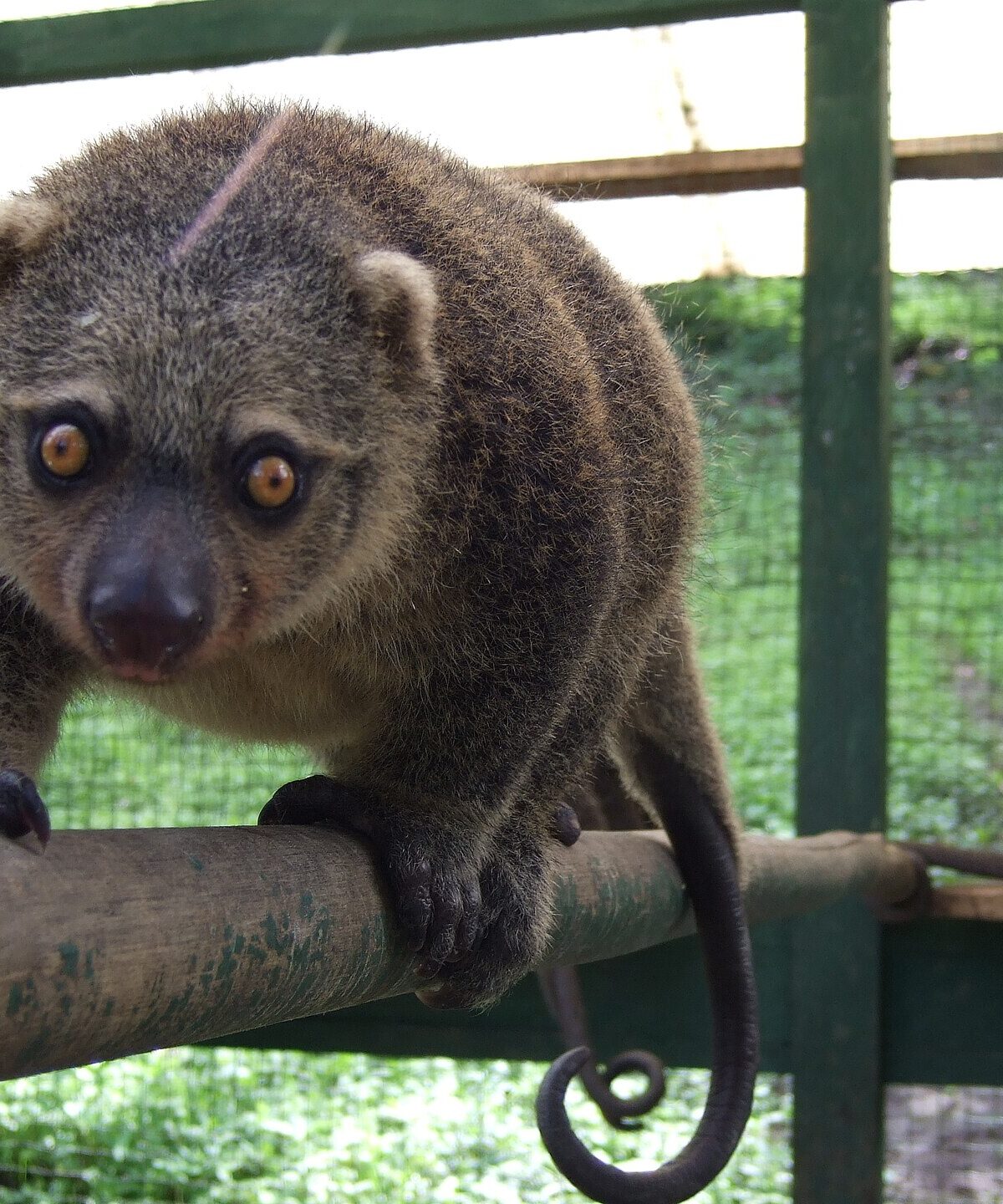
BEAR CUSCUS
Ailurops ursinus
DESCRIPTION
Bear cuscus (Ailurops ursinus) is a unique marsupial native to the rainforests of New Guinea. It has a distinctive bear-like appearance, characterized by its large body, thick fur, and a short, bushy tail. This species is primarily arboreal, spending most of its time in trees, where it exhibits a slow and deliberate movement, often seen clinging to branches while foraging for food.
FUN FACTS
- Bear cuscus is one of the few marsupials that have adapted to a fully arboreal lifestyle, showcasing remarkable climbing abilities
- Additionally, they have a unique method of locomotion, using their strong limbs to grasp branches and move slowly through the treetops, which helps them conserve energy and avoid predators.| Despite their bear-like appearance, bear cuscus are more closely related to other cuscuses and possums than to actual bears
- Their unique adaptations to life in the trees make them an important part of the rainforest ecosystem, contributing to seed dispersal and plant regeneration
QUICK INFO
Lifespan10-15 years in the wild, up to 20 years in captivi
Average Weight3-5 kg
Average Length50-70 cm
Diet TypeHerbivore
Social Structuresolitary, occasionally seen in pairs during mating
Activity PatternNocturnal
Breeding SeasonYear-round, with peaks depending on food availability
- Habitat
- Bear cuscus inhabits tropical rainforests, where it thrives in the dense canopy. It prefers areas with abundant vegetation that provide both food and shelter.
- Biomes
- Tropical Rainforest
- Native Range
- Endemic to New Guinea, specifically found in the lowland and montane forests.
- Continent
- Oceania
- Countries
- Papua New Guinea, Indonesia
- Diet
- Bear cuscus primarily feeds on leaves, fruits, and flowers, showcasing a preference for young foliage. Its diet is largely herbivorous, reflecting its adaptation to a folivorous lifestyle.
- Diet Type
- Herbivore
- Favorite Food
- leaves, fruits, flowers
- Social Structure
- solitary, occasionally seen in pairs during mating
- Activity Pattern
- Nocturnal
- Group Size
- 1-2
- Territorial
- 0
 VU
VU
 LC
LC
3-5 kg
Weight
50-70 cm
Length
- Coloration
- The fur is typically grayish-brown with lighter underparts, and it may have a slightly paler face.
- Lifespan
- 10-15 years in the wild, up to 20 years in captivi
- Gestation Period
- 30-35 days
- Offspring per Birth
- 1
- Sexual Maturity
- 2-3 years
- Breeding Season
- Year-round, with peaks depending on food availability
VU
Vulnerable
IUCN Red List Status
- Population Status
- The population is currently considered vulnerable due to habitat loss and hunting pressures.
- Wild Population Estimate
- Unknown
- Population Trend
- Decreasing
- Endangered
- 1
- Threats
- Main threats include habitat destruction due to logging and agricultural expansion, as well as hunting for bushmeat. These factors have led to a decline in their population across their native range.
- Predators
- Birds of prey, large snakes, and possibly feral dogs.
- Defense Mechanisms
- Bear cuscus relies on its camouflage and slow movements to avoid detection by predators.
- Found in Zoos
- Uncommon