


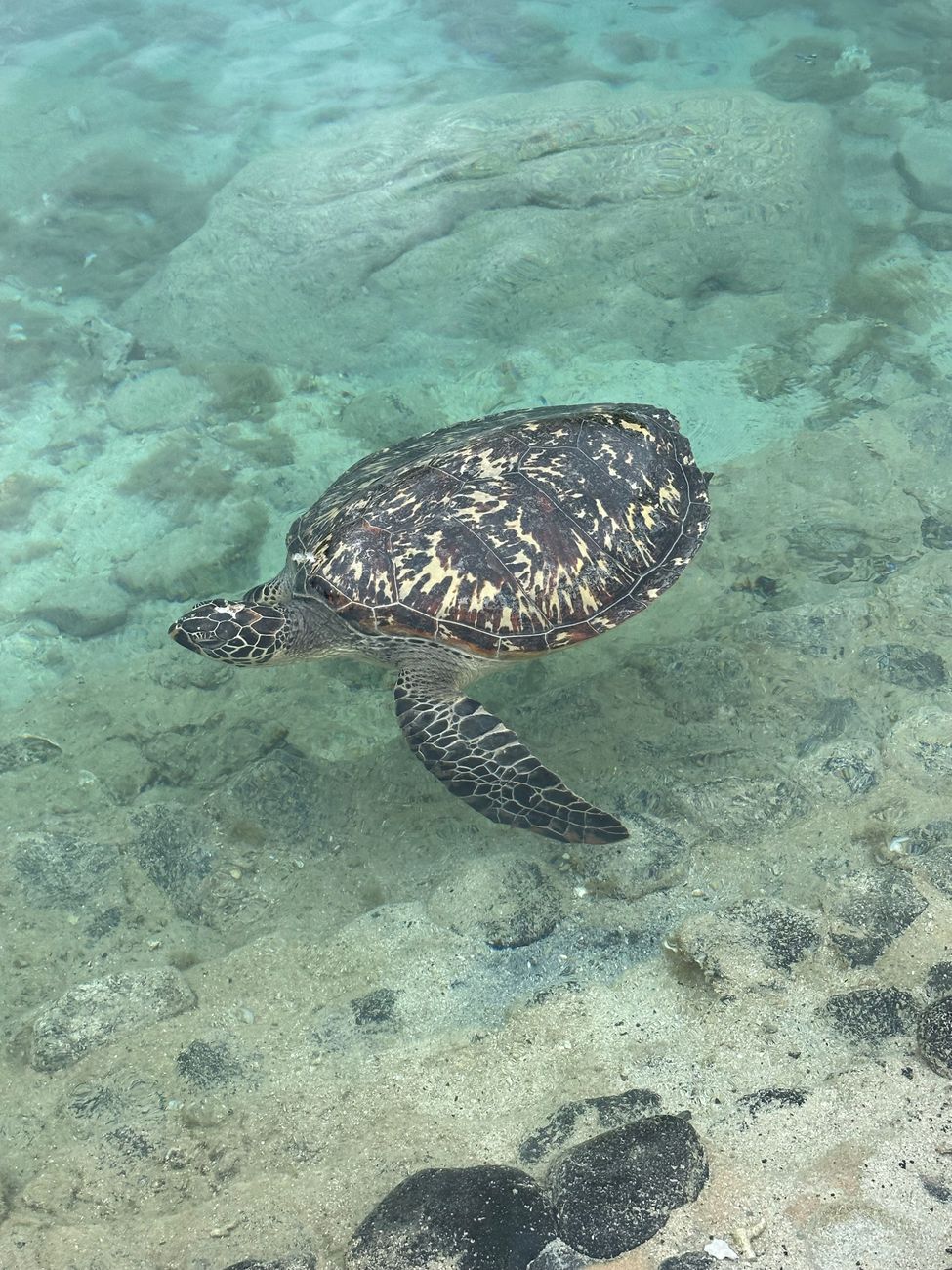
BEAUTIFUL TURTLE
DESCRIPTION
Beautiful Turtle, also known as the Hawksbill Turtle, is a critically endangered species characterized by its stunning shell, which features intricate patterns of amber and brown. This turtle is known for its agile swimming abilities and is often found in coral reefs, where it plays a crucial role in maintaining the health of these ecosystems. Hawksbill Turtles are primarily solitary creatures, but they can sometimes be seen in small groups, especially during feeding or nesting.
FUN FACTS
- Hawksbill Turtles are known for their unique feeding habits, particularly their preference for sponges, which few other marine animals eat
- This specialization helps maintain the balance of coral reef ecosystems by controlling sponge populations
- | The shell of the Hawksbill Turtle is highly sought after for its beauty and is often used in jewelry and ornaments, leading to significant illegal trade
- Conservation efforts are crucial to protect these turtles from poaching and habitat destruction
QUICK INFO
Lifespan30-50 years in the wild
Average Weight50-100 kg
Average Length0.8-1.1 m
Diet TypeOmnivore
Social Structuresolitary, though they may gather in small groups at feeding sites
Activity PatternDiurnal
Breeding SeasonNesting occurs from May to October
- Habitat
- Hawksbill Turtles inhabit tropical coral reefs, shallow coastal waters, and lagoons. They prefer areas with abundant sponges and other invertebrates to feed on.
- Biomes
- Coral Reef, Coastal
- Native Range
- Hawksbill Turtles are found in tropical and subtropical waters around the world, particularly in the Caribbean, the Indian Ocean, and the Pacific Ocean.
- Continent
- North America, South America, Africa, Asia, Australia
- Countries
- United States, Mexico, Brazil, Australia, Indonesia, Philippines
- Diet
- Hawksbill Turtles primarily feed on sponges, but they also consume other invertebrates and some types of algae. Their specialized beak allows them to extract food from crevices in coral reefs.
- Diet Type
- Omnivore
- Favorite Food
- sponges
- Social Structure
- solitary, though they may gather in small groups at feeding sites
- Activity Pattern
- Diurnal
- Group Size
- 1-5
- Territorial
- 0
 LC
LC
 LC
LC
50-100 kg
Weight
0.8-1.1 m
Length
- Coloration
- amber and brown patterned shell with a distinctive hawk-like beak
- Sexual Dimorphism
- males are generally smaller than females and have longer tails
- Lifespan
- 30-50 years in the wild
- Offspring per Birth
- 100-200 eggs
- Sexual Maturity
- 20-30 years
- Breeding Season
- Nesting occurs from May to October
CR
Critically Endangered
IUCN Red List Status
- Population Status
- The population of Hawksbill Turtles is declining due to various threats, and they are classified as critically endangered.
- Wild Population Estimate
- unknown, but significantly reduced from historical levels
- Population Trend
- Decreasing
- Endangered
- 1
- Threats
- Hawksbill Turtles face threats from habitat loss, illegal trade of their shells, and entanglement in fishing gear. Climate change also impacts their nesting sites and food availability.
- Conservation Program
- Various international agreements and local conservation programs aim to protect Hawksbill Turtles and their habitats.
- Predators
- Sharks, large fish, and humans pose significant threats to Hawksbill Turtles, especially to their eggs and hatchlings.
- Defense Mechanisms
- Hawksbill Turtles can retract into their shells for protection, and their hard shells provide a barrier against many predators.
- Compatible Animals
- other sea turtles, various fish species
- Found in Zoos
- Uncommon