


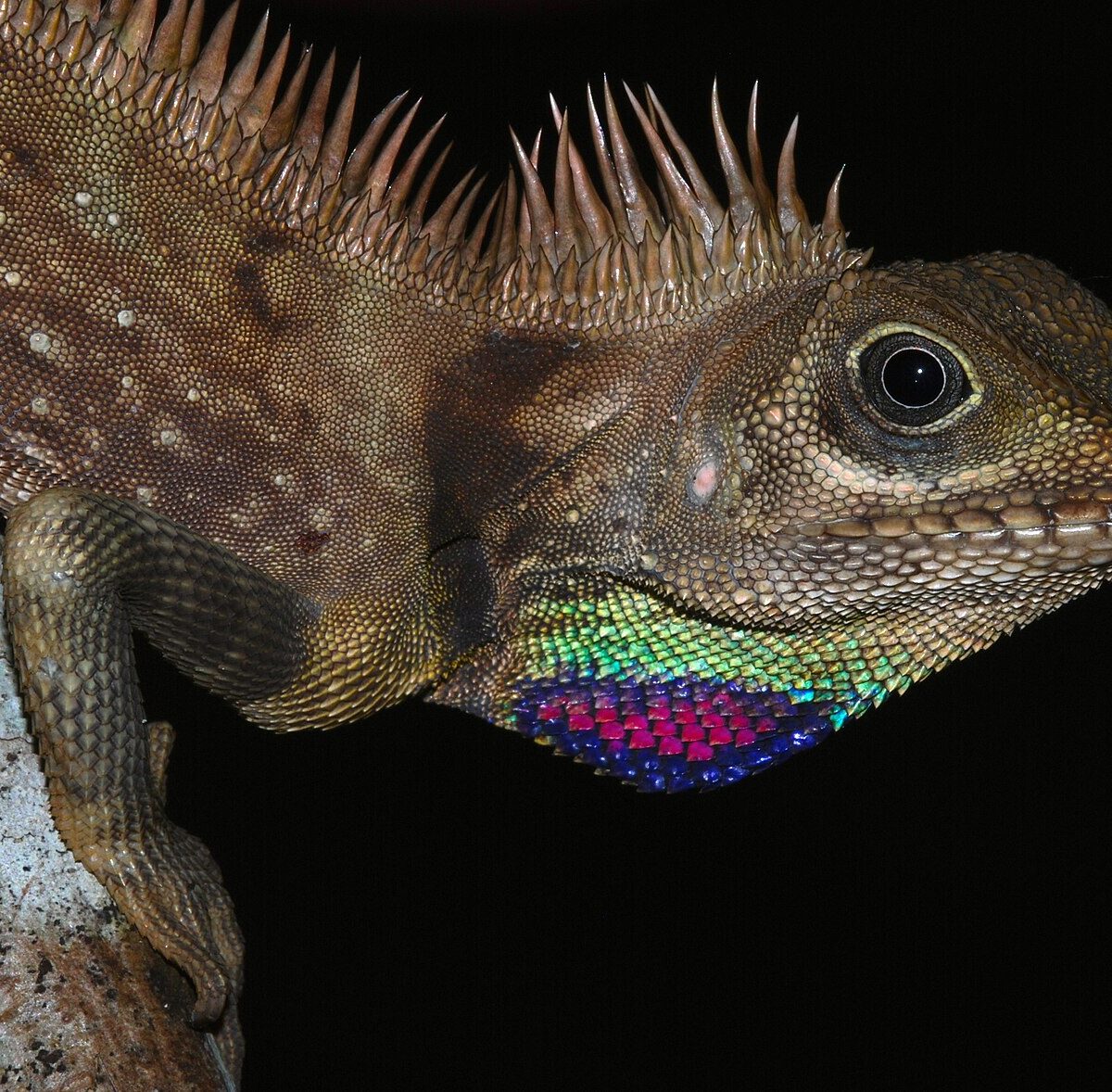
BELL'S ANGLEHEAD LIZARD
Gonocephalus bellii
DESCRIPTION
Bell's Anglehead Lizard (Gonocephalus bellii) is a striking species known for its distinctive flattened head and vibrant coloration, which can vary from green to brown, often with intricate patterns. This lizard is primarily arboreal, spending much of its time in trees where it can blend into the foliage, making it an adept ambush predator. Its behavior includes basking in the sun and displaying territoriality, especially during the breeding season, where males may engage in visual displays to attract females.
FUN FACTS
- Bell's Anglehead Lizard has a unique ability to flatten its head, which not only aids in camouflage but also makes it appear larger to potential threats
- Additionally, these lizards are known for their impressive climbing skills, allowing them to navigate the complex structures of their arboreal habitats with ease
QUICK INFO
Average Length15-20 cm
Diet TypeInsectivore
Social Structuresolitary, occasionally pairs during breeding
Activity PatternDiurnal
Breeding Seasonvaries by region, typically during the rainy season
- Habitat
- This species is typically found in tropical forests, where it inhabits the canopy and lower branches of trees. It prefers humid environments that provide ample cover and food sources.
- Biomes
- Tropical Rainforest
- Native Range
- Gonocephalus bellii is native to Southeast Asia, particularly found in regions such as Malaysia, Indonesia, and the Philippines.
- Continent
- Asia
- Countries
- Malaysia, Indonesia, Philippines
- Diet
- Bell's Anglehead Lizard primarily feeds on insects and other small invertebrates, showcasing its insectivorous diet. It uses its keen eyesight to spot prey from a distance before darting out to catch it.
- Diet Type
- Insectivore
- Favorite Food
- insects
- Social Structure
- solitary, occasionally pairs during breeding
- Activity Pattern
- Diurnal
- Group Size
- 1-2
- Territorial
- 1
 VU
VU
 LC
LC
15-20 cm
Length
- Coloration
- vibrant green to brown with intricate patterns
- Sexual Dimorphism
- males are typically more colorful than females
- Breeding Season
- varies by region, typically during the rainy season
LC
Least Concern
IUCN Red List Status
- Population Status
- The population status of Bell's Anglehead Lizard is not well-documented, but it is generally considered stable in its natural habitat.
- Population Trend
- Stable
- Endangered
- 0
- Threats
- Main threats include habitat loss due to deforestation and urbanization. Additionally, they may face pressure from the pet trade.
- Predators
- birds of prey, snakes, and larger reptiles
- Defense Mechanisms
- Bell's Anglehead Lizard can change its color to blend into its surroundings, providing camouflage against predators.
- Found in Zoos
- Uncommon