


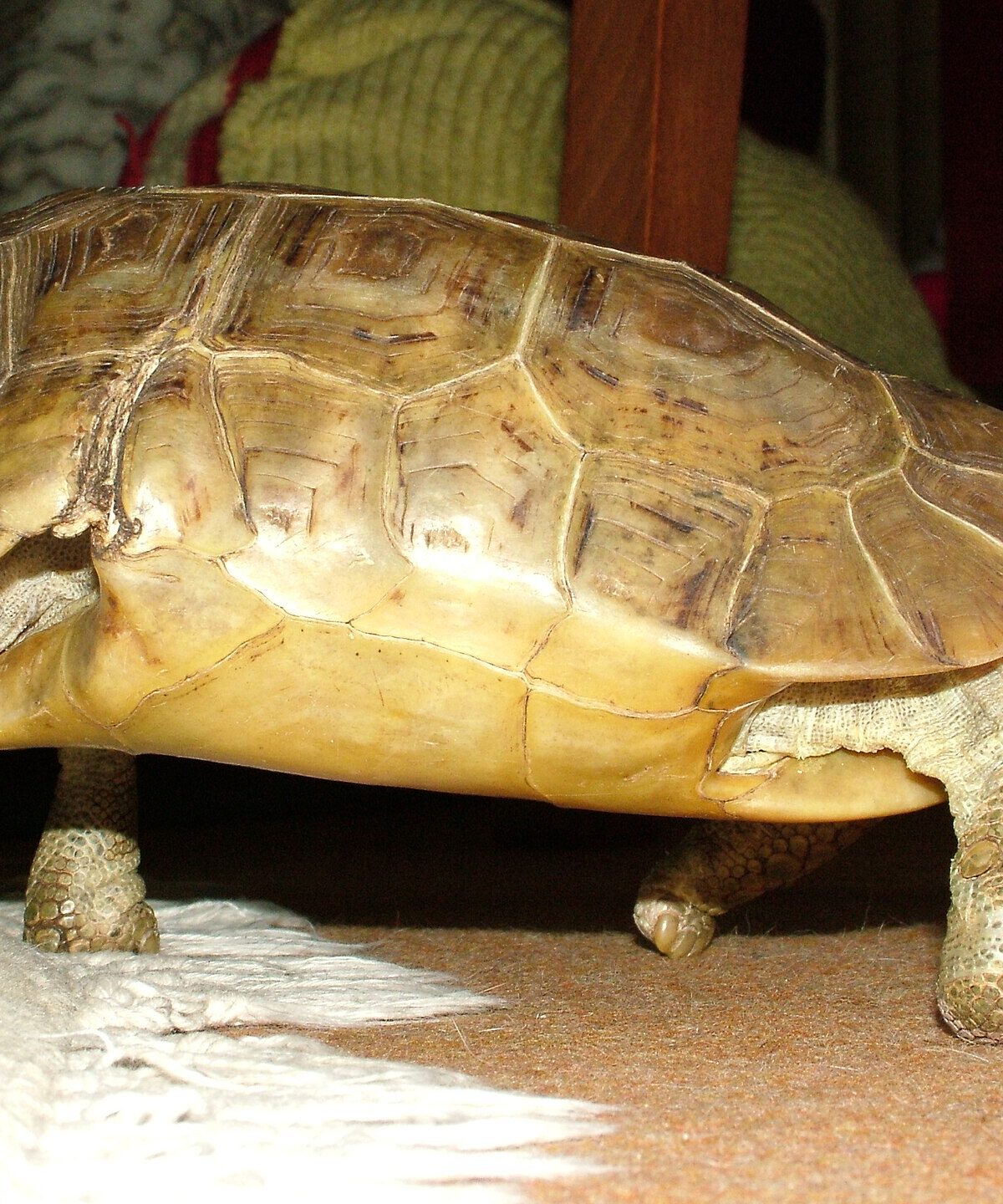
BELL'S HINGEBACK TORTOISE
Kinixys belliana
DESCRIPTION
Bell's Hingeback Tortoise (Kinixys belliana) is a medium-sized tortoise known for its distinctive hinged shell, which allows it to close tightly for protection. This species exhibits a brown to olive coloration with yellowish markings, providing effective camouflage in its natural habitat. Typically found in moist environments, it is a semi-aquatic tortoise that enjoys both terrestrial and aquatic habitats, often seen basking in the sun or foraging for food.
FUN FACTS
- Bell's Hingeback Tortoise is unique among tortoises for its ability to close its shell completely, which is a rare adaptation in the tortoise family
- This feature not only protects it from predators but also helps retain moisture in its body, making it well-suited for its humid habitat.| These tortoises are known for their gentle nature and can live for several decades, making them a long-term commitment for pet owners
- In captivity, they require a carefully controlled environment to mimic their natural habitat, including humidity and temperature regulation
QUICK INFO
Lifespan20-40 years in the wild, up to 50 in captivity
Average Weight2-5 kg
Average Length20-30 cm
Diet TypeHerbivore
Social Structuresolitary, occasionally seen in pairs during breeding
Activity PatternDiurnal
Breeding SeasonSpring to early summer
- Habitat
- This tortoise prefers humid, forested areas and is often found near water sources such as swamps and rivers. It thrives in environments that provide ample vegetation for foraging.
- Biomes
- Tropical Rainforest, Wetland
- Native Range
- The native range of Bell's Hingeback Tortoise includes parts of Central and West Africa.
- Continent
- Africa
- Countries
- Democratic Republic of the Congo, Cameroon, Gabon, Angola
- Diet
- Bell's Hingeback Tortoise primarily feeds on a variety of plant materials, including leaves, fruits, and flowers. It may also consume some insects and small invertebrates occasionally.
- Diet Type
- Herbivore
- Favorite Food
- leaves, fruits, flowers
- Social Structure
- solitary, occasionally seen in pairs during breeding
- Activity Pattern
- Diurnal
- Group Size
- 1-2
- Territorial
- 0
 LC
LC
 VU
VU
2-5 kg
Weight
20-30 cm
Length
- Coloration
- brown to olive with yellowish markings
- Sexual Dimorphism
- Males are generally smaller with a more concave plastron, while females are larger with a flatter plastron.
- Lifespan
- 20-40 years in the wild, up to 50 in captivity
- Gestation Period
- 60-90 days
- Offspring per Birth
- 1-5
- Sexual Maturity
- 5-7 years
- Breeding Season
- Spring to early summer
EN
Endangered
IUCN Red List Status
- Population Status
- The population of Bell's Hingeback Tortoise is currently declining due to habitat loss and poaching.
- Wild Population Estimate
- Unknown
- Population Trend
- Decreasing
- Endangered
- 1
- Threats
- Main threats include habitat destruction due to deforestation and agricultural expansion, as well as illegal collection for the pet trade. These factors have significantly impacted their populations in the wild.
- Predators
- Monitor lizards, birds of prey, and large mammals may prey on juvenile tortoises. Adults have few natural predators due to their size and protective shell.
- Defense Mechanisms
- The hinged shell allows the tortoise to close itself tightly, providing protection from predators.
- Found in Zoos
- Uncommon