


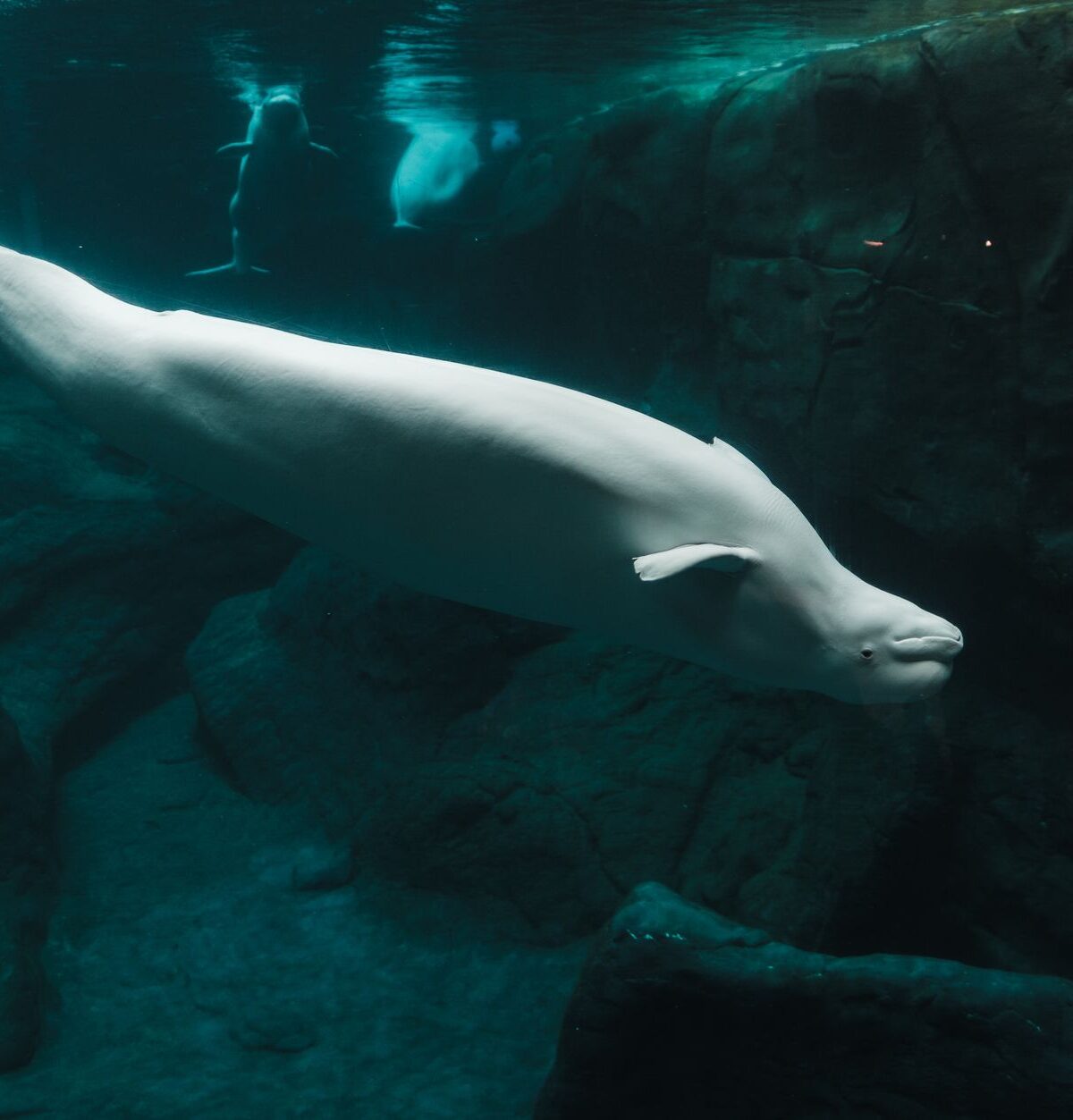
BELUGA WHALE
Delphinapterus leucas
DESCRIPTION
Beluga Whale (Delphinapterus leucas) is commonly known as the White Whale due to its distinctive white coloration as adults. These social marine mammals are known for their vocalizations, often referred to as the 'canaries of the sea' because of their wide range of sounds. Belugas inhabit cold Arctic and sub-Arctic waters, where they are often found in groups, showcasing complex social behaviors and interactions.
FUN FACTS
- Beluga whales are known for their incredible vocal abilities, producing a variety of sounds including clicks, whistles, and clangs, which they use for communication and navigation
- They are also one of the few cetaceans that can swim backward, a skill that aids them in maneuvering through icy waters and tight spaces.|Belugas have a unique ability to change the shape of their heads, allowing them to express emotions and communicate with one another
- This adaptability, combined with their social nature, makes them fascinating subjects for research on marine mammal behavior
QUICK INFO
Lifespan30-50 years in the wild
Average Weight400-1,500 kg
Average Length3-5 m
Diet TypePiscivore
Social Structuregroup — Belugas are often found in pods, which can vary in size and composition.
Activity PatternDiurnal
Breeding SeasonSpring (April-June)
- Habitat
- Beluga whales are typically found in shallow coastal waters, estuaries, and river mouths. They prefer areas with ice cover during the summer months, which provides them with protection and access to their prey.
- Biomes
- Marine, Arctic
- Native Range
- Beluga whales are found in the Arctic and sub-Arctic regions, including areas around Alaska, Canada, Greenland, and Russia.
- Continent
- North America, Europe, Asia
- Countries
- USA, Canada, Russia, Greenland
- Diet
- Beluga whales primarily feed on fish, crustaceans, and other marine invertebrates. They use echolocation to locate their prey in the murky waters of their habitat.
- Diet Type
- Piscivore
- Favorite Food
- fish, crustaceans
- Social Structure
- group — Belugas are often found in pods, which can vary in size and composition.
- Activity Pattern
- Diurnal
- Group Size
- 5-30
- Territorial
- 0
 VU
VU
 VU
VU
400-1,500 kg
Weight
3-5 m
Length
- Coloration
- Adults are predominantly white, while calves are born gray and gradually lighten as they mature.
- Sexual Dimorphism
- Males are generally larger than females.
- Lifespan
- 30-50 years in the wild
- Gestation Period
- 14-15 months
- Offspring per Birth
- 1
- Sexual Maturity
- 4-7 years
- Breeding Season
- Spring (April-June)
LC
Least Concern
IUCN Red List Status
- Population Status
- The population of beluga whales varies by region, with some populations being stable while others are declining.
- Wild Population Estimate
- 150,000-200,000
- Population Trend
- Stable
- Endangered
- 0
- Threats
- Main threats to beluga whales include habitat loss due to climate change, pollution, and increased shipping traffic in their Arctic habitats. Additionally, hunting and entanglement in fishing gear pose risks to their populations.
- Predators
- Orcas, polar bears, and large sharks are known predators of beluga whales, particularly targeting calves and weaker individuals.
- Defense Mechanisms
- Belugas use their agility and vocalizations to evade predators, often diving deep or swimming in tight groups for protection.
- Found in Zoos
- Common