


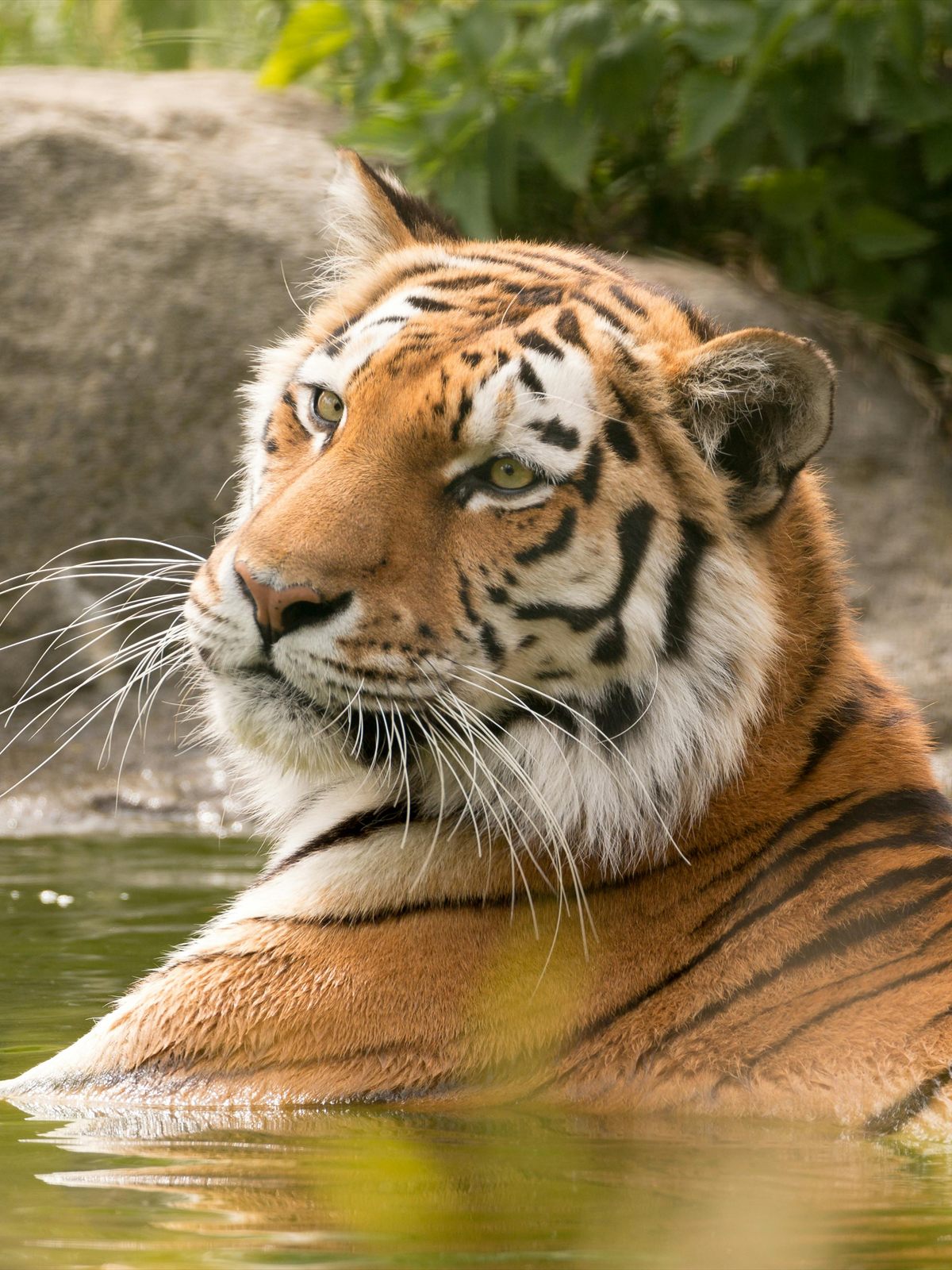
BENGAL TIGER
Panthera tigris tigris
DESCRIPTION
The Bengal tiger is a subspecies of tiger found primarily in India, with a small population in Bangladesh, Nepal, and Bhutan. It is known for its striking orange coat with black stripes and is one of the largest wild cats in the world.
FUN FACTS
- Bengal tigers can swim well and often enjoy water | Each tiger has a unique pattern of stripes, much like human fingerprints | They can run at speeds of up to 65 km/h in short bursts
QUICK INFO
Lifespan15-20 years in wild, up to 25 in captivity
Average Weight150-250 kg
Average Length1.8-2.5 m
Diet TypeCarnivore
Social StructureSolitary, typically living alone except during mating or a mother with her cubs.
Activity PatternNocturnal
Breeding SeasonYear-round, peaks in winter
- Habitat
- Bengal tigers inhabit a variety of environments, including tropical forests, grasslands, and mangrove swamps. They require large territories with access to water and abundant prey.
- Biomes
- Tropical Rainforest, Grassland, Mangrove
- Native Range
- Primarily found in India, with smaller populations in Bangladesh, Nepal, and Bhutan.
- Continent
- Asia
- Countries
- India, Bangladesh, Nepal, Bhutan
- Diet
- Bengal tigers are carnivorous and primarily hunt large prey such as deer, wild boar, and water buffalo. They are solitary hunters, relying on stealth and strength to ambush their prey.
- Diet Type
- Carnivore
- Favorite Food
- Deer, wild boar
- Social Structure
- Solitary, typically living alone except during mating or a mother with her cubs.
- Activity Pattern
- Nocturnal
- Group Size
- 1-3
- Territorial
- 1
150-250 kg
Weight
1.8-2.5 m
Length
1.2 m at shoulder
Height (Shoulder)
- Coloration
- Orange coat with black stripes
- Sexual Dimorphism
- Males are generally larger than females.
- Lifespan
- 15-20 years in wild, up to 25 in captivity
- Gestation Period
- 93-112 days
- Offspring per Birth
- 2-4
- Sexual Maturity
- 3-4 years
- Breeding Season
- Year-round, peaks in winter
EN
Endangered
IUCN Red List Status
- Population Status
- The Bengal tiger population is currently recovering due to conservation efforts, but it remains vulnerable.
- Wild Population Estimate
- 2,500-3,000
- Population Trend
- Increasing
- Endangered
- 1
- Threats
- Main threats include habitat loss due to deforestation, poaching for their skin and body parts, and depletion of prey species.
- Conservation Program
- Project Tiger, a conservation program initiated in India to protect tiger populations and their habitats.
- Defense Mechanisms
- Bengal tigers use their strength, agility, and camouflage to evade threats and ambush prey.
- Found in Zoos
- Common