


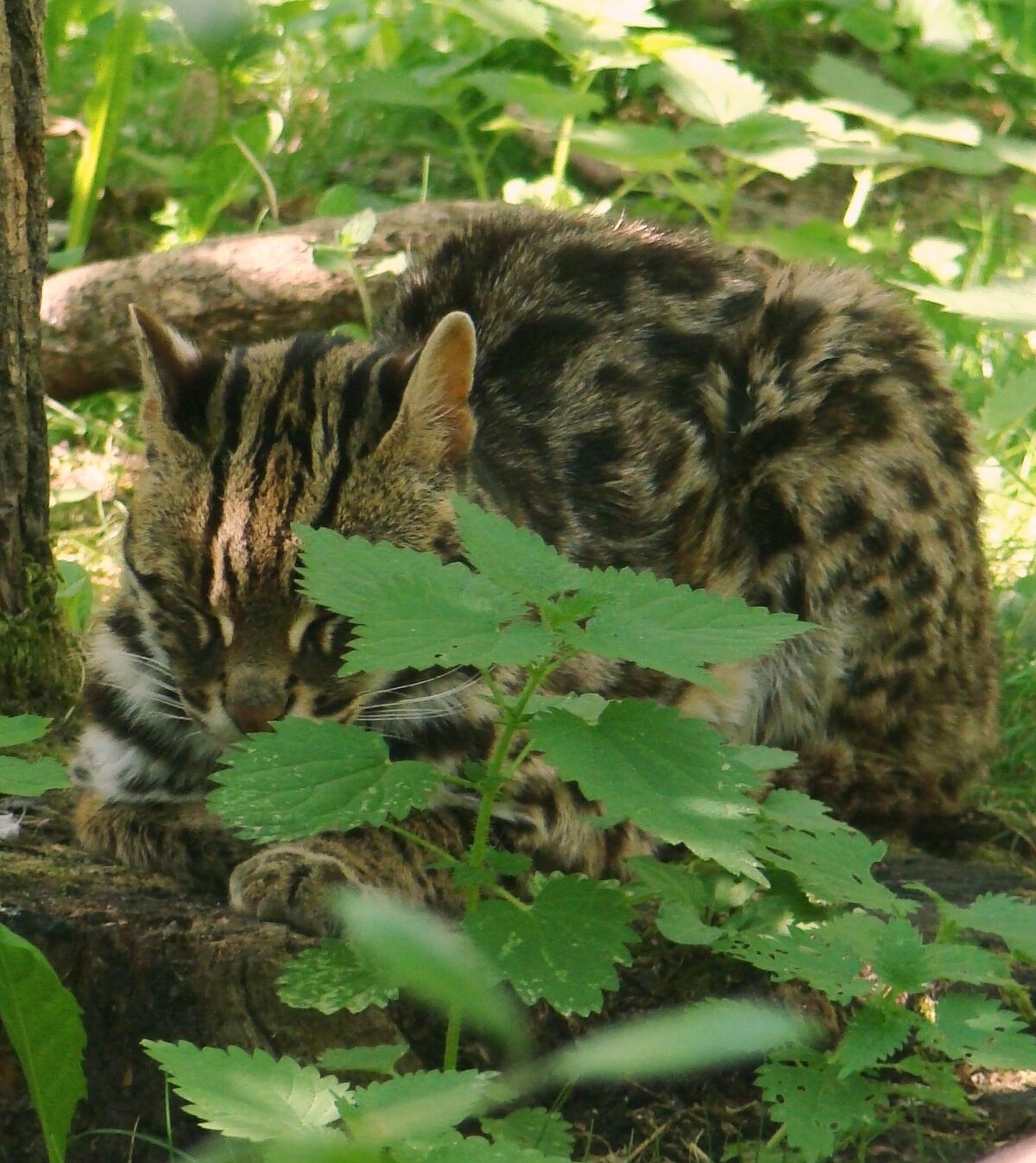
BENGAL
Prionailurus bengalensis
DESCRIPTION
Bengal (Prionailurus bengalensis) is commonly known as the Asian leopard cat, a small wild cat native to Asia. It has a distinctive coat with a pattern of spots and stripes, resembling that of a leopard, which provides excellent camouflage in its natural habitat. This species is primarily solitary and is known for its agility and climbing skills, often hunting in trees and dense vegetation.
FUN FACTS
- Bengal cats are known for their playful and curious nature, often engaging in activities that mimic hunting behaviors
- They are also highly intelligent and can be trained to perform tricks or use a litter box, making them popular among exotic pet owners.|The Bengal cat's unique coat pattern is not just for show; it serves a practical purpose by helping them blend into their surroundings while hunting
- This adaptation is crucial for their survival in the wild, allowing them to stalk prey effectively
QUICK INFO
Lifespan10-15 years in the wild, up to 20 years in captivi
Average Weight3-5 kg
Average Length48-78 cm
Diet TypeCarnivore
Social Structuresolitary, typically living alone except during mating season or when a mother is raising her young
Activity PatternNocturnal
Breeding SeasonSpring (March-May)
- Habitat
- Bengal cats inhabit a variety of environments, including forests, grasslands, and wetlands. They prefer areas with dense cover for hunting and shelter.
- Biomes
- Tropical Rainforest, Temperate Forest, Grassland, Wetland
- Native Range
- Bengal is found across a wide range in Asia, from the Himalayas to Southeast Asia.
- Continent
- Asia
- Countries
- India, Bangladesh, Nepal, Bhutan, Myanmar, Thailand, Vietnam, Malaysia, Indonesia, China
- Diet
- Bengals are carnivorous and primarily hunt small mammals, birds, and reptiles. They are skilled hunters and often stalk their prey before pouncing.
- Diet Type
- Carnivore
- Favorite Food
- small mammals, birds, reptiles
- Social Structure
- solitary, typically living alone except during mating season or when a mother is raising her young
- Activity Pattern
- Nocturnal
- Group Size
- 1
- Territorial
- 1
 VU
VU
3-5 kg
Weight
48-78 cm
Length
- Coloration
- spotted coat with a mix of yellowish-brown and black markings
- Sexual Dimorphism
- males are generally larger than females
- Lifespan
- 10-15 years in the wild, up to 20 years in captivi
- Gestation Period
- 60-70 days
- Offspring per Birth
- 1-4
- Sexual Maturity
- 1-2 years
- Breeding Season
- Spring (March-May)
LC
Least Concern
IUCN Red List Status
- Population Status
- The population of Bengal cats is currently stable, but habitat loss poses a threat.
- Wild Population Estimate
- unknown
- Population Trend
- Stable
- Endangered
- 0
- Threats
- Main threats include habitat destruction due to deforestation and human encroachment. They are also sometimes hunted for their beautiful pelts.
- Predators
- larger carnivores such as tigers and leopards, as well as birds of prey
- Defense Mechanisms
- Bengal cats rely on their agility and camouflage to evade predators, often climbing trees to escape danger.
- Found in Zoos
- Uncommon