


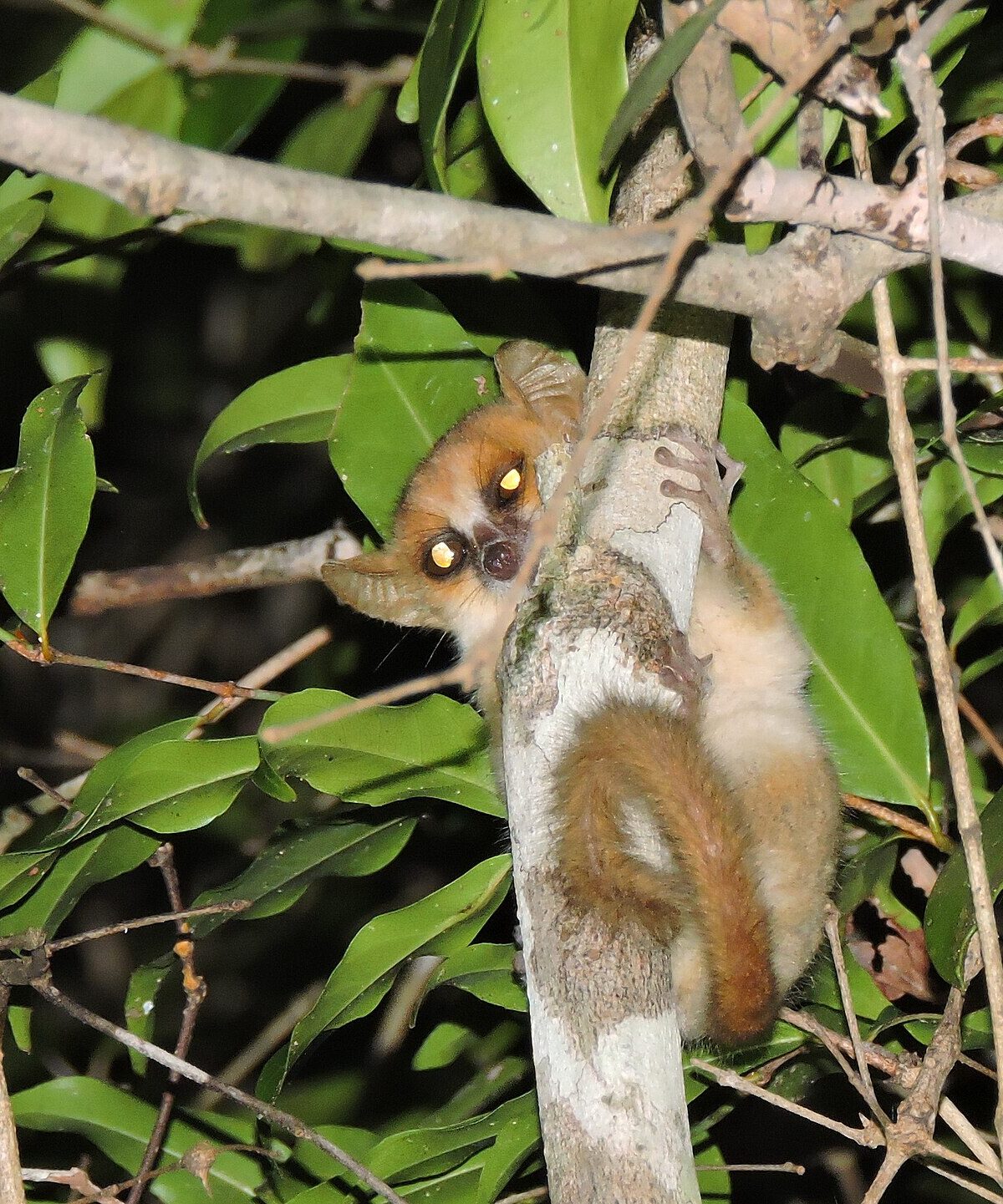
BERTHE'S MOUSE LEMUR
Microcebus berthae
DESCRIPTION
Berthe's Mouse Lemur (Microcebus berthae) is one of the smallest primates in the world, characterized by its large eyes and a small, compact body. This nocturnal species is primarily arboreal, spending most of its time in trees where it forages for food and avoids predators. Its small size and cryptic coloration help it blend into the foliage, making it less visible to both prey and predators in its natural habitat.
FUN FACTS
- Berthe's Mouse Lemur was only discovered in 2000, making it one of the most recently identified primate species
- Its small size and unique adaptations have made it a subject of interest for researchers studying primate evolution and behavior.| These lemurs have a remarkable ability to leap up to 3 meters between branches, showcasing their incredible agility
- Their large eyes are not just for show; they provide excellent night vision, allowing them to navigate their forest habitat in the dark
QUICK INFO
Lifespanup to 10 years in the wild, longer in captivity.
Average Weight30-50 g
Average Length9-10 cm
Diet TypeOmnivore
Social Structuresolitary, though they may occasionally be seen in small groups during foraging.
Activity PatternNocturnal
Breeding SeasonSpring (September-November)
- Habitat
- This species inhabits the dry deciduous forests of Madagascar, where it prefers areas with dense vegetation for cover. The forest structure provides ample opportunities for foraging and nesting.
- Biomes
- Tropical Rainforest, Dry Forest
- Native Range
- Berthe's Mouse Lemur is endemic to Madagascar, specifically found in the western part of the island.
- Continent
- Africa
- Countries
- Madagascar
- Diet
- Berthe's Mouse Lemur primarily feeds on fruits, insects, and flowers, showcasing a diverse diet that allows it to thrive in its environment. It often forages at night, using its keen sense of smell to locate food.
- Diet Type
- Omnivore
- Favorite Food
- fruits, insects
- Social Structure
- solitary, though they may occasionally be seen in small groups during foraging.
- Activity Pattern
- Nocturnal
- Group Size
- 1-3
- Territorial
- 0
 VU
VU
 LC
LC
30-50 g
Weight
9-10 cm
Length
- Coloration
- brownish-grey fur with a lighter underbelly, large eyes adapted for night vision.
- Sexual Dimorphism
- males are slightly larger than females.
- Lifespan
- up to 10 years in the wild, longer in captivity.
- Gestation Period
- 60-70 days
- Offspring per Birth
- 1-2
- Sexual Maturity
- 6-12 months
- Breeding Season
- Spring (September-November)
EN
Endangered
IUCN Red List Status
- Population Status
- The population of Berthe's Mouse Lemur is currently considered to be decreasing due to habitat loss.
- Wild Population Estimate
- unknown
- Population Trend
- Decreasing
- Endangered
- 1
- Threats
- The main threats to Berthe's Mouse Lemur include habitat destruction due to deforestation and human encroachment. Additionally, they face risks from hunting and the pet trade.
- Conservation Program
- Conservation efforts are underway in Madagascar to protect their habitat and raise awareness about their plight.
- Predators
- birds of prey, snakes, and larger mammals such as fossa.
- Defense Mechanisms
- They rely on their agility and nocturnal habits to evade predators, often freezing in place to avoid detection.
- Found in Zoos
- Uncommon