


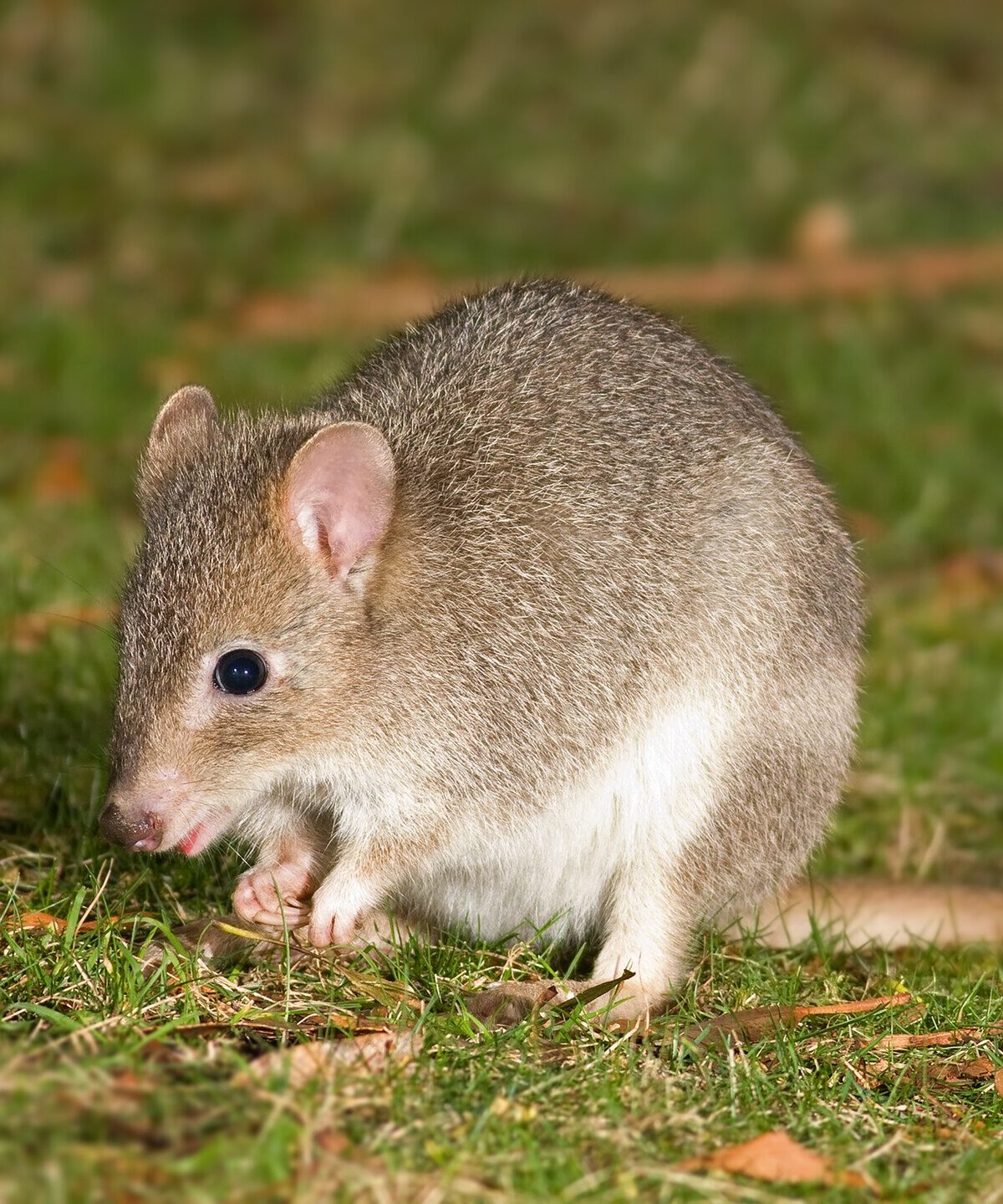
BETTONG
DESCRIPTION
Bettong is commonly known as the Eastern Bettong and Western Bettong, both of which are small marsupials native to Australia. They have a compact body, long tail, and large hind feet, which are adapted for hopping. Bettongs are nocturnal and primarily herbivorous, foraging for food at night and playing a crucial role in their ecosystem by aiding in seed dispersal.
FUN FACTS
- Bettongs are known for their unique hopping style, which allows them to move quickly through dense vegetation
- They have a special adaptation in their feet that helps them dig efficiently for food and create burrows
- | Bettongs play an important ecological role as seed dispersers, helping to maintain the health of their habitats
- Their foraging behavior also aerates the soil, promoting plant growth and biodiversity
QUICK INFO
Lifespan5-10 years in the wild, up to 15 years in captivit
Average Weight1-3 kg
Average Length30-50 cm
Diet TypeHerbivore
Social Structuresolitary, occasionally seen in small groups during foraging
Activity PatternNocturnal
Breeding SeasonYear-round, with peaks in spring and summer
- Habitat
- Bettongs inhabit a range of environments, including woodlands, grasslands, and scrublands. They prefer areas with dense undergrowth for shelter and foraging.
- Biomes
- Temperate Forest, Grassland
- Native Range
- Bettongs are native to Australia, specifically found in the eastern and southwestern regions.
- Continent
- Australia
- Countries
- Australia
- Diet
- Bettongs primarily eat a variety of plant materials, including roots, tubers, and fungi. They are known to dig in the soil to find their food.
- Diet Type
- Herbivore
- Favorite Food
- roots, tubers, fungi
- Social Structure
- solitary, occasionally seen in small groups during foraging
- Activity Pattern
- Nocturnal
- Group Size
- 1-5
- Territorial
- 0

 VU
VU
1-3 kg
Weight
30-50 cm
Length
- Coloration
- Bettongs have a soft, brownish-grey fur with lighter underparts.
- Lifespan
- 5-10 years in the wild, up to 15 years in captivit
- Gestation Period
- 30 days
- Offspring per Birth
- 1-2
- Sexual Maturity
- 6-12 months
- Breeding Season
- Year-round, with peaks in spring and summer
EN
Endangered
IUCN Red List Status
- Population Status
- Bettong populations have declined significantly due to habitat loss and predation by introduced species.
- Wild Population Estimate
- Less than 10,000
- Population Trend
- Decreasing
- Endangered
- 1
- Threats
- The main threats to Bettongs include habitat destruction, predation by feral cats and foxes, and competition with introduced species. Conservation efforts are underway to protect their remaining habitats.
- Conservation Program
- Bettong recovery programs and habitat restoration initiatives
- Predators
- Feral cats, red foxes, and birds of prey
- Defense Mechanisms
- Bettongs rely on their agility and speed to escape predators, often using their burrows for shelter.
- Found in Zoos
- Uncommon