


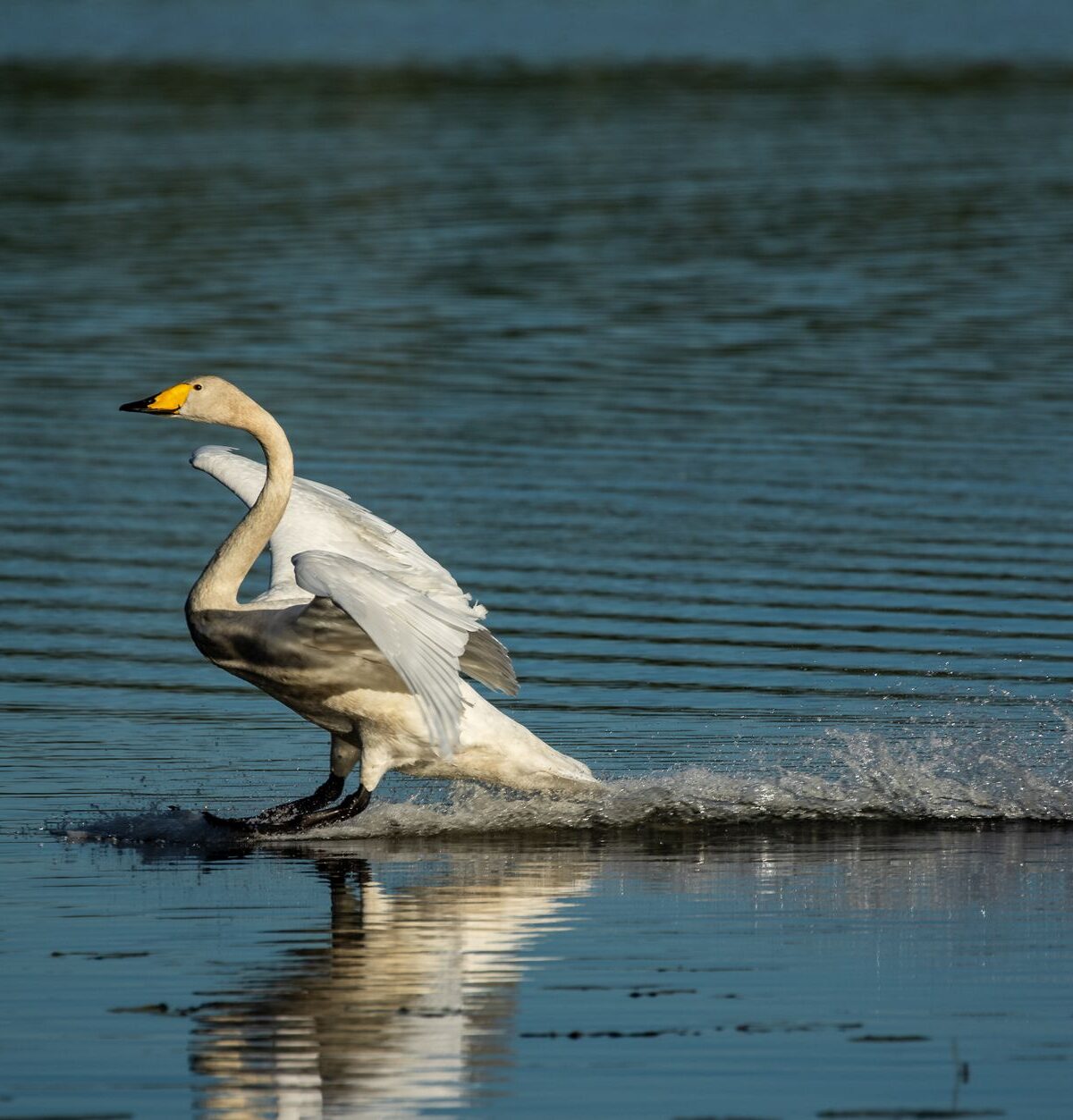
BEWICK'S SWAN
Cygnus columbianus bewickii
DESCRIPTION
Bewick's Swan (Cygnus columbianus bewickii) is commonly known as the Tundra Swan. This medium-sized swan is characterized by its predominantly white plumage, with a distinctive black and yellow patch on its head. They are known for their graceful swimming and strong migratory behavior, often traveling in family groups during migration.
FUN FACTS
- Bewick's Swans are named after the English naturalist Thomas Bewick, who was known for his detailed illustrations of birds
- They are remarkable migrators, traveling thousands of kilometers from their breeding grounds in the Arctic to wintering areas in Europe and Asia, often flying in a distinctive V formation.| These swans are known for their strong family bonds, with young swans staying with their parents for several months after hatching
- This social structure helps them learn essential survival skills and increases their chances of survival during migration
QUICK INFO
Lifespan10-15 years in the wild, up to 20 in captivity
Average Weight4-8 kg
Average Length1.2-1.5 m
Diet TypeHerbivore
Social Structurepair, family groups — they often stay with their mate and offspring during migration.
Activity PatternDiurnal
Breeding SeasonSpring (April-June)
- Habitat
- Bewick's Swans inhabit wetlands, lakes, and rivers during the breeding season, often nesting in marshy areas. They prefer shallow waters where they can easily access their food sources.
- Biomes
- Wetlands, Temperate Forests
- Native Range
- They breed in the Arctic regions of Russia and migrate to Europe and parts of Asia for wintering.
- Continent
- Europe, Asia
- Countries
- Russia, United Kingdom, Netherlands, Germany, China
- Diet
- Bewick's Swans primarily feed on aquatic vegetation, including roots, tubers, and leaves. They are known to forage in shallow waters and on land, particularly in agricultural fields.
- Diet Type
- Herbivore
- Favorite Food
- aquatic plants, grasses
- Social Structure
- pair, family groups — they often stay with their mate and offspring during migration.
- Activity Pattern
- Diurnal
- Group Size
- 2-50
- Territorial
- 0

 VU
VU
4-8 kg
Weight
1.2-1.5 m
Length
- Coloration
- mostly white with a black and yellow head patch
- Sexual Dimorphism
- males and females are similar in appearance, but males are generally larger.
- Lifespan
- 10-15 years in the wild, up to 20 in captivity
- Offspring per Birth
- 3-5
- Sexual Maturity
- 3-4 years
- Breeding Season
- Spring (April-June)
LC
Least Concern
IUCN Red List Status
- Population Status
- The population of Bewick's Swans has been declining in recent years due to habitat loss and hunting.
- Wild Population Estimate
- 50,000-100,000
- Population Trend
- Decreasing
- Endangered
- 0
- Threats
- Main threats include habitat destruction due to agricultural expansion and climate change, as well as hunting in some regions. These factors have contributed to their declining population.
- Predators
- Foxes, large birds of prey, and humans are known predators of Bewick's Swans, particularly during the nesting season.
- Defense Mechanisms
- They rely on their size and strong flight capabilities to evade predators, and they can also be aggressive when defending their nests.
- Compatible Animals
- other waterfowl, ducks, geese
- Found in Zoos
- Uncommon