


BIANCHI'S PHEASANT
Phasianus colchicus bianchii
DESCRIPTION
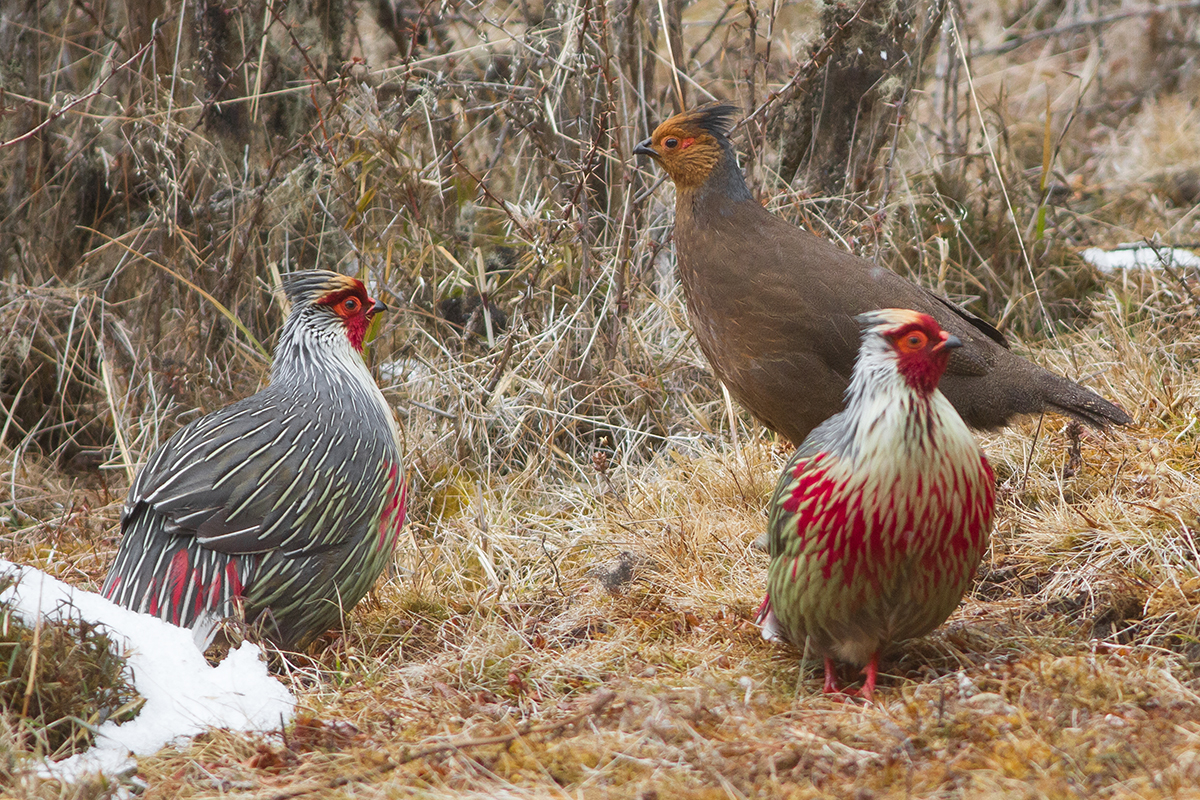
Bianchi's pheasant (Phasianus colchicus bianchii) is a striking subspecies of the common pheasant, characterized by its vibrant plumage and distinctive markings. Males typically exhibit a rich combination of iridescent greens, blues, and browns, while females are more subdued in coloration, featuring mottled browns and tans for camouflage. This species is known for its elusive behavior, often preferring dense underbrush and forested areas, making it a challenge to observe in the wild.
FUN FACTS
- Bianchi's pheasant is named after the Italian ornithologist, Giovanni Bianchi, who contributed significantly to the study of pheasants
- | This subspecies is known for its elaborate courtship displays, where males perform intricate dances and vocalizations to attract females during the breeding season
QUICK INFO
Lifespan5-10 years in the wild, up to 15 in captivity
Average Weight1-1.5 kg
Average Length60-75 cm
Diet TypeOmnivore
Social StructureTypically solitary or found in pairs, Bianchi's pheasant may also form small groups during the non-breeding season.
Activity PatternDiurnal
Breeding SeasonSpring (April-June)
- Habitat
- This pheasant inhabits dense forests, shrublands, and areas with thick undergrowth, which provide cover and food sources. It prefers regions with a mix of open ground and dense vegetation for foraging and nesting.
- Biomes
- Temperate Forest, Montane Forest
- Native Range
- Bianchi's pheasant is native to the mountainous regions of central and eastern Asia, particularly in parts of China.
- Continent
- Asia
- Countries
- China
- Diet
- Bianchi's pheasant primarily feeds on seeds, fruits, and various plant materials, but it also consumes insects and small invertebrates. This omnivorous diet allows it to adapt to different environments and food availability.
- Diet Type
- Omnivore
- Favorite Food
- seeds, fruits, insects
- Social Structure
- Typically solitary or found in pairs, Bianchi's pheasant may also form small groups during the non-breeding season.
- Activity Pattern
- Diurnal
- Group Size
- 1-5
- Territorial
- 1

 VU
LC
VU
LC
1-1.5 kg
Weight
60-75 cm
Length
- Coloration
- Males are adorned with iridescent green and blue feathers, while females are brown and mottled for camouflage.
- Sexual Dimorphism
- Males are more colorful and larger than females.
- Lifespan
- 5-10 years in the wild, up to 15 in captivity
- Offspring per Birth
- 6-12 eggs
- Sexual Maturity
- 1 year
- Breeding Season
- Spring (April-June)
LC
Least Concern
IUCN Red List Status
- Population Status
- The population of Bianchi's pheasant is currently stable, but habitat loss poses a potential threat.
- Wild Population Estimate
- unknown
- Population Trend
- Stable
- Endangered
- 0
- Threats
- Habitat destruction due to deforestation and agricultural expansion is the main threat to Bianchi's pheasant. Additionally, hunting pressures in some areas can impact local populations.
- Predators
- foxes, birds of prey, domestic dogs
- Defense Mechanisms
- Bianchi's pheasant relies on its excellent camouflage and ability to remain still to avoid detection by predators.
- Found in Zoos
- Uncommon