


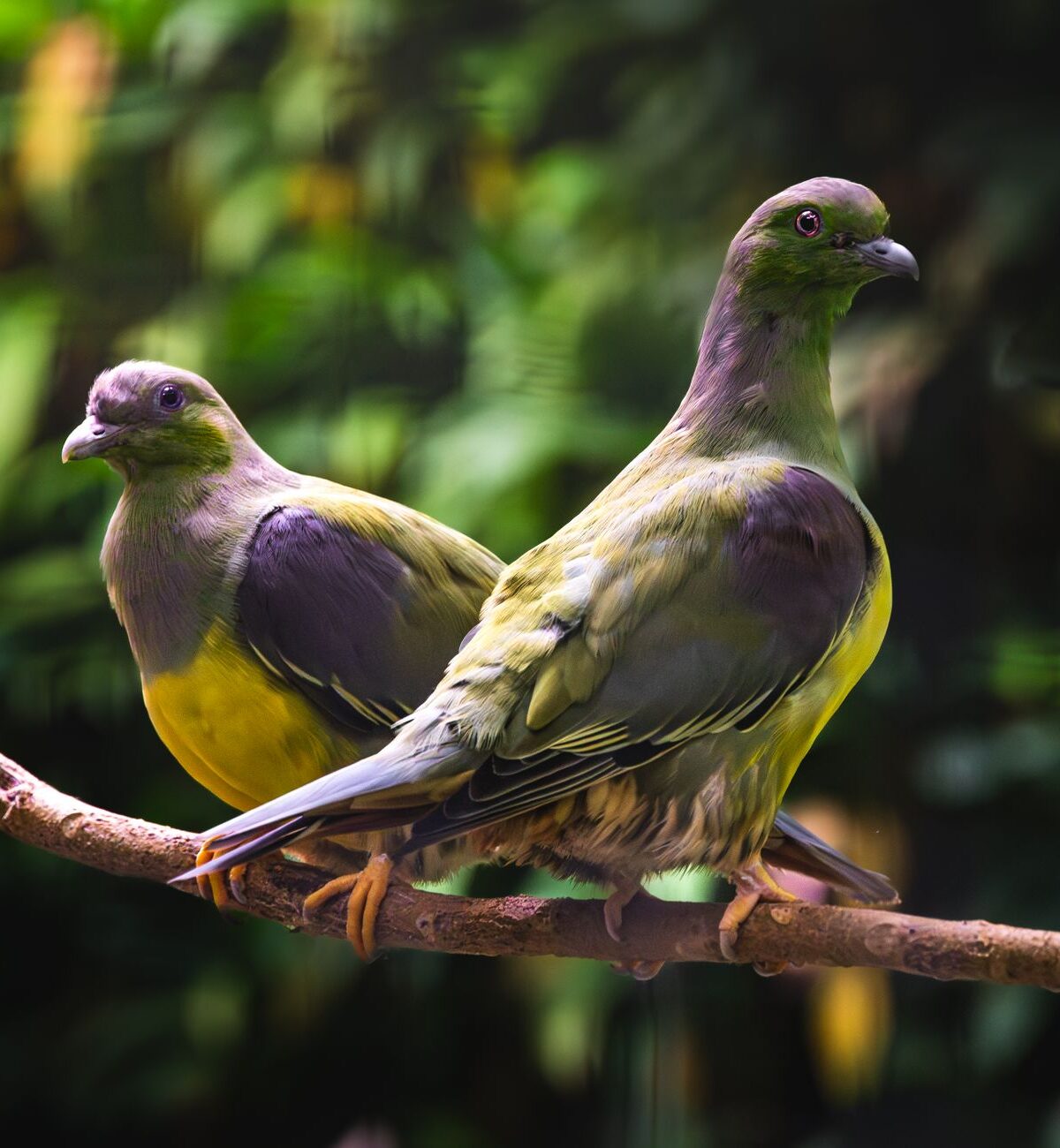
BICOLORED PIGEON
Ducula bicolor
DESCRIPTION
Bicolored Pigeon (Ducula bicolor) is also known as the Green Pigeon due to its striking plumage. This medium-sized pigeon exhibits a unique coloration with a combination of green and grayish tones, making it visually distinct among its relatives. Typically found in forested areas, it is known for its gentle demeanor and preference for feeding on fruits and seeds, which plays a crucial role in seed dispersal within its ecosystem.
FUN FACTS
- Bicolored Pigeons are known for their unique feeding behavior, often seen hanging upside down to reach fruits on higher branches
- They play a vital role in their ecosystem as seed dispersers, helping to maintain the health and diversity of their forest habitats
QUICK INFO
Lifespan10-15 years in the wild
Average Weight300-400 g
Average Length30-35 cm
Diet TypeHerbivore
Social StructureThey are typically seen in pairs or small groups, often forming monogamous pairs during the breeding season.
Activity PatternDiurnal
Breeding SeasonYear-round, peaking during the wet season
- Habitat
- This species inhabits tropical and subtropical forests, often favoring areas with dense canopy cover. They are typically found in lowland forests and can also be seen in secondary growth.
- Biomes
- Tropical Rainforest, Subtropical Forest
- Native Range
- Bicolored Pigeons are native to the islands of the Solomon Islands and Vanuatu.
- Continent
- Oceania
- Countries
- Solomon Islands, Vanuatu
- Diet
- Bicolored Pigeons primarily feed on fruits, seeds, and berries, which they forage from trees. Their diet is essential for maintaining the health of their forest habitats.
- Diet Type
- Herbivore
- Favorite Food
- fruits and seeds
- Social Structure
- They are typically seen in pairs or small groups, often forming monogamous pairs during the breeding season.
- Activity Pattern
- Diurnal
- Group Size
- 2-10
- Territorial
- 0
 LC
LC

300-400 g
Weight
30-35 cm
Length
- Coloration
- The plumage is predominantly green with a grayish head and a distinctive white patch on the wing.
- Lifespan
- 10-15 years in the wild
- Offspring per Birth
- 1-2
- Sexual Maturity
- 1-2 years
- Breeding Season
- Year-round, peaking during the wet season
LC
Least Concern
IUCN Red List Status
- Population Status
- The population of Bicolored Pigeons is currently stable, but habitat loss poses a potential threat.
- Wild Population Estimate
- Unknown
- Population Trend
- Stable
- Endangered
- 0
- Threats
- The main threats to Bicolored Pigeons include habitat destruction due to logging and agricultural expansion. Additionally, hunting in some areas poses a risk to their populations.
- Predators
- Natural predators include birds of prey and snakes, which may target eggs and young pigeons.
- Defense Mechanisms
- Bicolored Pigeons rely on their camouflage to avoid detection by predators, often remaining still among the leaves.
- Found in Zoos
- Uncommon