


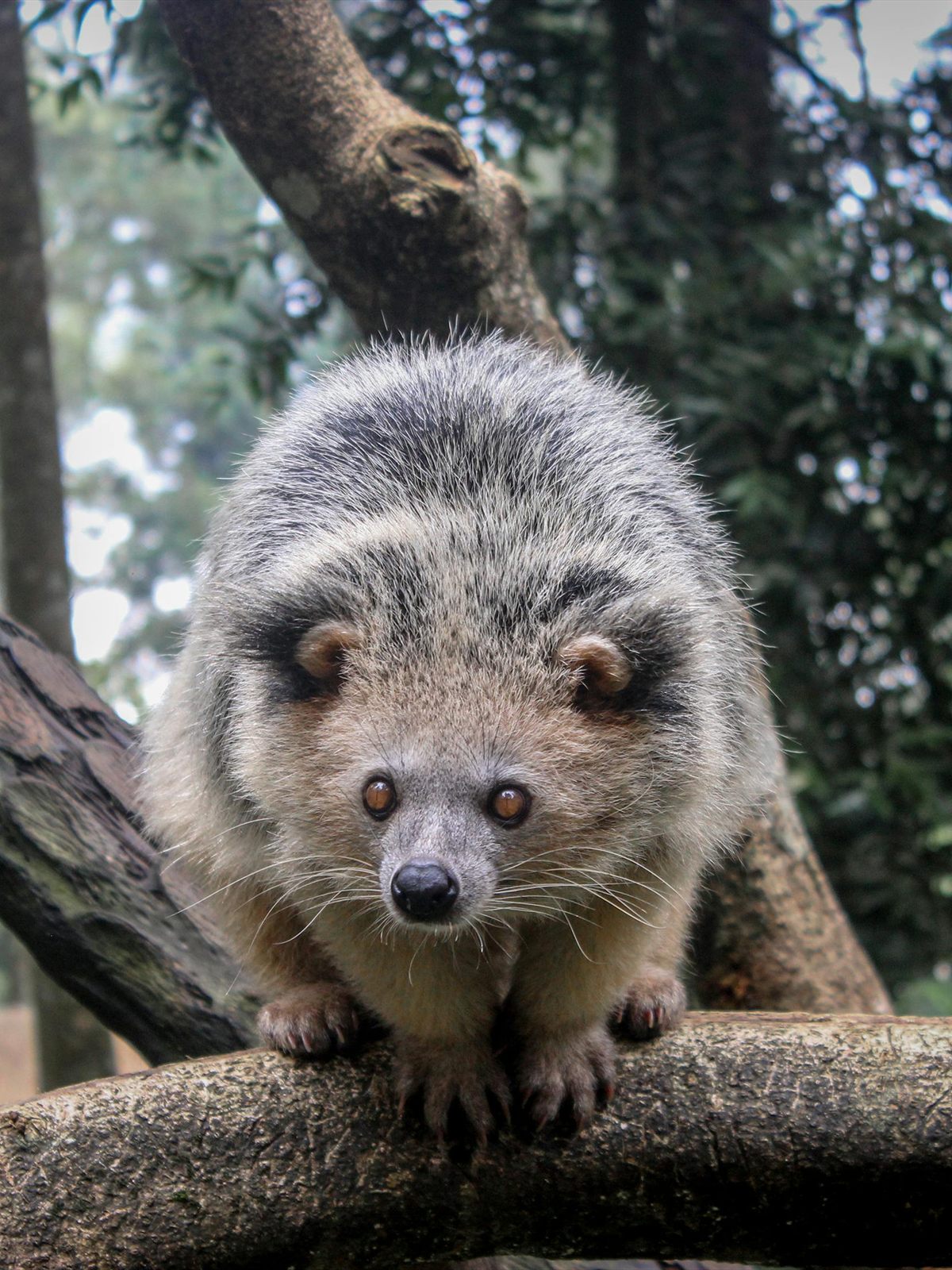
BINTURONG
Arctictis binturong
DESCRIPTION
The binturong, also known as the bearcat, is a large, nocturnal mammal native to Southeast Asia. It has a distinctive appearance with a long, prehensile tail and a shaggy black coat.
FUN FACTS
- Binturongs have a prehensile tail that helps them navigate trees | They are known to smell like buttered popcorn due to the scent of their urine | Binturongs play a crucial role in their ecosystem by dispersing seeds
QUICK INFO
LifespanUp to 25 years in captivity.
Average Weight9-14 kg
Average Length60-95 cm
Diet TypeOmnivore
Social StructureSolitary, with occasional pair bonding during mating season.
Activity PatternNocturnal
Breeding SeasonYear-round, with peaks in certain regions.
- Habitat
- Binturongs inhabit tropical rainforests and dense forests, often found in the canopy. They are arboreal and spend much of their time in trees.
- Biomes
- Tropical Rainforest
- Native Range
- Southeast Asia, including countries like Indonesia, Malaysia, and Thailand.
- Continent
- Asia
- Countries
- Indonesia, Malaysia, Thailand, Myanmar, Vietnam
- Diet
- Binturongs are omnivorous and primarily feed on fruits, particularly figs, as well as small animals and insects. They have a varied diet that allows them to adapt to different food sources in their habitat.
- Diet Type
- Omnivore
- Favorite Food
- Fruits, especially figs
- Social Structure
- Solitary, with occasional pair bonding during mating season.
- Activity Pattern
- Nocturnal
- Group Size
- 1-2
- Territorial
- 1
 VU
VU
9-14 kg
Weight
60-95 cm
Length
- Coloration
- Shaggy black fur with a lighter underbelly.
- Sexual Dimorphism
- Males are generally larger than females.
- Lifespan
- Up to 25 years in captivity.
- Gestation Period
- 90-95 days
- Offspring per Birth
- 1-3
- Sexual Maturity
- 2-3 years
- Breeding Season
- Year-round, with peaks in certain regions.
LC
Least Concern
IUCN Red List Status
- Population Status
- The population is currently stable but faces threats from habitat loss.
- Wild Population Estimate
- Unknown
- Population Trend
- Stable
- Endangered
- 0
- Threats
- Main threats include habitat destruction due to logging and agriculture, as well as hunting for bushmeat.
- Predators
- Large birds of prey and large carnivores may pose threats to young binturongs.
- Defense Mechanisms
- Binturongs can emit a strong-smelling odor to deter predators.
- Found in Zoos
- Uncommon