


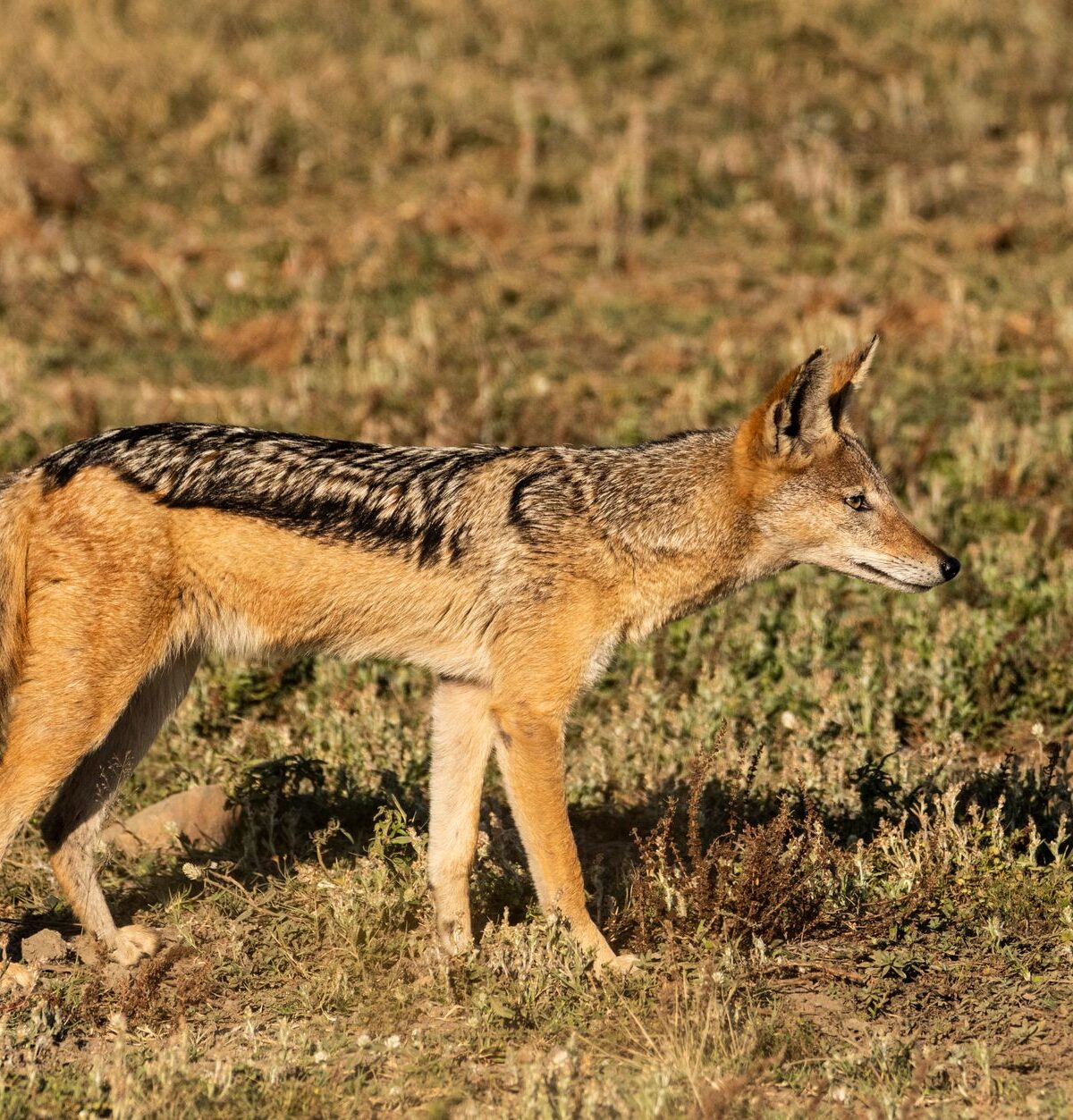
BLACK-BACKED JACKAL
Canis mesomelas
DESCRIPTION
Black-Backed Jackal (Canis mesomelas) is a medium-sized canid known for its distinctive black saddle-like marking on its back. It has a slender body, long legs, and a bushy tail, with a coat that varies from yellowish to reddish-brown. This species is highly adaptable, often found in a variety of habitats, and exhibits both solitary and social behaviors, making it a versatile predator in its ecosystem.
FUN FACTS
- Black-Backed Jackals are known for their intelligence and problem-solving abilities, often using tools or strategies to access food
- They play a crucial role in their ecosystem as scavengers, helping to keep the environment clean by consuming carrion and waste.| These jackals have a unique social structure that allows them to adapt to various environments, often changing their behavior based on the availability of food and the presence of other predators
QUICK INFO
Lifespan10-12 years in the wild, up to 15 years in captivi
Average Weight7-12 kg
Average Length60-80 cm
Diet TypeOmnivore
Social StructureThey can be solitary or form monogamous pairs, and sometimes live in small family groups. Their social structure is flexible, adapting to environmental conditions and food availability.
Activity PatternCrepuscular
Breeding SeasonYear-round, with peaks depending on the region
- Habitat
- They inhabit savannas, grasslands, and arid regions, often near water sources. Their adaptability allows them to thrive in both open and bushy areas.
- Biomes
- Savanna, Grassland, Desert
- Native Range
- Black-Backed Jackals are native to southern and eastern Africa, ranging from South Africa to Ethiopia.
- Continent
- Africa
- Countries
- South Africa, Namibia, Botswana, Zimbabwe, Tanzania, Kenya, Ethiopia
- Diet
- Black-Backed Jackals are opportunistic feeders, consuming a varied diet that includes small mammals, birds, insects, and fruits. They are known to scavenge as well, often following larger predators to feed on leftovers.
- Diet Type
- Omnivore
- Favorite Food
- small mammals, insects, fruits
- Social Structure
- They can be solitary or form monogamous pairs, and sometimes live in small family groups. Their social structure is flexible, adapting to environmental conditions and food availability.
- Activity Pattern
- Crepuscular
- Group Size
- 2-6
- Territorial
- 1
 LC
LC
 LC
LC
7-12 kg
Weight
60-80 cm
Length
- Coloration
- The coat is generally a mix of yellowish to reddish-brown with a distinctive black patch on the back.
- Sexual Dimorphism
- Males are typically larger than females.
- Lifespan
- 10-12 years in the wild, up to 15 years in captivi
- Gestation Period
- 63 days
- Offspring per Birth
- 2-6
- Sexual Maturity
- 1-2 years
- Breeding Season
- Year-round, with peaks depending on the region
LC
Least Concern
IUCN Red List Status
- Population Status
- The population is currently stable, though local declines may occur due to habitat loss and hunting.
- Wild Population Estimate
- 50,000-100,000
- Population Trend
- Stable
- Endangered
- 0
- Threats
- Main threats include habitat destruction, hunting, and competition with domestic dogs. In some areas, they are also persecuted as pests.
- Predators
- Lions, hyenas, and larger carnivores may prey on Black-Backed Jackals, especially when they are young or vulnerable.
- Defense Mechanisms
- They rely on their agility and speed to escape predators, and they can also use vocalizations to warn others of danger.
- Found in Zoos
- Uncommon