


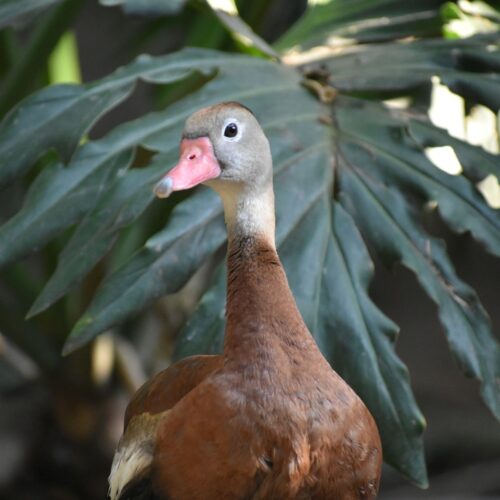
BLACK-BELLIED WHISTLING DUCK
Dendrocygna autumnalis
DESCRIPTION
The Black-Bellied Whistling Duck is a medium-sized waterfowl known for its distinctive black belly and bright orange bill. It has a striking appearance with a combination of brownish-gray body feathers and a white facial patch. This species is highly social and often seen in large groups, exhibiting a unique whistling call that gives it its name.
FUN FACTS
- Black-Bellied Whistling Ducks are unique among ducks for their ability to perch in trees, which they often do to escape predators or to rest
- They are also known for their loud, whistling calls that can be heard from a distance, making them one of the more vocal duck species.| These ducks have a fascinating social structure, often forming strong pair bonds that can last for years
- During the breeding season, they engage in elaborate courtship displays, which include synchronized swimming and vocalizations to attract mates
QUICK INFO
Lifespan10-15 years in the wild
Average Weight0.7-1.2 kg
Average Length50-60 cm
Diet TypeHerbivore
Social StructureThey are typically found in groups, often seen in pairs or larger flocks during feeding.
Activity PatternDiurnal
Breeding SeasonSpring to early summer
- Habitat
- These ducks inhabit freshwater wetlands, marshes, and rice fields, often preferring areas with abundant vegetation. They are also found in open grasslands near water sources.
- Biomes
- Wetlands, Grassland
- Native Range
- The Black-Bellied Whistling Duck is native to the southern United States, Mexico, and Central America, with some populations extending into South America.
- Continent
- North America, Central America
- Countries
- United States, Mexico, Belize, Guatemala, Honduras, Nicaragua, Costa Rica, Panama
- Diet
- Black-Bellied Whistling Ducks primarily feed on seeds, grains, and aquatic plants. They are known to forage in fields and wetlands, often grazing on the ground.
- Diet Type
- Herbivore
- Favorite Food
- seeds, grains, aquatic plants
- Social Structure
- They are typically found in groups, often seen in pairs or larger flocks during feeding.
- Activity Pattern
- Diurnal
- Group Size
- 10-50
- Territorial
- 0
 LC
LC

 VU
VU
0.7-1.2 kg
Weight
50-60 cm
Length
- Coloration
- The body is mostly brown with a distinctive black belly and a white face patch.
- Lifespan
- 10-15 years in the wild
- Offspring per Birth
- 6-12
- Sexual Maturity
- 1-2 years
- Breeding Season
- Spring to early summer
LC
Least Concern
IUCN Red List Status
- Population Status
- The population is currently stable, with some local increases noted.
- Wild Population Estimate
- 100,000-200,000
- Population Trend
- Stable
- Endangered
- 0
- Threats
- Main threats include habitat loss due to wetland drainage and agricultural expansion. They are also susceptible to hunting in some regions.
- Predators
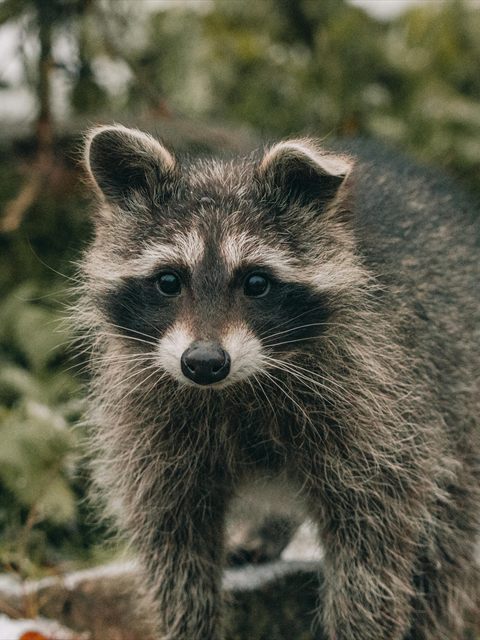
- Raccoons, foxes, birds of prey, and domestic cats are known predators of the Black-Bellied Whistling Duck.
- Defense Mechanisms
- They rely on their ability to fly quickly and their social behavior to evade predators.
- Compatible Animals
- Other waterfowl species, such as ducks and geese
- Found in Zoos
- Common