


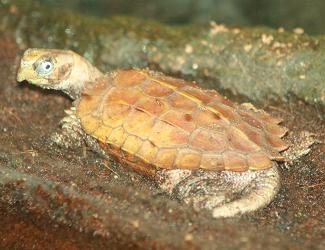
BLACK-BREASTED LEAF TURTLE
Geoemyda spengleri
DESCRIPTION
Black-Breasted Leaf Turtle (Geoemyda spengleri) is also known as Spengler's tortoise, characterized by its distinctive black and yellow coloration. This medium-sized turtle has a flattened shell that helps it blend into its leaf-litter habitat, making it an adept forager. Primarily found in Southeast Asia, it exhibits a shy demeanor and is often seen hiding among foliage during the day.
FUN FACTS
- The Black-Breasted Leaf Turtle is known for its unique ability to camouflage itself among the forest floor, making it difficult for predators to spot
- Additionally, this species has a fascinating reproductive strategy, where females can store sperm for several months before fertilizing their eggs, allowing them to time the hatching of their young with favorable environmental conditions
QUICK INFO
Lifespan20-30 years in captivity, potentially less in the
Average Weight1-2 kg
Average Length20-30 cm
Diet TypeHerbivore
Social Structuresolitary
Activity PatternDiurnal
Breeding SeasonSpring to early summer
- Habitat
- The Black-Breasted Leaf Turtle inhabits tropical rainforests, often found near streams and rivers. It prefers areas with dense vegetation that provides cover and foraging opportunities.
- Biomes
- Tropical Rainforest
- Native Range
- This species is native to the tropical forests of Southeast Asia, particularly in countries like Vietnam and Laos.
- Continent
- Asia
- Countries
- Vietnam, Laos
- Diet
- It primarily feeds on a variety of plant materials, including leaves, fruits, and flowers, but may also consume small invertebrates. This diet reflects its adaptation to a leaf-litter environment.
- Diet Type
- Herbivore
- Favorite Food
- leaves, fruits, flowers
- Social Structure
- solitary
- Activity Pattern
- Diurnal
- Group Size
- 1
- Territorial
- 0
 VU
VU
 LC
LC
 EN
EN
1-2 kg
Weight
20-30 cm
Length
- Coloration
- The turtle has a dark brown to black shell with bright yellow markings, particularly on the head and limbs.
- Sexual Dimorphism
- Males are typically smaller than females and may have slightly longer tails.
- Lifespan
- 20-30 years in captivity, potentially less in the
- Offspring per Birth
- 2-5
- Sexual Maturity
- 4-5 years
- Breeding Season
- Spring to early summer
EN
Endangered
IUCN Red List Status
- Population Status
- The population is currently considered to be decreasing due to habitat loss and illegal trade.
- Wild Population Estimate
- Unknown
- Population Trend
- Decreasing
- Endangered
- 1
- Threats
- Main threats include habitat destruction due to deforestation and illegal collection for the pet trade. These factors have significantly impacted their populations in the wild.
- Predators
- Large birds, snakes, and mammals may prey on juvenile turtles, while adults have fewer natural predators due to their size and shell.
- Defense Mechanisms
- When threatened, they can retract into their shells and remain motionless to avoid detection.
- Found in Zoos
- Uncommon