


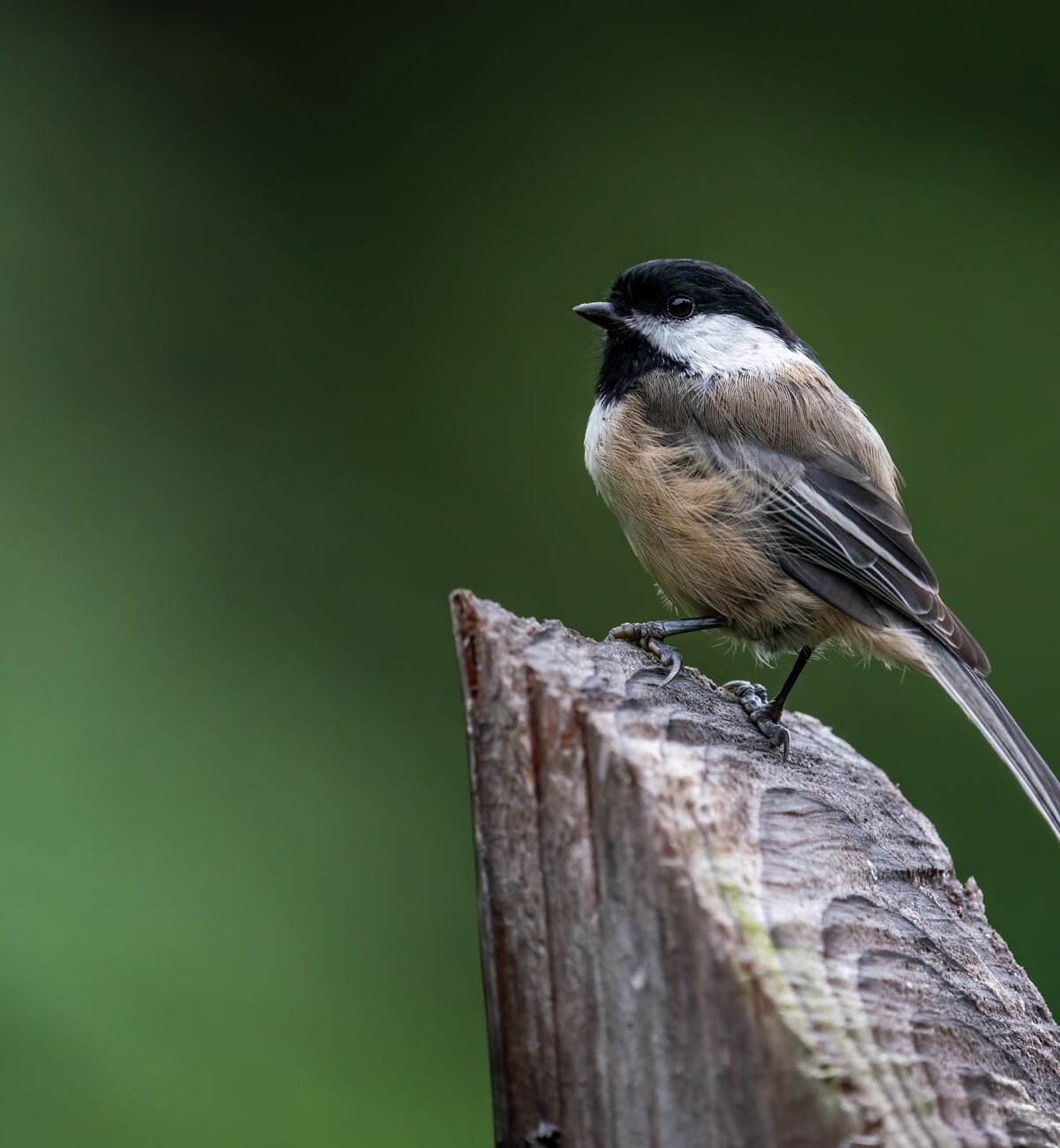
BLACK-CAPPED CHICKADEE
Poecile atricapillus
DESCRIPTION
Black-Capped Chickadee (Poecile atricapillus) is commonly known as the Chickadee due to its distinctive call. This small bird features a black cap and bib, white cheeks, and a soft gray body, making it easily recognizable. Known for its curious and friendly behavior, it often approaches humans and is a frequent visitor to bird feeders, where it can be seen hanging upside down while foraging.
FUN FACTS
- Black-Capped Chickadees have a unique way of storing food; they can remember the locations of thousands of seeds they hide for later use
- Additionally, they have a remarkable ability to adapt to urban environments, often thriving in parks and gardens where they can find food and shelter
QUICK INFO
Lifespan2-3 years in the wild, up to 13 years in captivity
Average Weight11-12 g
Average Length12-15 cm
Diet TypeOmnivore
Social StructureThey are often found in small groups, especially outside the breeding season, but can also be solitary.
Activity PatternDiurnal
Breeding SeasonSpring (March-June)
- Habitat
- This species thrives in mixed and deciduous forests, as well as suburban areas with sufficient tree cover. They prefer habitats that provide ample foraging opportunities and nesting sites.
- Biomes
- Temperate Forest, Boreal Forest
- Native Range
- The Black-Capped Chickadee is native to North America, ranging from southern Canada to the northern United States.
- Continent
- North America
- Countries
- Canada, United States
- Diet
- The Black-Capped Chickadee primarily feeds on insects, seeds, and berries. It is known to cache food for later consumption, hiding seeds in various locations.
- Diet Type
- Omnivore
- Favorite Food
- seeds, insects, berries
- Social Structure
- They are often found in small groups, especially outside the breeding season, but can also be solitary.
- Activity Pattern
- Diurnal
- Group Size
- 2-12
- Territorial
- 1

 LC
LC
11-12 g
Weight
12-15 cm
Length
- Coloration
- Black cap and bib, white cheeks, gray wings and back, and a light underbelly.
- Lifespan
- 2-3 years in the wild, up to 13 years in captivity
- Offspring per Birth
- 5-8
- Sexual Maturity
- 1 year
- Breeding Season
- Spring (March-June)
LC
Least Concern
IUCN Red List Status
- Population Status
- The population of Black-Capped Chickadees is currently stable, with no significant declines reported.
- Wild Population Estimate
- Unknown
- Population Trend
- Stable
- Endangered
- 0
- Threats
- Main threats include habitat loss due to deforestation and climate change. They are also vulnerable to predation by larger birds and mammals.
- Predators
- Sharp-shinned Hawk, Cooper's Hawk, domestic cats, and various snakes.
- Defense Mechanisms
- They use alarm calls to warn other birds of predators and can also engage in mobbing behavior to drive away threats.
- Compatible Animals
- Nuthatches, finches, sparrows
- Found in Zoos
- Uncommon