


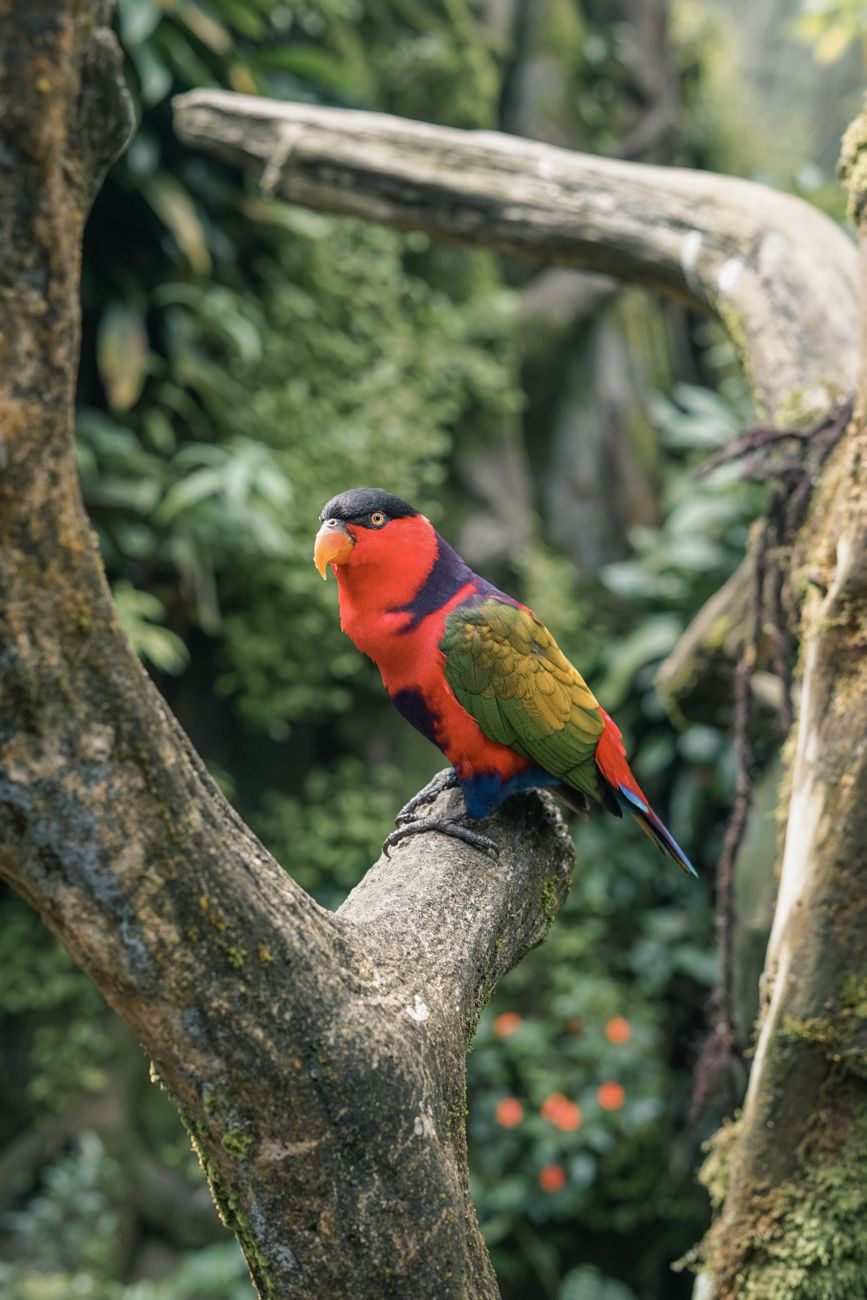
BLACK-CAPPED LORY
Lorius lory
DESCRIPTION
Black-Capped Lory (Lorius lory) is also known as the Red Lory and Lory, characterized by its vibrant red plumage and distinctive black crown. This medium-sized parrot exhibits a playful and social nature, often seen in flocks, engaging in acrobatic displays and vocalizations. In their natural habitat, they play a crucial role in pollination and seed dispersal, contributing to the health of their ecosystem.
FUN FACTS
- Black-Capped Lories have a unique feeding adaptation that allows them to consume nectar efficiently, which is essential for their survival in the wild
- They are also known for their playful antics and intelligence, often engaging in problem-solving activities and interactive play with their keepers in captivity.|These birds have a strong social structure and can form lifelong bonds with their mates, showcasing affectionate behaviors such as preening and feeding each other
- Their vibrant colors and engaging personalities make them popular pets, although they require a lot of social interaction and mental stimulation
QUICK INFO
Lifespan15-20 years in the wild, up to 30 in captivity
Average Weight100-150 g
Average Length25-30 cm
Diet TypeHerbivore
Social StructureThey are typically found in pairs or small groups, often forming strong bonds with their mates.
Activity PatternDiurnal
Breeding SeasonSpring (March-May)
- Habitat
- Black-Capped Lories inhabit tropical rainforests, often found in the canopy where they can access abundant food sources. They prefer areas with flowering plants that provide nectar.
- Biomes
- Tropical Rainforest
- Native Range
- They are native to the islands of Indonesia, particularly in the regions of the Maluku Islands.
- Continent
- Asia
- Countries
- Indonesia
- Diet
- They primarily feed on nectar, fruits, and flowers, utilizing their specialized tongues to extract food from blossoms.
- Diet Type
- Herbivore
- Favorite Food
- nectar, fruits, flowers
- Social Structure
- They are typically found in pairs or small groups, often forming strong bonds with their mates.
- Activity Pattern
- Diurnal
- Group Size
- 2-10
- Territorial
- 0
 LC
LC
100-150 g
Weight
25-30 cm
Length
- Coloration
- Vibrant red body with a black crown and blue underwing feathers.
- Lifespan
- 15-20 years in the wild, up to 30 in captivity
- Offspring per Birth
- 1-3
- Sexual Maturity
- 2-3 years
- Breeding Season
- Spring (March-May)
LC
Least Concern
IUCN Red List Status
- Population Status
- The population is currently stable, but habitat loss poses a potential threat.
- Wild Population Estimate
- Unknown
- Population Trend
- Stable
- Endangered
- 0
- Threats
- Main threats include habitat destruction due to logging and agricultural expansion, which reduces their natural feeding and nesting areas.
- Predators
- Natural predators include larger birds of prey and snakes.
- Defense Mechanisms
- They rely on their agility and ability to fly quickly to evade predators.
- Compatible Animals
- Other lories, small parrots
- Found in Zoos
- Common