


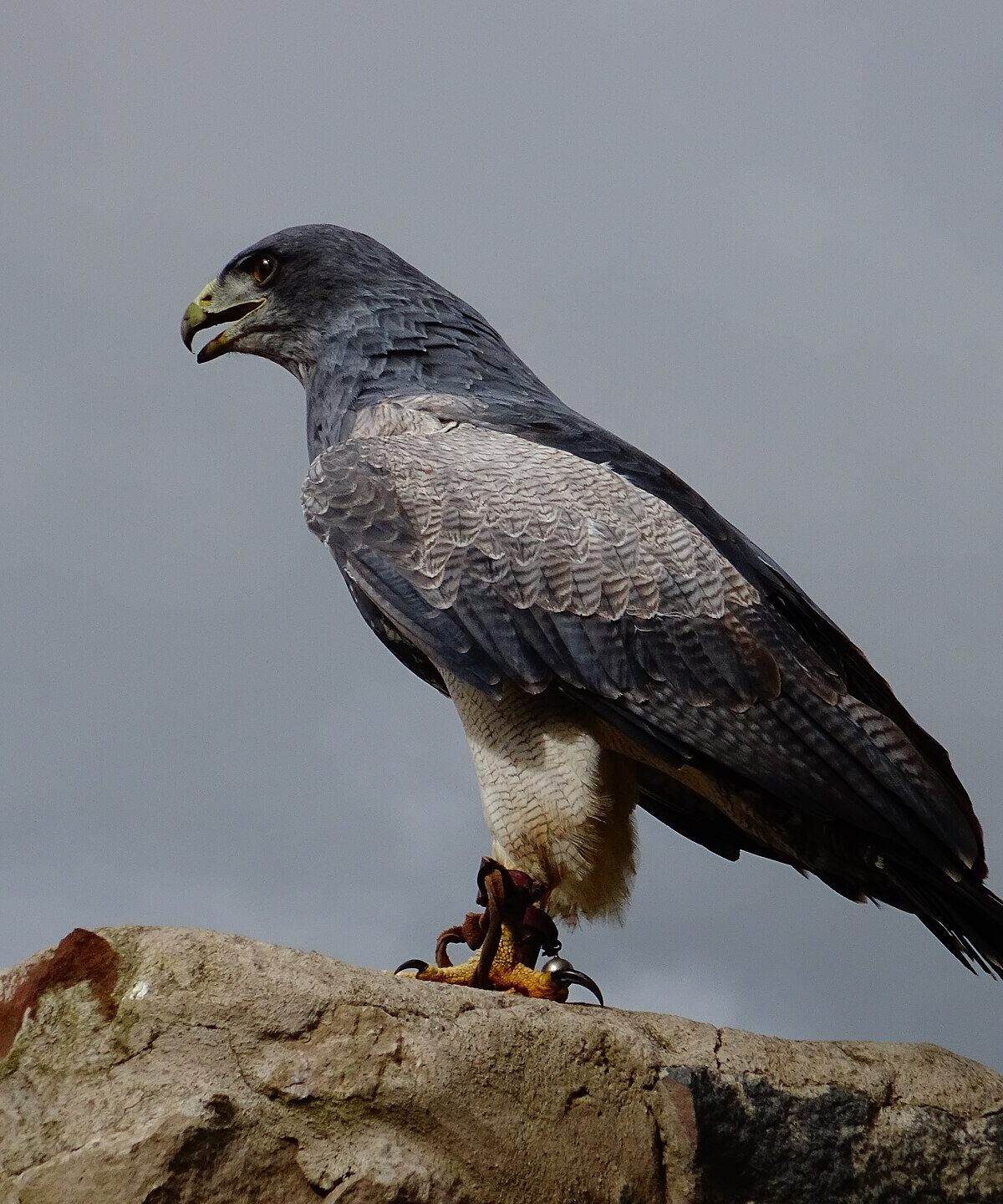
BLACK-CHESTED BUZZARD-EAGLE
Geranoaetus melanoleucus
DESCRIPTION
The Black-Chested Buzzard-Eagle is a large bird of prey characterized by its striking black and white plumage. Adults have a distinctive black chest and a white head, with a wingspan that can reach up to 1.8 meters. This species is known for its soaring flight and keen eyesight, often seen gliding effortlessly on thermal updrafts while searching for prey.
FUN FACTS
- The Black-Chested Buzzard-Eagle is known for its impressive hunting skills, often using a technique called 'stooping' where it dives at high speed to catch prey
- This species also plays a crucial role in its ecosystem as a top predator, helping to control populations of small mammals and birds in its habitat.| Interestingly, the Black-Chested Buzzard-Eagle has been observed engaging in playful aerial displays, where they will perform acrobatic maneuvers in the sky, showcasing their agility and strength
- These displays are not only a form of communication but also serve to strengthen pair bonds during the breeding season
QUICK INFO
Lifespan15-20 years in the wild, up to 30 in captivity
Average Weight2.5-3.5 kg
Average Length60-70 cm
Diet TypeCarnivore
Social Structuresolitary or pair, often seen alone or with a mate during breeding season
Activity PatternDiurnal
Breeding SeasonSpring (August-October)
- Habitat
- This species inhabits open grasslands, scrublands, and mountainous regions. It prefers areas with ample perches for hunting and nesting.
- Biomes
- Grassland, Mountain
- Native Range
- The Black-Chested Buzzard-Eagle is native to the Andes mountains and surrounding areas in South America.
- Continent
- South America
- Countries
- Argentina, Bolivia, Chile, Peru
- Diet
- The Black-Chested Buzzard-Eagle primarily feeds on small mammals, birds, and reptiles. It is known to hunt by soaring high above the ground and diving down to capture its prey.
- Diet Type
- Carnivore
- Favorite Food
- small mammals, birds, reptiles
- Social Structure
- solitary or pair, often seen alone or with a mate during breeding season
- Activity Pattern
- Diurnal
- Group Size
- 1-2
- Territorial
- 1
2.5-3.5 kg
Weight
60-70 cm
Length
- Coloration
- black chest, white head and underparts, dark wings
- Sexual Dimorphism
- males are generally smaller than females
- Lifespan
- 15-20 years in the wild, up to 30 in captivity
- Offspring per Birth
- 1-3
- Sexual Maturity
- 3-4 years
- Breeding Season
- Spring (August-October)
LC
Least Concern
IUCN Red List Status
- Population Status
- The population is currently stable, but habitat loss poses a potential threat.
- Wild Population Estimate
- 10,000-20,000
- Population Trend
- Stable
- Endangered
- 0
- Threats
- Main threats include habitat destruction due to agriculture and urbanization. Additionally, they may be affected by poisoning and hunting.
- Defense Mechanisms
- They rely on their size and flight capabilities to evade potential threats, often soaring high to avoid ground predators.
- Found in Zoos
- Uncommon