


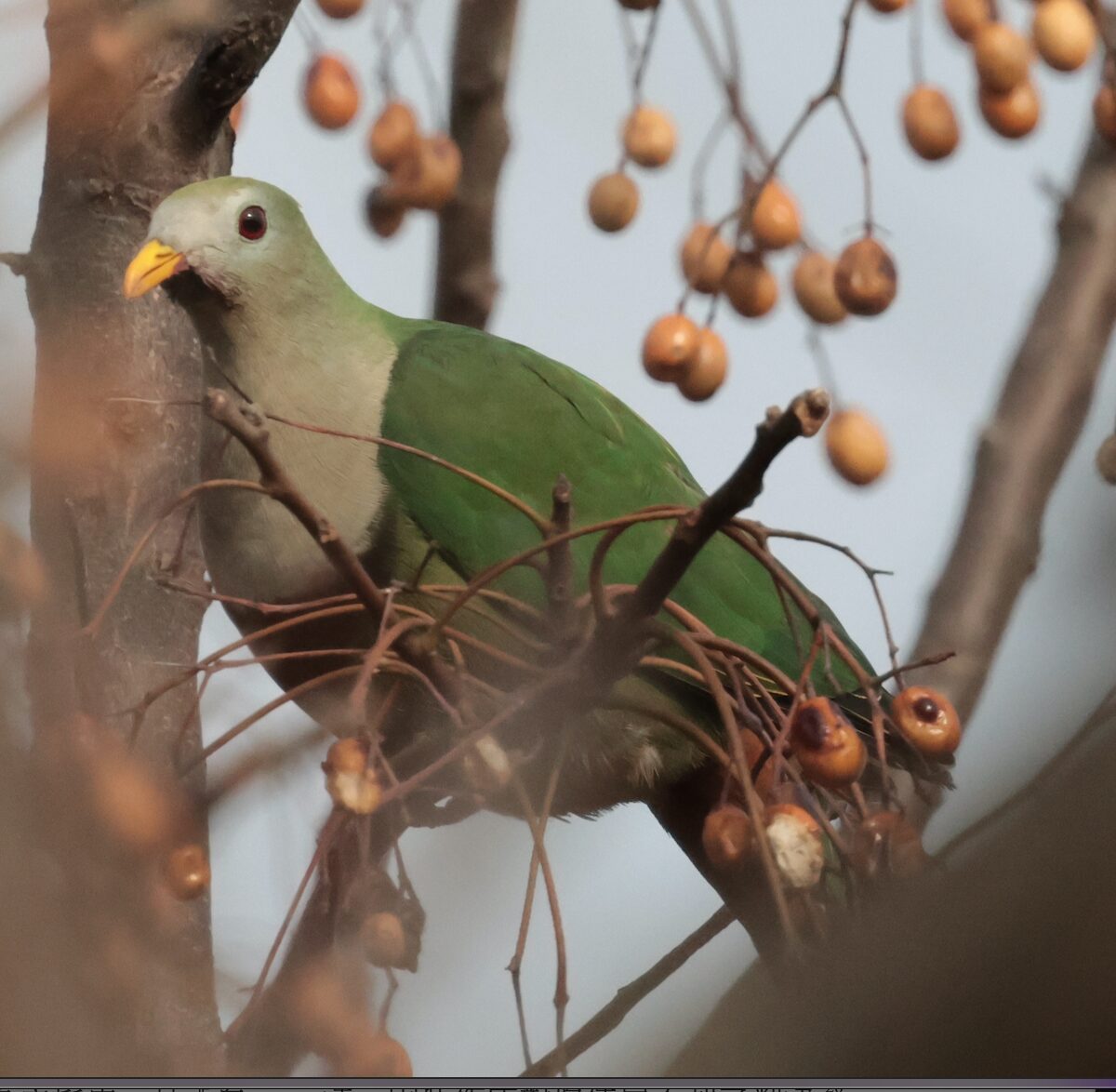
BLACK-CHINNED FRUIT DOVE
Ptilinopus leclancheri
DESCRIPTION
Black-chinned fruit dove (Ptilinopus leclancheri) is also known as Leclancher's fruit dove. This species is characterized by its striking plumage, featuring a black chin and a vibrant green body with hints of purple and yellow. They are typically found in forested areas, where they exhibit a shy and elusive behavior, often perching quietly among the foliage.
FUN FACTS
- Black-chinned fruit doves are known for their unique cooing calls, which can vary significantly between individuals, making them quite distinctive
- They play an important ecological role as seed dispersers, helping to maintain the health of their forest habitats by spreading seeds from the fruits they consume
QUICK INFO
Lifespan10-15 years in the wild
Average Weight150-200 g
Average Length25-30 cm
Diet TypeHerbivore
Social StructureThey are typically found in pairs or alone, showing a solitary nature outside of the breeding season.
Activity PatternDiurnal
Breeding SeasonYear-round, peaking during the wet season
- Habitat
- Black-chinned fruit doves inhabit tropical and subtropical forests, often favoring dense canopy areas. They are typically found at various elevations, depending on the availability of food sources.
- Biomes
- Tropical Rainforest
- Native Range
- This species is native to the islands of the southwestern Pacific, particularly in the Solomon Islands.
- Continent
- Oceania
- Countries
- Solomon Islands
- Diet
- They primarily feed on fruits, seeds, and berries, which they forage from trees. Their diet is crucial for seed dispersal in their habitat.
- Diet Type
- Herbivore
- Favorite Food
- Fruits and berries
- Social Structure
- They are typically found in pairs or alone, showing a solitary nature outside of the breeding season.
- Activity Pattern
- Diurnal
- Group Size
- 1-2
- Territorial
- 0
 LC
LC
 LC
LC
150-200 g
Weight
25-30 cm
Length
- Coloration
- The plumage is predominantly green with a distinctive black chin and a mix of purple and yellow accents.
- Lifespan
- 10-15 years in the wild
- Offspring per Birth
- 1-2
- Sexual Maturity
- 1-2 years
- Breeding Season
- Year-round, peaking during the wet season
LC
Least Concern
IUCN Red List Status
- Population Status
- The population is currently stable, but habitat loss poses a potential threat.
- Wild Population Estimate
- Unknown
- Population Trend
- Stable
- Endangered
- 0
- Threats
- Main threats include habitat destruction due to logging and agricultural expansion. Additionally, invasive species may compete for resources.
- Predators
- Predators include larger birds of prey and snakes, which may target eggs and young doves.
- Defense Mechanisms
- They rely on their camouflage and quiet behavior to avoid detection by predators.
- Found in Zoos
- Uncommon