


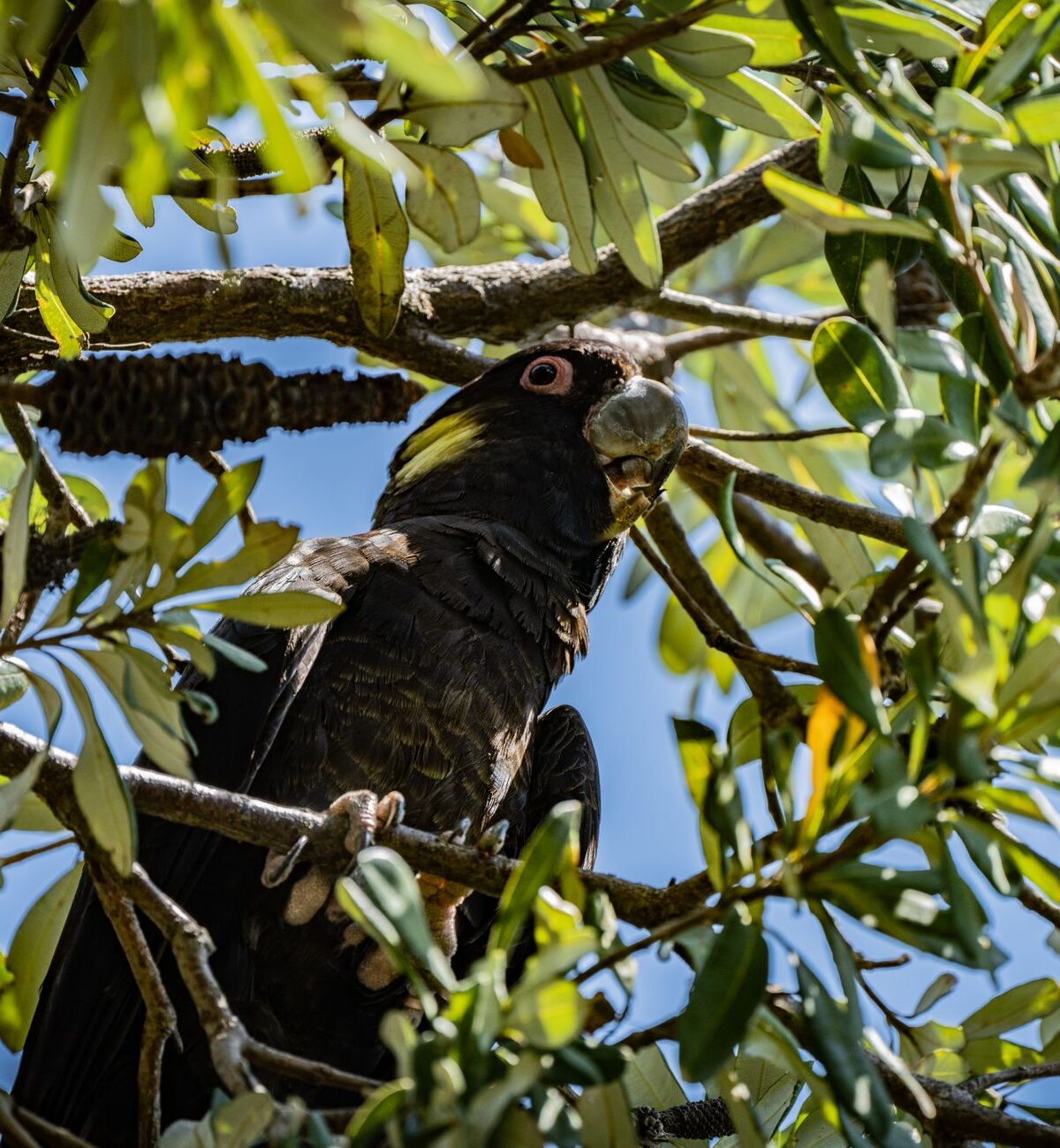
BLACK COCKATOO
DESCRIPTION
Black Cockatoo is commonly known as the Yellow-tailed Black Cockatoo and the Red-tailed Black Cockatoo. These large, striking birds are characterized by their predominantly black plumage, with distinctive yellow or red markings on their tails and underwings. They are social creatures, often seen in pairs or small groups, and are known for their loud, raucous calls that echo through their forest habitats.
FUN FACTS
- Black Cockatoos are known for their impressive vocal abilities, often mimicking sounds from their environment, including human speech
- They also play a crucial role in their ecosystems by helping to disperse seeds, which aids in forest regeneration.|These birds have a unique way of communicating with each other through a series of clicks and whistles, which can convey different messages depending on the context
- Their social structures are complex, and they often engage in playful behaviors, such as swinging from branches and playing with each other
QUICK INFO
Lifespan20-40 years in the wild, up to 50 years in captivi
Average Weight600-900 g
Average Length45-60 cm
Diet TypeHerbivore
Social StructureThey are typically found in pairs or small flocks, often forming strong pair bonds.
Activity PatternDiurnal
Breeding SeasonSpring to early summer (August to January)
- Habitat
- These birds inhabit a variety of forested areas, including woodlands and open forests, often near water sources. They prefer habitats with abundant food sources and nesting sites.
- Biomes
- Temperate Forest, Tropical Rainforest
- Native Range
- Black Cockatoos are native to Australia, with some species also found in New Guinea and surrounding islands.
- Continent
- Australia
- Countries
- Australia, Papua New Guinea
- Diet
- Black Cockatoos primarily feed on seeds, nuts, and fruits, using their strong beaks to crack open hard shells. They are particularly fond of the seeds of native Australian trees.
- Diet Type
- Herbivore
- Favorite Food
- Acacia seeds, pine nuts
- Social Structure
- They are typically found in pairs or small flocks, often forming strong pair bonds.
- Activity Pattern
- Diurnal
- Group Size
- 2-20
- Territorial
- 1
 LC
LC
600-900 g
Weight
45-60 cm
Length
- Coloration
- Predominantly black with yellow or red markings on the tail and underwings.
- Sexual Dimorphism
- Males and females are similar in appearance, but males typically have brighter coloration.
- Lifespan
- 20-40 years in the wild, up to 50 years in captivi
- Offspring per Birth
- 1-2
- Sexual Maturity
- 2-3 years
- Breeding Season
- Spring to early summer (August to January)
VU
Vulnerable
IUCN Red List Status
- Population Status
- Some species of Black Cockatoo are considered vulnerable due to habitat loss and hunting.
- Wild Population Estimate
- 10,000-20,000
- Population Trend
- Decreasing
- Endangered
- 1
- Threats
- Main threats include habitat destruction due to logging and land clearing, as well as illegal trapping for the pet trade. These factors have significantly impacted their populations in the wild.
- Conservation Program
- Various conservation programs are in place to protect their habitats and raise awareness about their plight.
- Predators
- Natural predators include large birds of prey and snakes, but they have few natural enemies due to their size and social behavior.
- Defense Mechanisms
- They use loud calls to warn others of danger and can also fly away quickly to escape threats.
- Compatible Animals
- Other cockatoos, parrots, and larger birds of similar size
- Found in Zoos
- Common