


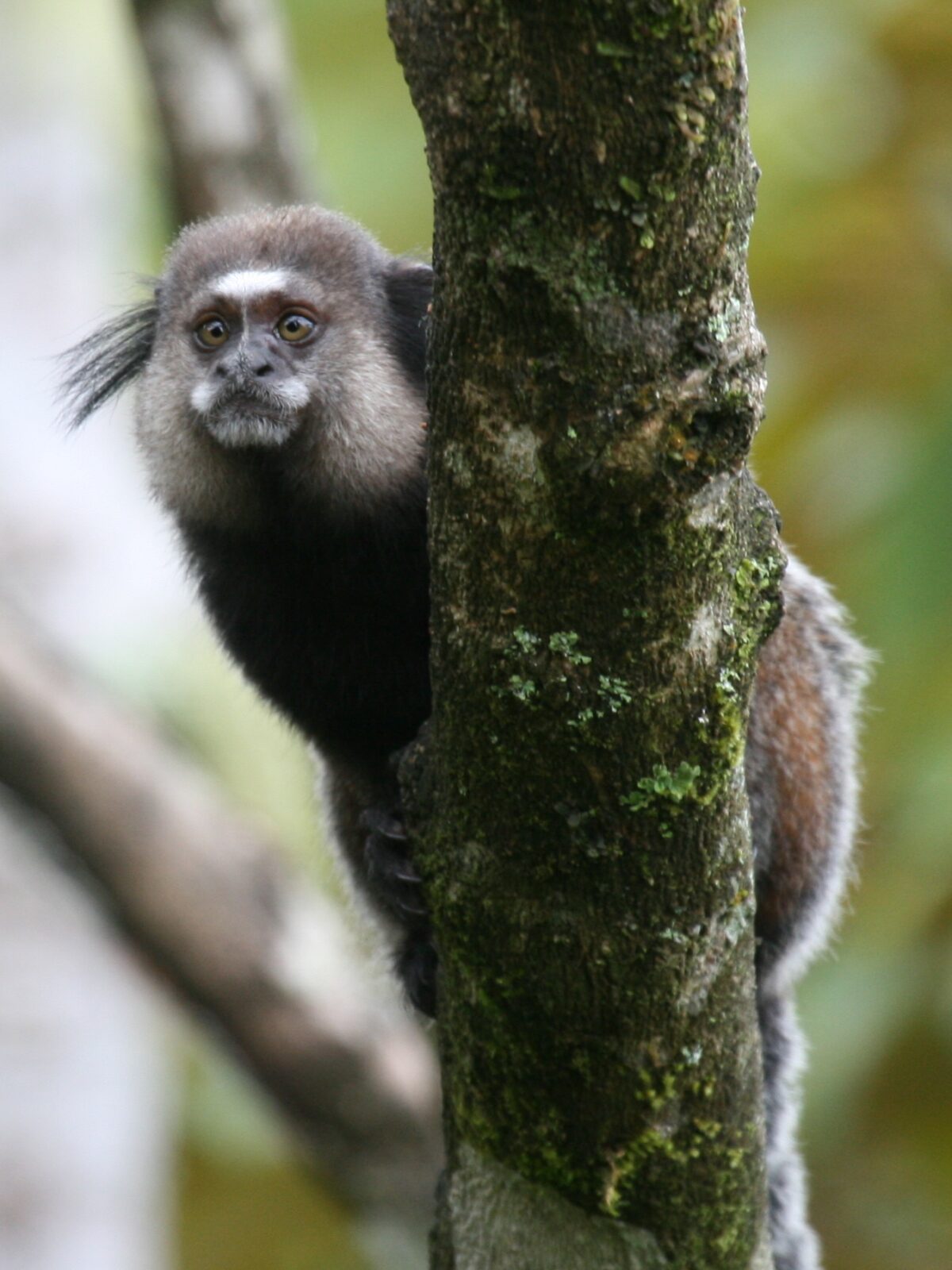
BLACK-EARED MARMOSET
Callithrix kuhlii
DESCRIPTION
Also called Kuhl's Marmoset, the Black-eared Marmoset (Callithrix kuhlii) is a small primate characterized by its distinctive black ears and a predominantly grayish-brown body. This species exhibits a playful and social behavior, often seen leaping between branches in its arboreal habitat. They are known for their vocalizations, which include a variety of chirps and whistles, facilitating communication within their groups.
FUN FACTS
- Black-eared Marmosets are known for their unique social structures, where multiple adults in a group may help care for the young, ensuring higher survival rates
- They also have a remarkable ability to adapt to urban environments, often foraging in parks and gardens, showcasing their resilience in changing habitats
- | These primates have a specialized diet that includes not only fruits and insects but also tree sap, which they obtain by gnawing on tree bark
- This behavior is essential for their nutrition and highlights their role in the ecosystem as seed dispersers
QUICK INFO
Lifespan10-15 years in the wild, up to 20 years in captivi
Average Weight300-500 g
Average Length20-25 cm
Diet TypeOmnivore
Social Structuregroup — they typically live in family groups consisting of several adults and their offspring.
Activity PatternDiurnal
Breeding SeasonYear-round, with peaks depending on local conditions
- Habitat
- This species inhabits tropical and subtropical forests, often found in areas with dense vegetation that provide ample food sources and shelter. They are highly adaptable and can also be found in secondary forests and urban areas.
- Biomes
- Tropical Rainforest, Subtropical Forest
- Native Range
- The Black-eared Marmoset is native to the Atlantic Forest region of Brazil.
- Continent
- South America
- Countries
- Brazil
- Diet
- The Black-eared Marmoset primarily feeds on fruits, insects, and small vertebrates, showcasing a diverse diet that allows it to thrive in its environment.
- Diet Type
- Omnivore
- Favorite Food
- fruits, insects
- Social Structure
- group — they typically live in family groups consisting of several adults and their offspring.
- Activity Pattern
- Diurnal
- Group Size
- 4-15
- Territorial
- 1
 VU
VU
 LC
LC
300-500 g
Weight
20-25 cm
Length
- Coloration
- grayish-brown body with distinctive black ears and white facial markings
- Sexual Dimorphism
- males and females are similar in size and appearance
- Lifespan
- 10-15 years in the wild, up to 20 years in captivi
- Gestation Period
- 150 days
- Offspring per Birth
- 1-3
- Sexual Maturity
- 1-2 years
- Breeding Season
- Year-round, with peaks depending on local conditions
LC
Least Concern
IUCN Red List Status
- Population Status
- The population of Black-eared Marmosets is currently stable, but habitat loss poses a potential threat.
- Wild Population Estimate
- Unknown
- Population Trend
- Stable
- Endangered
- 0
- Threats
- Main threats include habitat destruction due to deforestation and urbanization, which can lead to fragmentation of their living spaces. Additionally, they face risks from the illegal pet trade.
- Predators
- Birds of prey, snakes, and larger mammals can pose threats to Black-eared Marmosets.
- Defense Mechanisms
- They use vocalizations to warn of predators and can escape quickly into the trees.
- Found in Zoos
- Common