


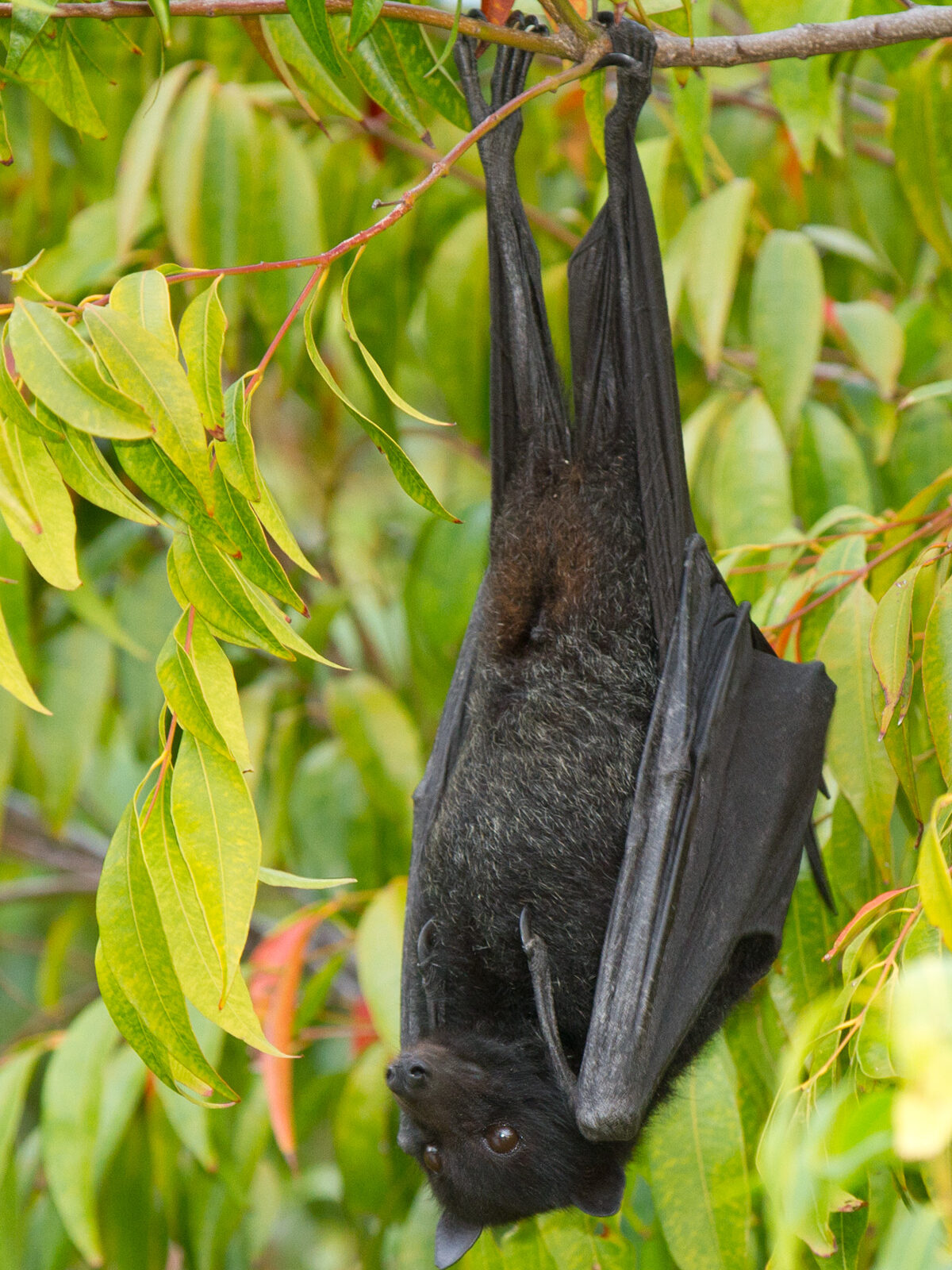
BLACK FLYING FOX
Petaurus alecto
DESCRIPTION
Black Flying Fox (Petaurus alecto) is a large species of bat known for its impressive wingspan and distinctive black fur. These bats are primarily nocturnal and are often seen roosting in large colonies during the day, hanging upside down in trees. They play a crucial role in their ecosystem as pollinators and seed dispersers, contributing to the health of their forest habitats.
FUN FACTS
- Black Flying Foxes can consume large quantities of fruit in a single night, helping to disperse seeds over vast distances, which is vital for forest regeneration
- Additionally, they have a unique social structure, often forming large colonies that can be quite noisy, especially during mating season, showcasing their complex communication skills
QUICK INFO
Lifespan10-15 years in the wild, up to 20 years in captivi
Average Weight0.5-1 kg
Average Length25-30 cm
Diet TypeHerbivore
Social StructureThey are typically found in large colonies, which can number in the thousands, indicating a strong social structure.
Activity PatternNocturnal
Breeding SeasonSpring to early summer (September to December)
- Habitat
- Black Flying Foxes inhabit subtropical and tropical forests, often near water sources. They prefer areas with abundant flowering and fruiting trees.
- Biomes
- Tropical Rainforest, Subtropical Forest
- Native Range
- They are native to eastern Australia, including Queensland, New South Wales, and Victoria.
- Continent
- Australia
- Countries
- Australia
- Diet
- They primarily feed on fruits, nectar, and flowers, making them important for pollination. Their diet varies seasonally based on the availability of food sources.
- Diet Type
- Herbivore
- Favorite Food
- Fruits and nectar
- Social Structure
- They are typically found in large colonies, which can number in the thousands, indicating a strong social structure.
- Activity Pattern
- Nocturnal
- Group Size
- 100-1,000
- Territorial
- 0
0.5-1 kg
Weight
25-30 cm
Length
- Coloration
- They have glossy black fur with a lighter-colored face and wings.
- Sexual Dimorphism
- Males are generally larger than females.
- Lifespan
- 10-15 years in the wild, up to 20 years in captivi
- Gestation Period
- 60-70 days
- Offspring per Birth
- 1
- Sexual Maturity
- 1-2 years
- Breeding Season
- Spring to early summer (September to December)
LC
Least Concern
IUCN Red List Status
- Population Status
- The population is currently stable, but habitat loss poses a threat.
- Wild Population Estimate
- 50,000-100,000
- Population Trend
- Stable
- Endangered
- 0
- Threats
- Main threats include habitat destruction due to urban development and agriculture, as well as climate change affecting food availability. They are also vulnerable to extreme weather events.
- Predators
- Natural predators include large birds of prey and possibly some species of snakes.
- Defense Mechanisms
- They rely on their ability to fly and roost high in trees to avoid predators.
- Found in Zoos
- Uncommon